License and Insurance Verification
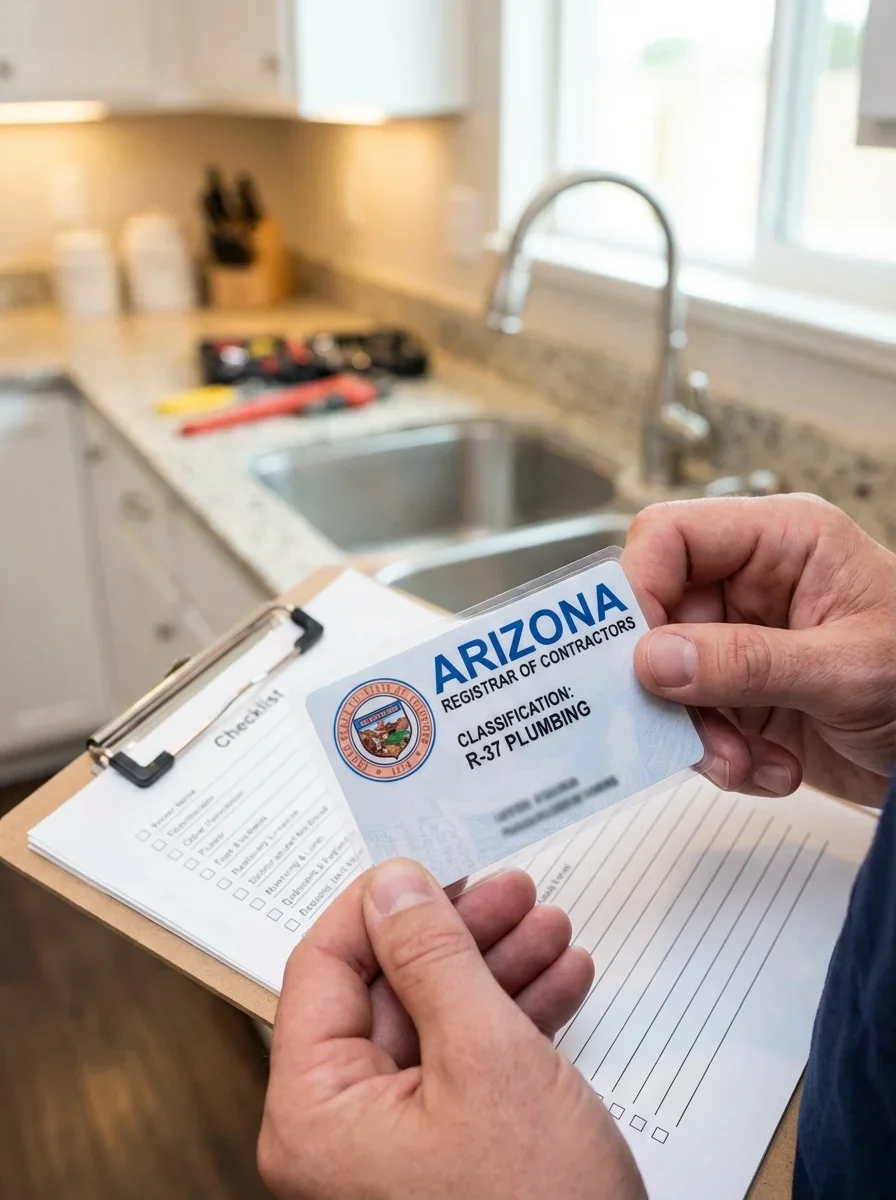
Ask for their Arizona Registrar of Contractors license number before they touch a pipe.
Arizona requires all contractors performing work over $1,000 to hold an active ROC license, and plumbing falls under the R-37 classification, which covers installation and repair of water and gas piping systems, fire protection systems, sewage treatment, and all fixtures and vents common to the industry.[1] Don't just take their word for it. Verify the license yourself at roc.az.gov before signing anything.
The license number tells you whether they're qualified for residential work (R-37) or commercial projects (C-37). It also shows their bond amount, complaint history, and whether they're current on renewals. A plumber with an expired or suspended license is operating illegally, and you'll have zero recourse if something goes wrong.
Insurance Beyond the ROC Bond
Arizona's ROC bond requirements are shockingly low — just $4,000 to $15,000 depending on license type. That won't cover a flooded house or a gas line explosion.
Ask for proof of general liability insurance (minimum $500,000) and workers compensation coverage. Arizona doesn't mandate workers comp for contractors, which means if an uninsured plumber gets hurt on your property, your homeowner's insurance might be on the hook.
Request current certificates of insurance directly from their carrier. Avoid plumbers who say they're "bonded and insured" without showing documentation. One homeowner spent 36 hours without water after a disputed pipe repair because the plumber's bond didn't cover the full damage and they had no additional insurance.
- ROC License: R-37 for residential, C-37 for commercial — verify at roc.az.gov
- Bond Amount: Only $4,000-$15,000 standard (insufficient for major damage)
- General Liability: Request minimum $500,000 coverage with current certificate
- Workers Comp: Not mandatory in AZ — your homeowner's policy may be liable without it
- Documentation: Get insurance certificates directly from carrier, not just contractor's word
Experience With Phoenix-Specific Plumbing Issues
Generic plumbing experience doesn't translate to Phoenix competence. Ask how long they've worked specifically in the Valley and how many slab leak repairs they've completed in the past year.
Slab-on-grade construction means all your plumbing runs under or through concrete, and Phoenix's hard water accelerates copper pipe corrosion at double the national rate. A plumber from a humid climate won't understand thermal expansion issues when ambient ground temperature hits 95°F in July.
Verify their familiarity with caliche soil excavation. That calcium carbonate hardpan layer at 1-6 feet depth makes trenching 2-3x more expensive than normal soil, and inexperienced contractors consistently underbid jobs because they don't account for it. Ask what equipment they use for caliche excavation and whether their estimate includes potential rock removal costs.
Piping Material Expertise
Phoenix plumbing has evolved through three distinct eras: pre-1980 copper supply lines, 1980-2000 copper with ABS drains, and post-2000 PEX supply systems. Ask which materials they recommend for your home's age and why.
A plumber who defaults to PVC for a water line repair without discussing copper or PEX alternatives doesn't understand local standards or your home's specific needs.
One homeowner's third-party plumber criticized a previous PVC repair choice that failed under Phoenix heat stress, leading to thousands in additional costs. Ask candidates to explain material longevity in 106°F ambient temperatures and compatibility with water that tests at 300+ ppm calcium carbonate. Their answer reveals whether they're thinking long-term or just selling what's fastest to install.
Detailed Scope and Pricing Transparency
Request a written estimate that breaks down labor, materials, permits, and potential additional costs before work begins. Vague quotes like "$450-$850 depending on what we find" leave you vulnerable to surprise bills.
The estimate should specify whether they're charging flat-rate, hourly, or by the fixture, and what scenarios would trigger change orders.
Ask what happens if they discover unexpected damage during the job. Will they stop work and provide a new estimate, or do you authorize them to proceed up to a certain dollar amount? Phoenix's combination of hard water scale buildup and aging infrastructure means plumbers frequently encounter corroded pipes, failed pressure regulators, or damaged slab penetrations once they start working. Establish decision-making protocols upfront.
Permit and Code Compliance
Most plumbing work in Phoenix requires permits. Water heater replacements, gas line installations, repiping projects, and sewer line work all need city approval.
Ask whether the estimate includes permit costs and who handles the inspection scheduling. Unpermitted work can void your homeowner's insurance, complicate future home sales, and leave you liable for code violations.
Verify their knowledge of current Arizona amendments to the International Residential Code. Recent legislation prohibits installation of plumbing fixtures in new or replacement residential construction unless they meet specific water-saving standards: lavatory faucets delivering no more than 0.5 gallons per minute at 80 PSI and showerheads capped at 3 gallons per minute.[3] A plumber installing non-compliant fixtures puts you at risk during inspections.
Pro Tip: Ask if the plumber will be present during city inspections. A contractor who sends apprentices to meet inspectors while they move to another job may not be able to address inspector questions or corrections efficiently. You want the licensed contractor who designed the work to defend it during inspection.
Warranty Terms and Service Guarantees
Ask for written warranty details covering both parts and labor. Standard manufacturer warranties on water heaters or fixtures don't cover installation defects or labor to replace failed components.
You want the plumber's workmanship warranty to last at least one year, preferably longer for major projects like sewer line replacement or whole-house repiping.
Clarify what voids the warranty. Some plumbers exclude coverage if you use chemical drain cleaners, skip annual maintenance, or have another contractor work on the same system. Others refuse warranty service if you don't use their recommended water softener in Phoenix's hard water conditions. Get these exclusions in writing so you're not surprised when a covered repair gets denied.
Response Time for Warranty Issues
A 10-year warranty means nothing if the plumber takes three weeks to return your call about a leaking connection.
Ask what their typical response time is for warranty claims and whether they charge a service call fee even for covered repairs. Some companies provide warranty service within 24 hours at no charge, while others treat warranty work as low priority behind new paying customers.
Check whether the warranty transfers if you sell your home. For major projects like complete repiping, a transferable warranty adds value to your property and gives buyers confidence in the work quality.
Emergency Service Availability
Phoenix's peak plumbing season runs June through August when heat stress causes pipe failures, water heater breakdowns, and slab leaks from thermal expansion. Ask whether they offer true 24/7 emergency service or just answer phones after hours and schedule you for the next business day.
A burst pipe at 11 PM on Saturday doesn't care that it's the weekend.
Request their after-hours pricing structure. Some companies charge standard rates around the clock, while others add 50-100% surcharges for nights, weekends, and holidays. Clarify whether the emergency fee covers diagnostics only or includes repair work, and ask their average response time for urgent calls. Several homeowners praised plumbers who arrived within two hours for drain clearing and water heater emergencies — that's the standard you're looking for.
What Qualifies as an Emergency
Not every plumbing problem requires immediate response, but you need to know what the plumber considers urgent. A gas leak or major water line break obviously demands instant attention. But what about a running toilet that's wasting 200 gallons per day, a water heater leaking into the drip pan, or a backed-up sewer line?
Ask whether they triage emergency calls and how they prioritize response. Some issues like gas leaks genuinely require you to evacuate and call the fire department before calling a plumber.
Others can wait until morning without causing additional damage. A good plumber will tell you honestly whether your 9 PM call can wait until 7 AM.
| Issue Type | True Emergency? | Typical Response | Can Wait Until Morning? |
|---|---|---|---|
| Gas leak (smell or detector alarm) | YES | Evacuate immediately, call fire dept first | NO |
| Burst water line flooding home | YES | Shut main valve, call plumber | NO |
| Slab leak under concrete | MAYBE | Depends on severity and water damage risk | Often yes if main valve shut |
| Backed-up sewer (one fixture) | NO | Unpleasant but not urgent | YES |
| Water heater leaking in drip pan | MAYBE | If actively flooding, no; if contained, yes | Often yes if pan draining properly |
| Running toilet wasting water | NO | Costly but not damaging | YES |
Who Actually Performs the Work
The person who shows up for the estimate might not be the one doing the repair. Ask whether the plumber you're speaking with will personally handle your job or whether they dispatch employees or subcontractors.
Arizona plumbing standards distinguish between apprentice and journeyman plumbers, with different training and certification levels for each.[2]
Verify the experience level of whoever will work in your home. An apprentice can legally perform plumbing work under supervision, but you don't want unsupervised apprentices tackling a complex slab leak diagnosis or gas line installation. Ask how many years of Phoenix-specific experience the actual technician has and whether a licensed journeyman or contractor will supervise apprentice work.
Background Checks and Drug Testing
You're giving this person access to your home, often when you're not there. Ask whether the company performs background checks and drug testing on all employees.
Most established plumbing companies do this routinely, but smaller operations and independent contractors might not have formal policies.
Request the technician's name and license number before the appointment. Some homeowners appreciate knowing who's coming rather than just getting "we'll send someone between 8 and 12." This also lets you verify the individual's credentials through the ROC if they're claiming to be a licensed contractor.
References and Complaint History
Online reviews give you a starting point, but ask for specific references from jobs similar to yours. Someone who had a water heater replaced if that's your project, or a homeowner who dealt with a slab leak if that's your issue.
Call these references and ask whether the plumber showed up on time, cleaned up thoroughly, explained the problem clearly, and stood behind their work when questions arose later.
Check their complaint history through the Arizona Registrar of Contractors. Every ROC license page shows complaints filed, investigations, and disciplinary actions. One or two resolved complaints over a 15-year career might not be concerning, but patterns of similar issues or unresolved disputes should send you elsewhere.
Local Business Standing
Ask how long they've operated under their current business name and ROC license. Some contractors close up shop when complaints pile up, then reopen under a new LLC with a fresh license.
A 12-year track record under the same business entity demonstrates stability and accountability.
Verify their physical business address through the ROC database. Post office boxes or residential addresses might indicate a side business operating without proper commercial infrastructure. That doesn't automatically disqualify them, but it affects your recourse if disputes arise.
Water Quality and System Compatibility
Phoenix's hard water contains 300+ ppm calcium carbonate that accelerates copper pipe corrosion and reduces water heater efficiency 20-30% over five years. Ask whether the plumber recommends a water softener or filtration system for your specific water quality and plumbing materials.
They should be able to discuss calcium buildup, scale prevention, and how water chemistry affects different pipe materials.
Request their opinion on anode rod replacement schedules for tank water heaters in Phoenix conditions. Hard water depletes sacrificial anode rods faster than soft water, and most homeowners never replace them because they don't know they exist. A plumber who mentions checking the anode rod during a water heater service call understands local conditions and preventive maintenance.
Hot Water Temperature Safety
Arizona administrative code requires hot water temperature in bathing areas not to exceed 120°F to prevent scalding injuries, and plumbing systems must ensure a continuous source of safe drinking water with properly functioning sewage disposal.[4] Ask whether the plumber checks water temperature as part of their service and whether they'll adjust your water heater thermostat if needed.
This matters particularly for homes with young children or elderly residents. Water at 140°F causes third-degree burns in five seconds, while 120°F takes ten minutes.
One degree makes a real difference in safety.
Specialized Equipment and Diagnostic Tools
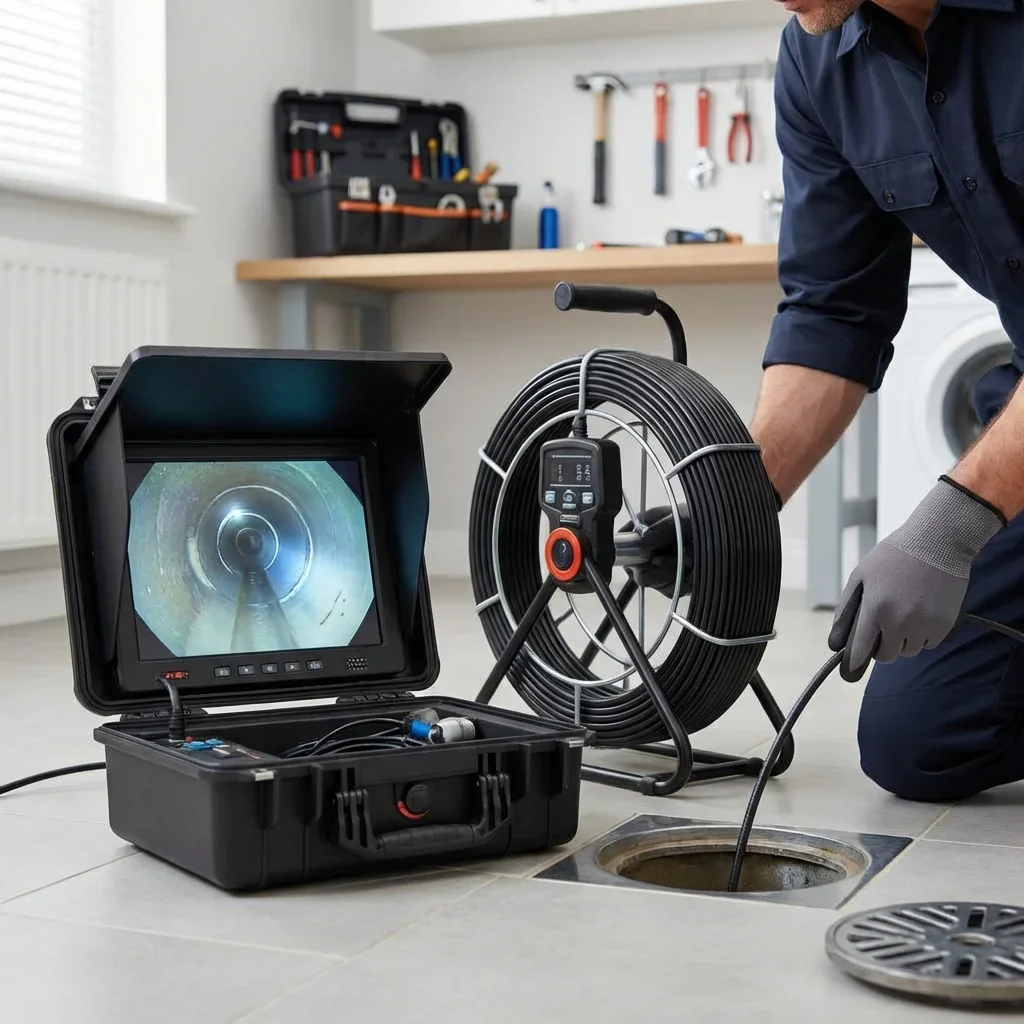
Not all plumbers own the same equipment, and some tools make the difference between accurate diagnosis and expensive guesswork. Ask whether they use sewer camera inspection equipment for drain line problems or rely on symptoms alone to recommend repairs.
Camera inspection costs $200-400 but can save you thousands by pinpointing the exact location and cause of a blockage or break.
Verify their leak detection capabilities for slab leaks. Acoustic listening devices, infrared cameras, and electronic pressure testing identify leaks without destructive exploration. A plumber who wants to start jackhammering your floor without confirming the leak location first is costing you money and stress.
Drain Cleaning Methods
For chronic drain clogs, ask whether they offer hydro jetting or just cable snaking. Snaking clears a hole through blockages but leaves buildup on pipe walls that causes recurring clogs.
Hydro jetting uses high-pressure water to completely clean pipes and lasts 3-5 times longer. Not every situation requires hydro jetting, but the option should exist for severe blockages or grease buildup.
Compare their approach to preventive drain maintenance. Some plumbers recommend annual cleaning for homes with mature trees whose roots infiltrate sewer lines. Others suggest video inspection every 3-5 years to catch problems before they become emergencies.
Project Timeline and Disruption
Ask for realistic timelines including permit approval, material procurement, and actual work days. A water heater replacement might take 4-6 hours, but if they need to special-order a specific model or wait three days for permit approval, you need to know upfront.
Phoenix's peak season (summer) often means longer lead times for both permits and contractor availability.
Clarify how work disruption affects your daily routine. Will you have water during the project? Do they shut it off for the entire day or in short intervals? If they're accessing plumbing under the slab, which rooms become unusable and for how long? One homeowner endured 36 hours without water during a disputed pipe repair. That's completely avoidable with proper planning and communication.
Cleanup and Site Restoration
Plumbing work gets messy, especially projects involving slab leak access or sewer line excavation in caliche soil. Ask what their cleanup process includes and whether site restoration is part of the bid or billed separately.
Some plumbers patch concrete, replace flooring, and haul away debris as part of the project. Others leave you with a hole in the floor and a pile of dirt in the yard.
Request specifics about how they protect your home during work. Do they use floor protection, dust barriers, and clean tools before entering? These details reveal professionalism and respect for your property.
Payment Terms and Financing Options
Understand the payment schedule before work begins. Some plumbers require deposits (typically 10-25% for large projects), others invoice upon completion, and some want payment before they leave your property.
Ask about accepted payment methods. Credit cards often carry processing fees, while checks or cash might qualify for discounts.
Verify whether they offer financing for major projects like whole-house repiping or water heater replacement. These projects easily run $3,500-$12,000, and spreading payments over 12-24 months makes them manageable for many homeowners. Check the interest rates and terms — some "special financing" deals carry 20%+ APR after promotional periods expire.
Change Order Procedures
Establish how additional work gets priced and approved. If they discover your pressure regulator failed during a water heater replacement, do they stop work and provide a new estimate, or do you authorize ongoing work up to a certain dollar threshold?
Get this in writing so neither party feels taken advantage of when unexpected issues arise.
Ask how they handle disagreements about necessary repairs. Phoenix's hard water and aging infrastructure mean almost every plumbing service uncovers additional issues. A trustworthy plumber will explain what's urgent, what can wait, and what's purely optional, then let you decide.
Main Water Shutoff and Emergency Protocols
This might seem basic, but it matters. Ask whether they'll verify your main water shutoff works and show you its location if you don't already know.
During a plumbing emergency, every minute counts while water pours into your home. If your shutoff valve hasn't been turned in 20 years, it might be seized or broken.
Request their emergency contact procedures for issues that arise after they leave. If a connection starts leaking at 2 AM, do you call their emergency line, send an email, or wait until business hours? Some companies provide direct cell phone numbers for recent customers, while others route everything through an answering service. Know what you're getting before you need it.
How Much Do Plumbers Charge in Phoenix?
Pricing varies dramatically based on the project type and contractor experience. Emergency service typically runs $150-300 just for showing up, plus labor at $100-200 per hour.
Standard service calls during business hours cost $75-150 for diagnostics, often credited toward repair work if you proceed.
Ask whether they charge flat-rate pricing or hourly rates. Flat rates give you cost certainty but might be higher than necessary for simple jobs. Hourly rates can save money on quick fixes but expose you to risk if the plumber works slowly or encounters complications. For major projects like water heater replacement ($1,200-$3,500) or slab leak repair ($2,000-$6,000), get multiple written estimates and compare scope, not just price.
Several homeowners noted that plumbers offering free estimates upfront made comparison shopping easier and built trust before any money changed hands. That transparency matters in an industry where prices can vary 200% for identical work.
- Arizona Registrar of Contractors. "ARIZONA REGISTRAR OF CONTRACTORS R-37 PLUMBING, INCLUDING SOLAR (RESIDENTIAL)." https://proctor2.psionline.com/programs/AZ%20CO/C-37%20including%20solar.pdf. Accessed April 07, 2026.
- Arizona Department of Education. "PLUMBING 46.0503.00 TECHNICAL STANDARDS." https://www.azed.gov/sites/default/files/2024/07/PlumbingTS.pdf. Accessed April 07, 2026.
- Arizona State Legislature. "Arizona-2025-HB2253-Introduced." https://legiscan.com/AZ/text/HB2253/id/3058224/Arizona-2025-HB2253-Introduced.html. Accessed April 07, 2026.
- Arizona Department of Economic Security (via Arizona Administrative Code). "Ariz. Admin. Code § R6-18-707 - Plumbing Requirements." https://www.law.cornell.edu/regulations/arizona/Ariz-Admin-Code-SS-R6-18-707. Accessed April 07, 2026.