Arizona's Mandatory Workmanship Warranty
Arizona law doesn't leave warranty terms entirely up to contractors. The ROC enforces minimum workmanship standards that apply to all licensed plumbing contractors, whether they mention a warranty in your contract or not.[1]
For most residential plumbing work, you automatically get a two-year workmanship warranty covering defects in installation. Not materials, not pre-existing conditions, but the actual quality of the contractor's work.[2]
This statutory warranty exists because A.R.S. § 32-1104(A)(5) requires the ROC to establish minimum standards for "good and workmanlike construction."[3] If a licensed plumber installs a water heater that fails due to improper installation within two years, you have legal recourse through the ROC even if your written contract doesn't mention warranties. Contractors who fail to perform work in a good and workmanlike manner or refuse to honor these warranty periods violate Arizona law.[4]
The two-year period starts when the work is completed and accepted, not when you discover the defect. Once properly installed plumbing fixtures pass the initial warranty period, you're generally limited to the manufacturer's warranty for equipment failures.[2]
A toilet installed correctly in 2024 that develops a tank crack in 2027 is a manufacturer issue, not a workmanship issue.
What "Good and Workmanlike" Actually Means
Arizona courts have interpreted workmanship standards to include proper material selection for local conditions, code-compliant installation, and reasonable durability given Phoenix's climate. A repiping job using copper in a home with 350 ppm hard water might meet code but still fail workmanship standards if the installer didn't account for Arizona's corrosive water chemistry.
Conversely, a PEX repipe that develops leaks at compression fittings within a year likely fails workmanship tests regardless of material choice.
The ROC evaluates disputes on a case-by-case basis, but proper permitting, code compliance, and adherence to manufacturer installation specs are baseline expectations. Unpermitted plumbing work not only risks code violations but also weakens your warranty protections. The ROC has less leverage over contractors who operated outside the licensing system from the start.
Implied Warranty of Habitability
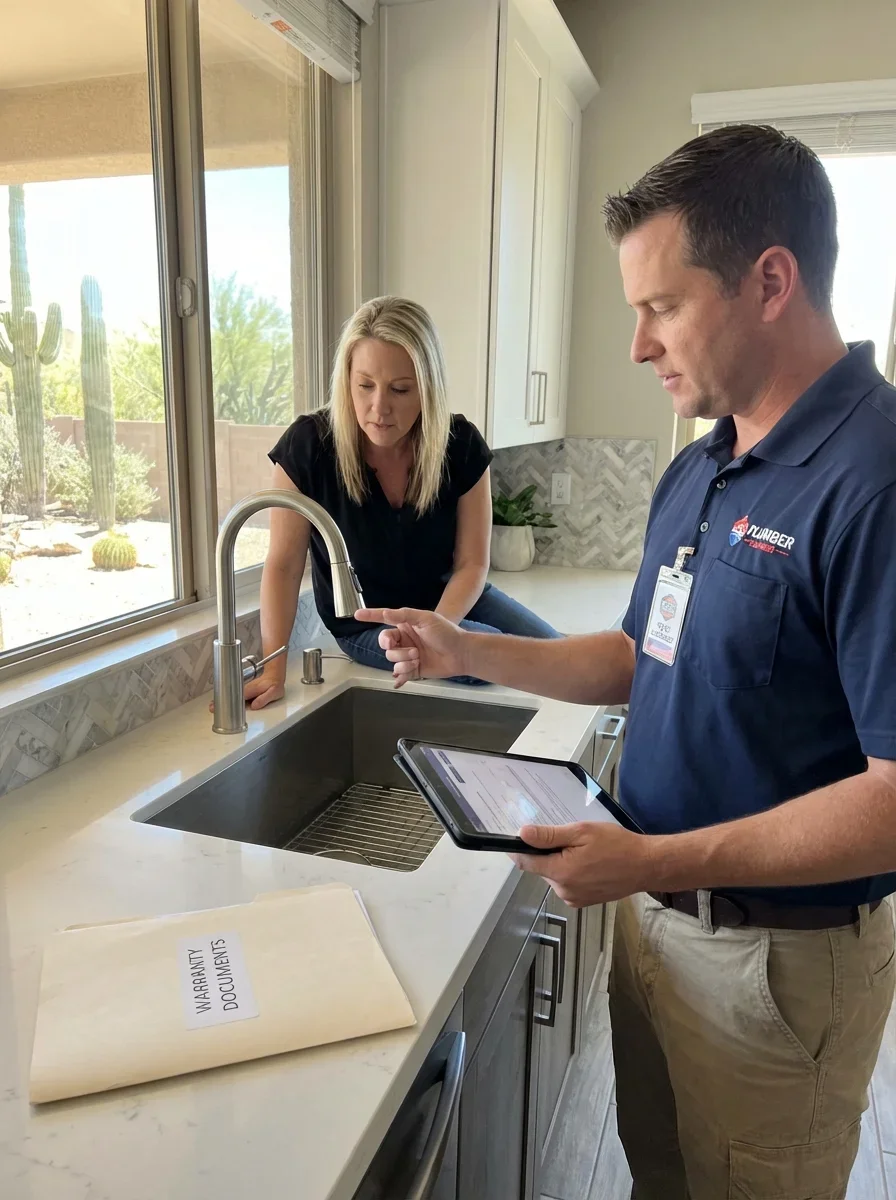
Beyond the ROC's workmanship standards, Arizona recognizes an implied warranty of habitability that protects homeowners from substandard construction. This doctrine gained teeth in 2022 when the Arizona Supreme Court ruled in Zambrano v. M & RC II, LLC that builders cannot contractually waive this warranty.[5] While the case addressed new construction, the principle extends to major plumbing work that affects a home's livability.
If a sewer line replacement is performed so poorly that your home becomes uninhabitable due to sewage backups, you have claims under both the workmanship warranty and the implied warranty of habitability. The latter often survives longer than statutory warranty periods because it's rooted in consumer protection law, not just contractor licensing rules.
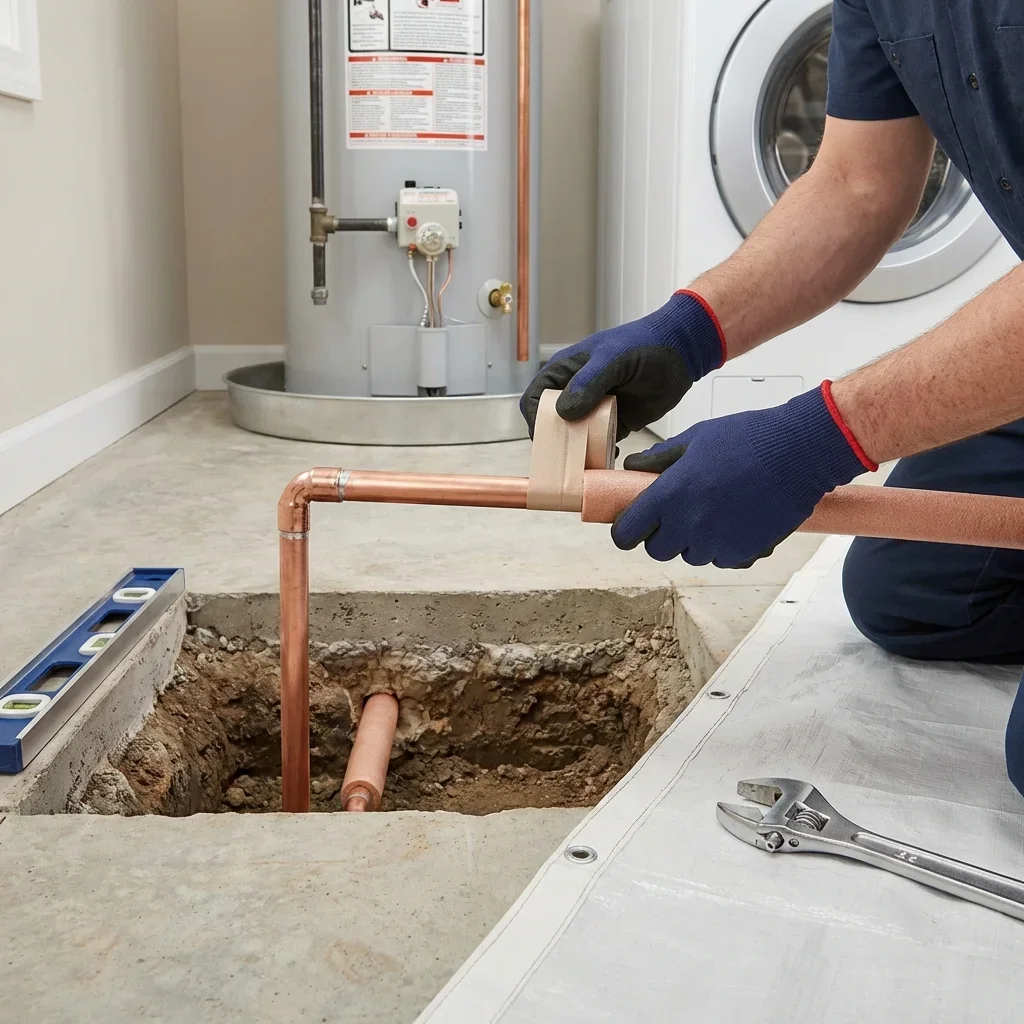
This matters for Phoenix homeowners dealing with slab-on-grade construction. All plumbing runs under or through your concrete slab, and a botched repair that requires jackhammering your foundation to access leaking pipes affects habitability in ways a simple fixture swap doesn't.
Courts have interpreted these warranties more broadly for work that fundamentally compromises how a home functions.
Quick Reference: Arizona Plumbing Warranty Timeline
- 0-2 years: Mandatory ROC workmanship warranty (all licensed contractors)
- 1-2 years: Typical contractor labor warranty (reputable plumbers)
- 6-12 years: Standard water heater tank warranty (manufacturer)
- 10+ years: Premium tankless water heater coverage (manufacturer)
- Lifetime: High-end fixture components (Kohler, Delta ceramic/metal parts)
- Ongoing: Implied warranty of habitability (cannot be waived)
Written Warranties from Contractors
Most reputable plumbing contractors in Arizona provide written warranties that exceed the ROC's two-year minimum. These warranties spell out what's covered, what's excluded, and how long protection lasts.
The specifics matter more than the length.
A typical contractor warranty on labor might cover:
- Leaks at joints, fittings, or connections installed during the service call
- Failures caused by improper installation techniques
- Code violations discovered during inspection that trace back to the contractor's work
- Return visits to correct defects within the warranty period at no charge
That same warranty will exclude:
- Damage from hard water, sediment, or chemical reactions (common in Phoenix with 300+ ppm calcium carbonate water)
- Clogs caused by user behavior (wipes, grease, foreign objects)
- Failures of pre-existing plumbing the contractor didn't touch
- Normal wear on washers, seals, and gaskets after the first year
- Damage from freezing, ground settling, or external forces
One Phoenix homeowner learned this distinction the hard way when his annual service line warranty policy (purchased for $125 and marketed as "repair coverage for your water and sewer lines with no deductible for covered repairs 365 days a year") denied his $11,000 sewer line claim just two months after purchase. The company classified tree root infiltration as a "pre-existing condition" despite the policy language suggesting comprehensive coverage.
When he persisted and involved local consumer advocates, the company eventually paid. But the initial denial revealed how narrowly some warranty providers interpret their obligations.
Service Line Warranties vs. Contractor Workmanship Warranties
These are different animals. Service line warranties sold by third-party companies (often marketed through utility bills) cover repair costs for water and sewer line failures, regardless of who did the original work. Contractor workmanship warranties cover defects in the contractor's installation labor.
Homeowners sometimes confuse the two, expecting their service line policy to cover poor workmanship from a recent plumber visit.
Service line policies are inexpensive ($120-$150 annually in Arizona) but come with significant exclusions. Read the fine print before purchasing. Companies often deny claims for pre-existing conditions, which can include anything from root intrusion to corrosion that began before policy activation. One frustrated Arizona homeowner described his service line warranty company as "a dead end" and "like talking to a block wall" when seeking help after a sewer break, despite having paid premiums for two years.
If you do file a service line claim, you may need to hire a plumber independently and then seek reimbursement, rather than waiting for the warranty company to authorize work. This creates cash flow issues. You pay $8,000 upfront for a trenchless sewer repair, then battle the warranty company for months over reimbursement.
Some policies require the contractor to be certified or pre-approved by the warranty company before they'll pay, adding another layer of bureaucracy to an already stressful situation.
Manufacturer Warranties on Equipment
When you install a new water heater, toilet, or garbage disposal, the equipment comes with a manufacturer's warranty separate from the contractor's labor warranty. These typically cover defects in materials and manufacturing, not installation errors or damage from use.
Water Heater Warranties
Standard tank water heaters sold in Arizona carry 6- to 12-year warranties on the tank itself, with shorter coverage (1-3 years) on components like thermostats, heating elements, and pressure relief valves. Tankless units often have longer warranties (10 to 15 years on the heat exchanger, 5 years on parts).
But warranty length doesn't always correlate with real-world lifespan in Phoenix's hard water environment.
A 12-year warranty water heater might fail at year 8 due to sediment buildup accelerating tank corrosion. Not a warranty claim. A maintenance issue. Phoenix's 300+ ppm calcium carbonate water reduces water heater efficiency by 20-30% over five years if you don't flush the tank annually. Manufacturers exclude damage from "aggressive water conditions" or lack of maintenance, and Arizona's water chemistry qualifies.
Some manufacturers void warranties if a homeowner doesn't install a water softener or expansion tank where local code requires one. Phoenix doesn't universally mandate expansion tanks, but some jurisdictions do.
Check your water heater installation contract to confirm the installer met all manufacturer requirements. Missing a $200 expansion tank can void a $1,500 warranty claim.
Fixture and Appliance Warranties
Toilets, faucets, and garbage disposals carry limited lifetime warranties on certain components (usually the ceramic or metal housing) and shorter coverage on working parts. A Kohler toilet might have a one-year warranty on the flush valve and flapper, but lifetime coverage on the bowl and tank.
If the flapper fails in year two, you're buying replacement parts.
Garbage disposals typically carry 2- to 10-year warranties depending on the model tier. Budget units (under $150) might have 2-year coverage; premium models ($400+) often include 10-year warranties. But Phoenix's hard water wreaks havoc on disposal seals and impellers. Mineral buildup accelerates wear, and many warranties exclude "normal wear and tear" or damage from "chemical exposure," which can include hard water minerals.
When you replace a garbage disposal, document the installation date and model number. Manufacturers require proof of purchase and installation date for warranty claims.
Some also require professional installation. DIY work can void coverage even if you followed instructions perfectly.
| Warranty Type | Coverage Duration | What's Covered | What's Excluded | Best For |
|---|---|---|---|---|
| ROC Workmanship | 2 years (mandatory) | Installation defects, code violations | Materials, pre-existing issues, maintenance | All licensed contractor work |
| Contractor Labor | 1-2 years (typical) | Leaks at connections, installation failures | Hard water damage, user-caused clogs | Service calls, repairs |
| Manufacturer Equipment | 6-12 years (varies) | Material defects, manufacturing flaws | Installation errors, lack of maintenance | New water heaters, fixtures |
| Service Line Policy | 1 year (renewable) | Water/sewer line failures | Pre-existing conditions, tree roots (often) | Older homes with aging infrastructure |
What to Look for in a Plumbing Contract
Before you sign, confirm these warranty details are spelled out in writing:
- Labor warranty term (how long the contractor guarantees their installation work)
- Callback policy (whether return visits for defects are free or discounted)
- Parts vs. labor coverage (some contractors warrant only their labor, leaving parts coverage to manufacturers)
- Exclusions specific to Arizona (hard water damage, ground settling from caliche soil, thermal expansion from 106°F summer heat)
- Permitting and inspection (whether the contractor pulls permits and passes inspections, which protects your warranty rights)
- Dispute resolution (whether the contract requires arbitration or allows ROC complaints)
Top-rated Phoenix plumbing contractors often provide 1- to 2-year labor warranties that mirror or exceed ROC minimums, plus lifetime warranties on certain high-margin work like repiping or sewer line replacement. A lifetime warranty sounds impressive, but read the fine print. It usually covers only the contractor's labor, not the pipes themselves, and excludes damage from external forces like ground shifting or root intrusion.
Red Flags in Warranty Language
Watch for these warning signs:
- "As-is" clauses on repair work (some contractors try to limit warranty exposure on difficult repairs, but this conflicts with Arizona's implied warranty of habitability)
- Vague exclusions like "damage from external factors" without defining what that means
- Short callback windows (30 or 60 days) that fall well short of Arizona's two-year statutory minimum
- Transferability restrictions (if you sell your home within the warranty period, does coverage transfer to the new owner?)
If a contract says "all work warranted for 90 days," that doesn't override Arizona's two-year workmanship standard. It just signals the contractor doesn't understand or doesn't respect ROC rules.
Address that red flag before work begins.
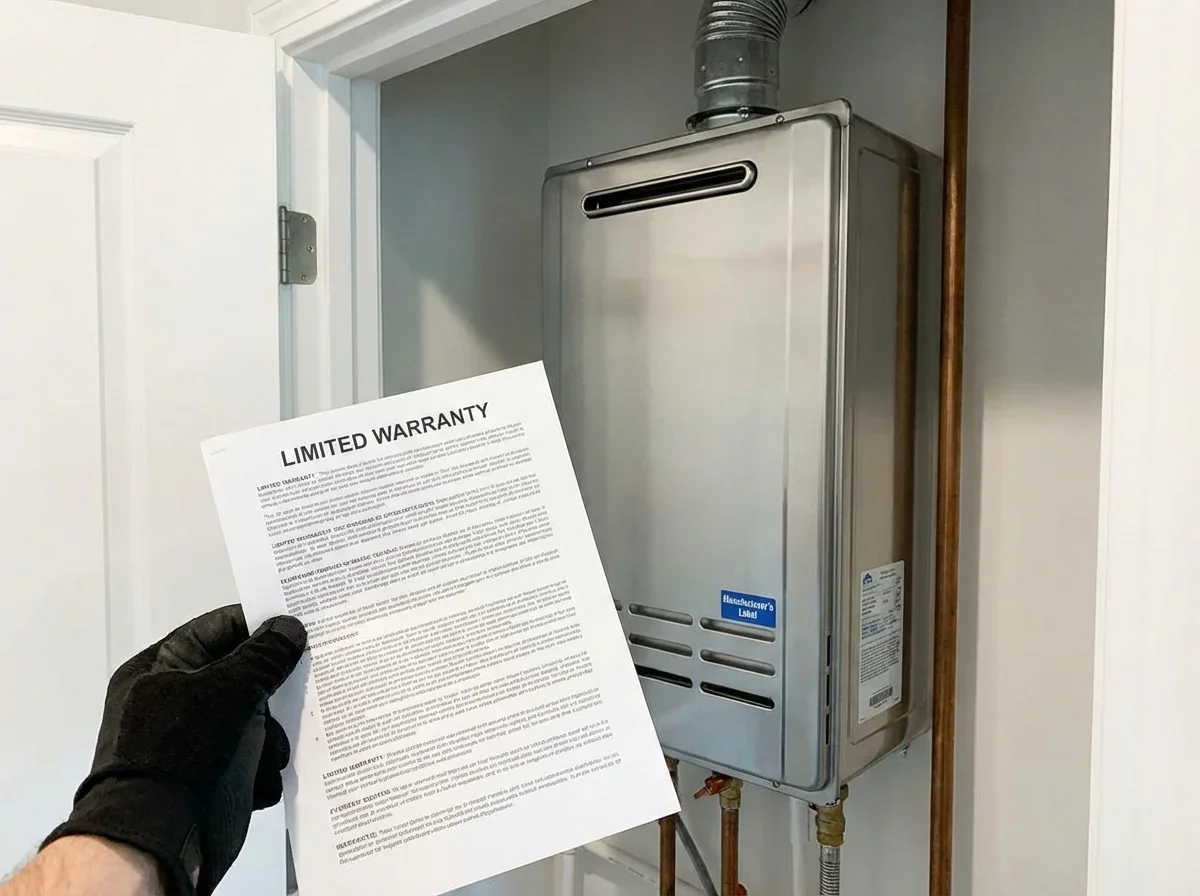
How to File a Warranty Claim
If plumbing work fails within the warranty period, document the problem immediately. Take photos of leaks, water damage, or failed components. Note the date you discovered the issue and any symptoms leading up to it.
Contact the contractor in writing (email creates a paper trail) and request a repair under warranty terms.
Most reputable contractors will schedule a callback within a few days. If the contractor disputes whether the failure is covered, ask for a written explanation. Arizona's workmanship warranty is enforceable through the ROC, but you'll need documentation showing you notified the contractor promptly and they either refused to repair or performed inadequate corrective work.
When the Contractor Won't Respond
If a licensed contractor ghosts you or refuses to honor a valid warranty claim, file a complaint with the Arizona Registrar of Contractors at https://roc.az.gov/. The ROC investigates complaints, mediates disputes, and can discipline contractors who violate workmanship standards or warranty obligations.
The process isn't instant. Resolution can take weeks or months. But it's your primary legal recourse for warranty disputes with licensed contractors.
For unlicensed contractors (who shouldn't have been working on your home in the first place), your options narrow to small claims court or civil litigation. The ROC has no jurisdiction over unlicensed operators.
This is why verifying a contractor's ROC license before hiring is critical. It's the foundation of your warranty protections.
Pro Tip: Before paying the final invoice, verify your contractor pulled all required permits and passed inspections. Unpermitted work weakens your warranty protections and can create problems when you sell your home. Ask for copies of the permit and final inspection approval — reputable contractors provide these automatically.
Warranty Protections on Common Phoenix Plumbing Issues
Arizona's climate and construction patterns create specific warranty scenarios worth understanding.
Slab Leak Repairs
Phoenix's slab-on-grade construction means most plumbing runs under concrete. When a slab leak repair fails within the warranty period, determining fault gets complicated. Did the repair fail because of poor workmanship, or because Arizona's expansive caliche soil shifted the foundation?
Did thermal expansion from 106°F summer heat stress the new connection, or did the plumber use improper fittings?
Good contractors warranty slab leak repairs for at least one year, covering leaks at the repair site. They typically exclude damage from ground movement or foundation settling (both common in Phoenix) but should guarantee their access points, connections, and patching work.
If you have a slab leak repaired and a new leak appears within six inches of the repair within a year, that's almost certainly a workmanship issue covered by warranty.
Repiping Projects
Whole-home repiping is a major investment ($4,000-$15,000 in Phoenix) and should come with robust warranty coverage. Expect at least a 2-year labor warranty and lifetime coverage on leaks at joints and connections. Some contractors offer 10-year or lifetime guarantees on their installation work for repiping, confident that proper PEX or copper installation will outlast typical ownership periods.
But "lifetime" warranties often contain annual inspection requirements or exclusions for homes with untreated hard water above certain mineral thresholds. A contractor might void a lifetime repipe warranty if you don't install a water softener in a home with 400 ppm calcium carbonate water.
Not necessarily unreasonable. Phoenix's hard water accelerates copper corrosion at twice the national rate, and contractors can't guarantee materials against chemical conditions they warned you about.
Water Heater Installations
When you replace a water heater, you're juggling two warranties: the manufacturer's equipment warranty (6-12 years typical) and the contractor's installation warranty (1-2 years typical). If the unit fails in year one, determining whether it's a manufacturing defect or installation error matters for who pays.
A leaking temperature and pressure relief valve three months after installation could be either. A defective valve is a manufacturer warranty claim. An improperly torqued valve that vibrates loose is an installation warranty claim.
Most contractors will investigate and coordinate with the manufacturer rather than making you navigate both claims separately. But only if you hired a reputable, licensed plumber who stands behind their work.
Phoenix homeowners face an additional complication: thermal expansion. When city water heats up in a closed plumbing system (which Phoenix code requires via backflow preventers), pressure builds. Without an expansion tank, that pressure can blow relief valves or crack tank welds. If your installer didn't include an expansion tank where required and your water heater fails due to pressure damage, that's a workmanship issue.
But the manufacturer will deny the equipment warranty claim. You're left chasing the contractor for replacement costs.
Extended Warranties and Service Plans
Some plumbing companies sell annual maintenance plans that include warranty extensions, priority scheduling, and discounted repairs. These plans typically cost $150-$300 per year and cover one or two annual maintenance visits plus minor repairs (like replacing faucet cartridges or toilet flappers).
Are they worth it? That depends on your home's age and plumbing condition. A 1985 Phoenix home with original copper supply lines, a 15-year-old water heater, and caliche soil settling is a good candidate. You're likely to need multiple service calls annually, and the maintenance visits can catch problems before they become emergencies.
A 2020 home with PEX plumbing and a new water heater probably doesn't justify the cost.
These plans are not the same as the third-party service line warranties discussed earlier. Plumbing company service plans are backed by the contractor's service capacity and reputation. Third-party service line warranties are backed by insurance-like companies with profit incentives to deny claims.
The former provides real value if you trust the plumbing company. The latter creates headaches for many Arizona homeowners who discover exclusions only after filing claims.
Protecting Your Warranty Rights
Warranties only help if you can enforce them. Protect yourself by:
- Hiring only ROC-licensed contractors and verifying their status at https://roc.az.gov/ before work begins
- Getting all warranty terms in writing before signing contracts or paying deposits
- Keeping detailed records of all plumbing work, including invoices, permits, inspection reports, and warranty certificates
- Responding quickly when problems appear (waiting 18 months to report a leak weakens your claim)
- Following maintenance requirements specified in manufacturer and contractor warranties (annual water heater flushing, drain line cleanings, etc.)
Arizona law gives you strong warranty protections, but only if you do your part. The ROC can't help you if you hired an unlicensed handyman. Manufacturers won't honor claims if you can't prove purchase dates. Contractors have legitimate grounds to deny claims if you ignored maintenance requirements or caused damage through misuse.
When you hire a licensed plumber in Phoenix, you're not just buying a repair. You're buying legally enforceable promises about quality and durability. Make sure you understand what those promises cover, how long they last, and what you need to do to keep them valid.
The small effort upfront saves major headaches when something goes wrong.
- Arizona Registrar of Contractors. "Workmanship Standards for Licensed Contractors." https://roc.az.gov/workmanship-standards-licensed-contractors. Accessed April 07, 2026.
- Arizona Registrar of Contractors. "Warranties." https://roc.az.gov/warranties. Accessed April 07, 2026.
- Arizona Legislature (Arizona Revised Statutes). "32-1104 - Powers and duties." https://www.azleg.gov/ars/32/01104.htm. Accessed April 07, 2026.
- Arizona Legislature (Arizona Revised Statutes). "32-1154 - Prohibited acts; violations; classification." https://www.azleg.gov/ars/32/01154.htm. Accessed April 07, 2026.
- William Schroeder & Begley, PLC (citing AZ Supreme Court). "Builders Unable to Limit Warranties in Supreme Court Ruling." https://www.wshblaw.com/experience-builders-unable-to-limit-warranties-in-supreme-court-ruling. Accessed April 07, 2026.