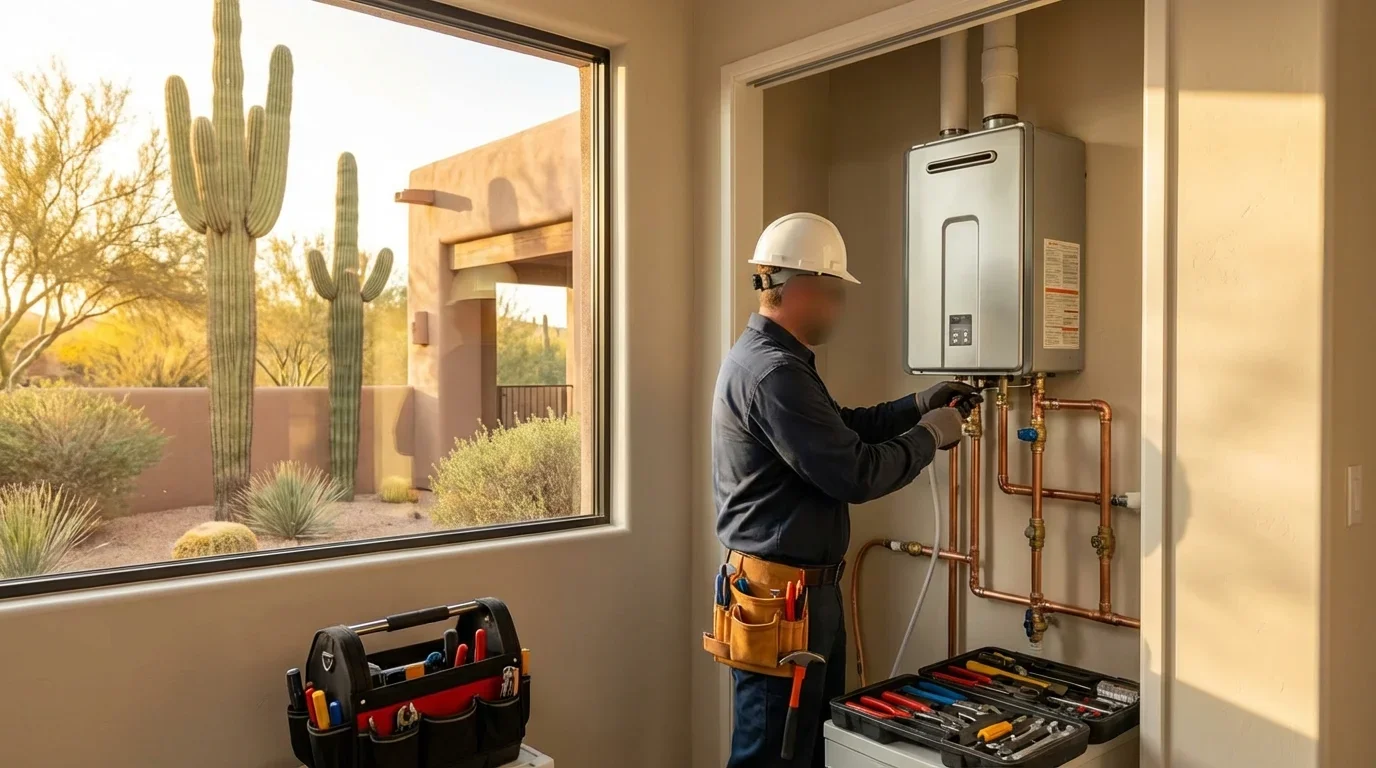
Phoenix's extreme summer heat and hard water create unique challenges for water heaters, often reducing lifespan and efficiency. Professional plumbers provide expert repair and installation services for both traditional tank and tankless water heaters, ensuring your home has reliable hot water year-round. From diagnosing pilot light issues and sediment buildup to full replacements with proper sizing and code-compliant installation, licensed technicians deliver solutions tailored to Arizona's climate and water conditions.
! Common Issues
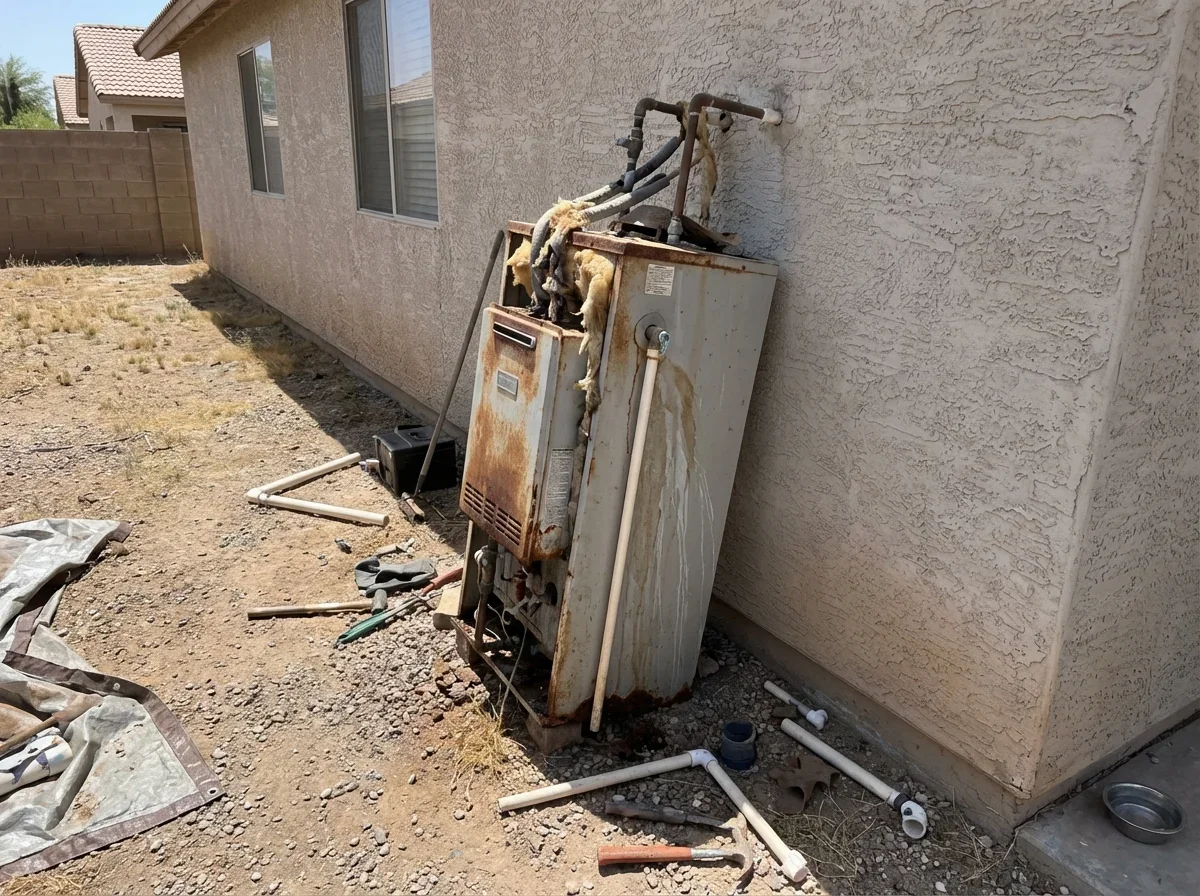
When Do You Need Water Heater Repair?
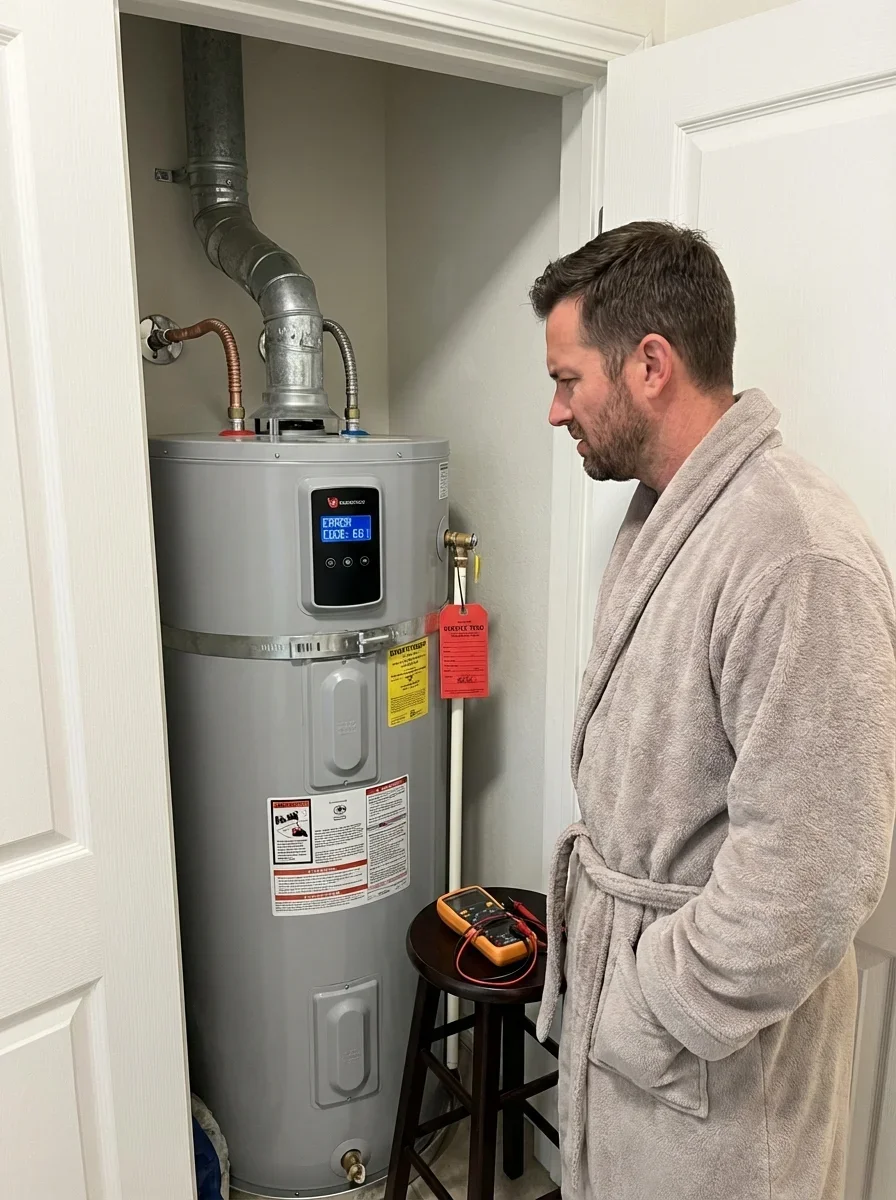
Your morning routine just got disrupted. No hot water for the shower. Or worse — you walked into your garage in Chandler and found a puddle spreading from the water heater.
Some water heater problems announce themselves loudly. Others whisper warnings for weeks before they fail completely.
Common Warning Signs
Inconsistent water temperature is usually the first clue. The shower starts hot, then goes lukewarm halfway through. In Phoenix's hard water environment, sediment builds up at the bottom of tank heaters, creating a barrier between the heating element and the water. What should take 30 minutes to heat now takes an hour and never gets as hot.
Rumbling or popping noises mean that sediment layer is thick enough to trap water beneath it. As it boils, it creates those sounds. This doesn't just annoy you. It's destroying your tank from the inside. Homes in Mesa and Gilbert with untreated hard water can accumulate 2-3 inches of calcium deposits in just 3-4 years.
Rusty or discolored water coming from hot taps only signals corrosion inside the tank or in the anode rod (the sacrificial component designed to corrode instead of your tank). Once you see rust, you're on borrowed time.
Water pooling around the base isn't always catastrophic. It might be condensation or a loose pressure relief valve. But it's often the tank itself starting to leak. Tank failures don't heal themselves.
Emergency vs Non-Emergency Issues
Call immediately if:
- Water is actively leaking and won't stop
- You smell gas near a gas water heater
- The pressure relief valve is spraying or won't close
- The unit is making loud banging or hissing sounds
Schedule service soon if:
- Water temperature is inconsistent or takes forever to heat
- You're hearing rumbling or popping regularly
- Hot water has a metallic smell or rusty tint
- The unit is 10+ years old and acting temperamental
Sound familiar? Your water heater is 12 years old. You've been nursing it along — relighting the pilot, adjusting the thermostat up and down. Last month the plumber quoted $350 to replace the heating element. This morning it's leaking. Now you're replacing the whole thing anyway.
Phoenix's extreme attic temperatures (120°F+ in summer) cook water heaters installed in unconditioned spaces. Combined with hard water that accelerates corrosion, the average tank water heater in Arizona lasts 8-10 years, versus 10-12 in milder climates. Tankless units fare better at 15-20 years, but only with annual descaling maintenance that most homeowners skip.
When repair costs approach 50% of replacement cost and your unit is past the 8-year mark, replacement makes more financial sense. A $400 repair on a 9-year-old tank just buys you another year or two before the next failure.
$ Cost Guide
What Does Water Heater Repair & Installation Cost in Phoenix?
The dreaded question. The answer depends on whether you're fixing what you have or starting over. And whether it's 2pm on a Tuesday or 2am on Sunday.
Emergency vs Scheduled Service Pricing
Emergency service calls in Phoenix Metro start at $150-$250 just to get a plumber to your door after hours or on weekends. During business hours, most licensed ROC plumbers charge $95-$150 for the diagnostic visit, which applies toward the repair if you proceed.
Common repair costs:
- Thermostat replacement: $150-$300
- Heating element replacement: $200-$450
- Gas valve or pilot assembly: $300-$600
- Pressure relief valve: $150-$250
- Anode rod replacement: $200-$400
- Leak repair (minor fitting): $150-$350
If you're calling because there's no hot water at 6am and everyone needs showers before work or school, expect to pay the emergency premium. If you can wait until regular business hours, you'll save $100-$200 on the service call alone.
Installation Cost by Water Heater Type
Replacement is a different conversation. Here's what full installations cost in Scottsdale, Tempe, and surrounding areas:
| Water Heater Type | Unit Cost | Installation | Total Installed | Lifespan (Phoenix) | Annual Energy Cost |
|---|---|---|---|---|---|
| 40-gal gas tank | $400-$700 | $800-$1,200 | $1,200-$1,900 | 8-10 years | $300-$400 |
| 50-gal gas tank | $500-$900 | $800-$1,200 | $1,300-$2,100 | 8-10 years | $350-$450 |
| 50-gal electric tank | $400-$800 | $600-$1,000 | $1,000-$1,800 | 8-12 years | $500-$650 |
| Gas tankless | $1,000-$2,500 | $1,500-$3,000 | $2,500-$5,500 | 15-20 years | $200-$300 |
| Electric tankless | $500-$1,500 | $1,200-$2,500 | $1,700-$4,000 | 15-20 years | $400-$550 |
| Heat pump (hybrid) | $1,200-$2,500 | $1,000-$1,800 | $2,200-$4,300 | 12-15 years | $250-$350 |
Installation costs vary based on complexity. If you're replacing a tank with another tank in the same location with existing gas/water/vent connections, you're at the lower end. If you're converting from tank to tankless, expect to add $500-$1,500 for gas line upgrades (tankless units require larger gas supply), electrical work for the ignition system, and venting modifications.
Phoenix Metro permits add $100-$300 to the total, depending on city. Permits are legally required for water heater replacement in Phoenix, Peoria, Glendale, and all surrounding cities per the International Residential Code adopted by Arizona.[1] Any contractor who offers to skip permits to "save money" is risking your home insurance coverage and creating problems when you sell.
Hard water considerations: Budget an extra $200-$400 for a sediment filter or water softener loop if you're installing tankless. Phoenix water averages 300+ ppm hardness, brutal on tankless heat exchangers. Without treatment, you'll need professional descaling annually ($150-$250) or face early failure.
> What to Expect
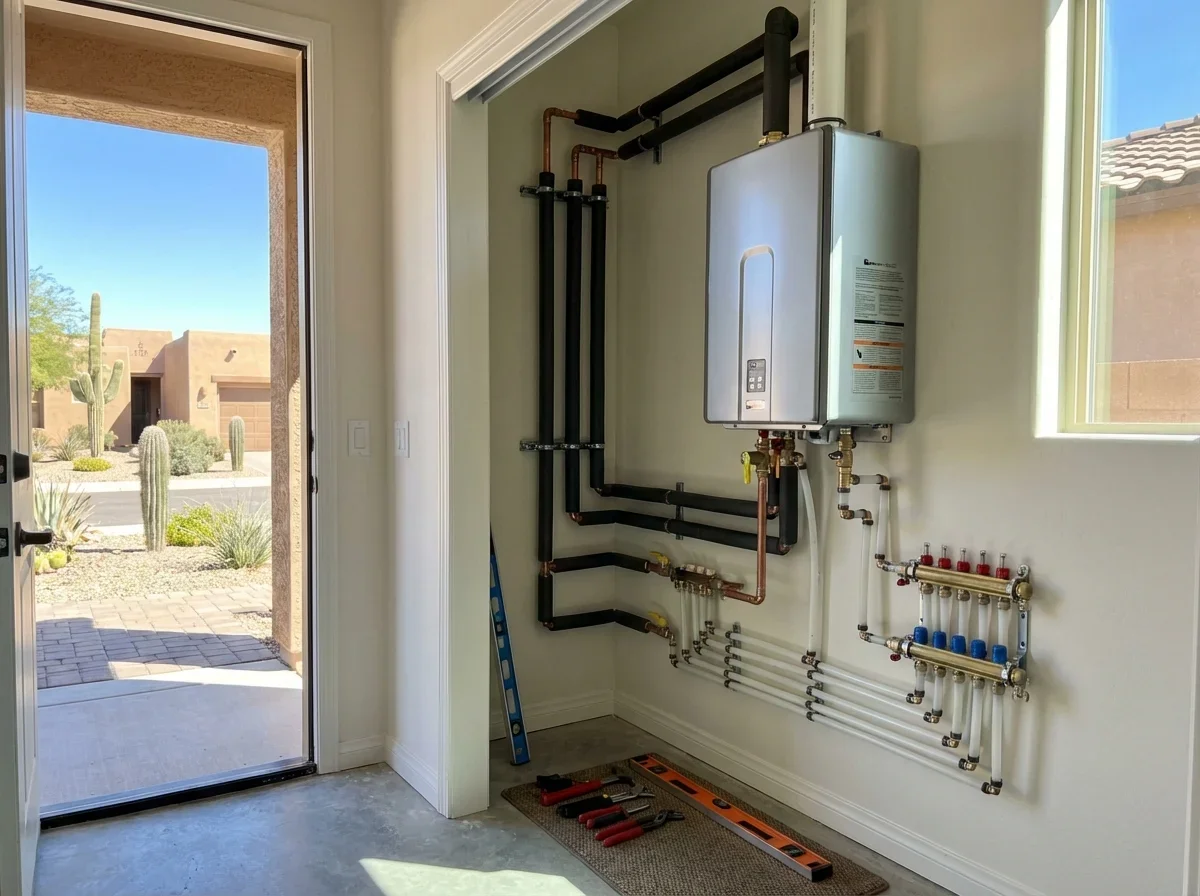
The Water Heater Installation Process
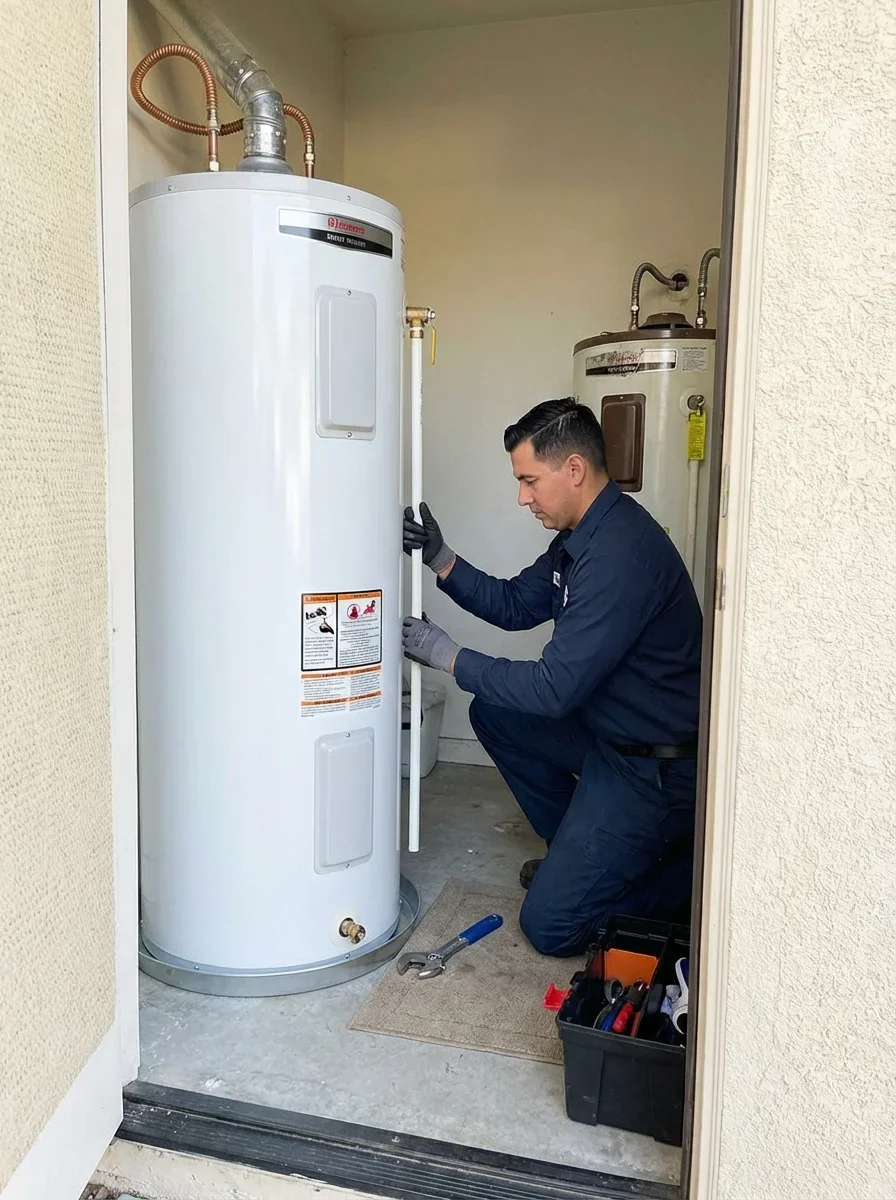
Professional installation takes 4-6 hours for a straightforward tank replacement, or a full day for tankless conversions.
Here's what happens.
1. Assessment and Code Compliance Review
The plumber inspects your existing installation, measures clearances, checks venting (for gas units), and confirms your home's gas line or electrical panel can support the new unit. In Phoenix, attic installations require special attention to clearance and ventilation. Summer attic temps regularly hit 130°F, which affects performance and longevity.
They'll verify whether your home needs seismic bracing (required by Phoenix building code for all water heaters) and proper temperature/pressure relief valve piping that drains safely outside, not into the garage or living space.[2]
2. Permit Application
Licensed contractors pull the permit before starting work. The city approves standard replacements within 24-48 hours. Tankless conversions or capacity upgrades may require plan review, adding 3-5 business days.
3. Removal and Disposal
The old unit gets drained, disconnected from water/gas/electric, and hauled away. Responsible contractors dispose of old water heaters properly. Most get recycled for scrap metal. This is included in installation quotes from reputable plumbers.
4. Installation and Connection
The new water heater goes in, gets leveled, and connects to existing supply lines. Gas units require proper venting to prevent carbon monoxide buildup. This is where unlicensed handymen get people killed. Electric units need proper circuit breakers sized for the heating elements.
Tankless installations require additional steps: gas line upsizing (most homes have 1/2" lines; tankless needs 3/4"), dedicated electrical circuits for the control board, and upgraded venting (tankless units use PVC vent pipes instead of metal flues).
5. Inspection and Testing
The contractor tests for gas leaks (if applicable), verifies proper venting, sets the temperature (120°F is code max for residential in Arizona to prevent scalding), and confirms the pressure relief valve operates correctly. They run hot water to multiple fixtures to check performance.
The city inspector visits to verify code compliance, usually within 1-2 business days in Surprise and Buckeye, same-day in Phoenix if scheduled early. No inspection means no permit closure, which creates problems during home sales.
6. Homeowner Education
Good contractors explain the shutoff valve location, show you how to read the temperature setting, and outline maintenance requirements. For tankless units, they'll emphasize the annual descaling schedule. Non-negotiable in Phoenix's hard water environment.
Total timeline: Tank replacement completes in one day including inspection. Tankless conversions often require two visits: rough-in work and inspection on day one, finish work and final inspection on day two.
✓ Choosing a Contractor
How to Choose a Water Heater Contractor
You need hot water today. That urgency makes you vulnerable to the first company that answers the phone.
Don't do it.
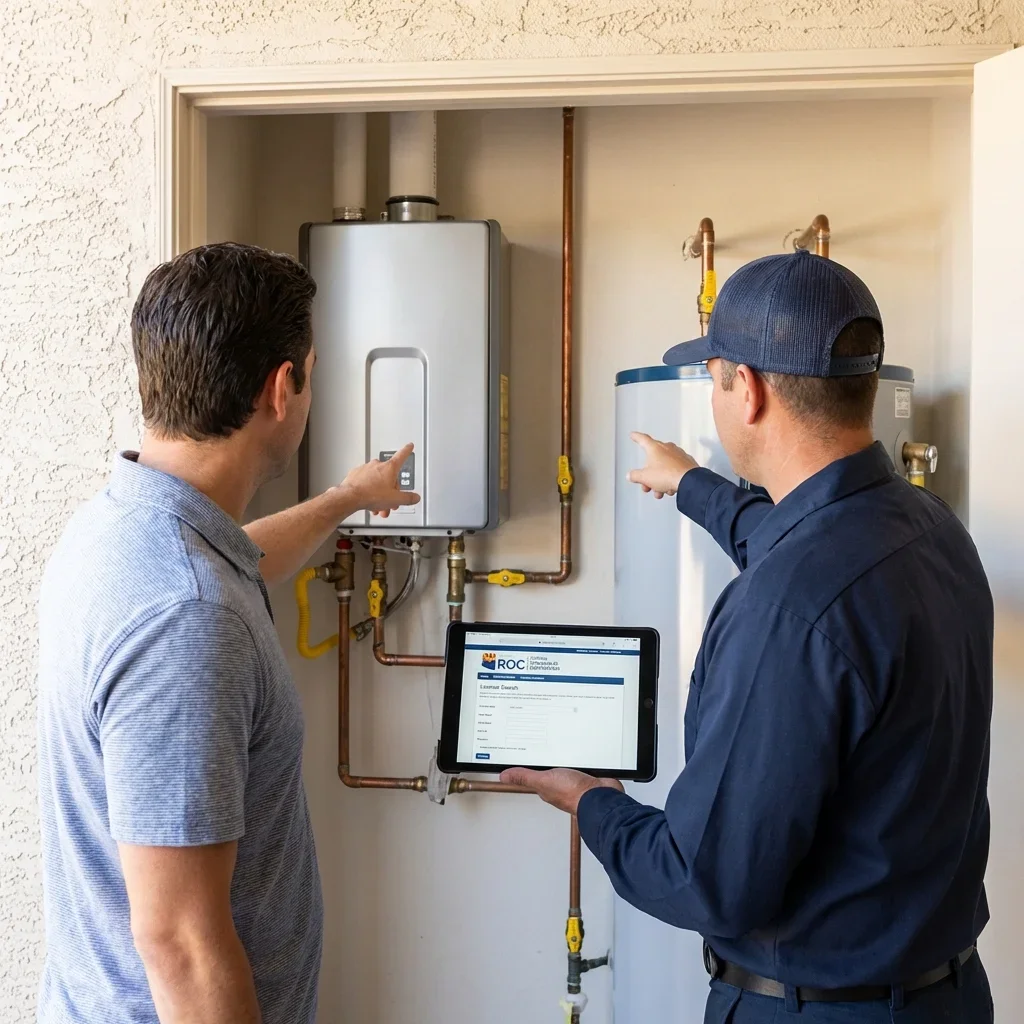
Verify Arizona ROC licensing first. Every plumber performing water heater work over $1,000 must hold an active Registrar of Contractors license. Search their license number at roc.az.gov. It takes 30 seconds. Check for complaints, citations, and whether they're licensed for plumbing (not just handyman services). An active license means they've posted a bond, carry liability insurance, and passed competency exams.
Ask these questions before anyone touches your water heater:
"Do you pull permits for water heater replacement?"
The only acceptable answer is yes. If they offer to skip permits to save money or time, walk away. Unpermitted work voids warranties, complicates insurance claims, and creates title issues when you sell. Phoenix, Gilbert, and all surrounding cities require permits for water heater installation. No exceptions.
"What's included in your installation price?"
Itemize everything: removal and disposal of old unit, permit fees, code-required upgrades (expansion tanks, seismic straps, pressure relief valve piping), testing, and inspection coordination. Lowball quotes often exclude these necessities, then hit you with "unexpected" charges mid-job.
"How do you handle Phoenix's hard water with tankless installations?"
If they don't mention water treatment, sediment filters, or annual descaling requirements, they don't understand local conditions. Tankless units in untreated Phoenix water fail early and expensively.
Red flags that should end the conversation:
- No physical business address (just a phone number or PO box)
- Pressure to decide immediately or "today-only" pricing
- Cash-only payment or requests for full payment upfront
- Unwilling to provide references from recent Phoenix-area jobs
- No mention of manufacturer warranties or their own labor warranty
- Offers to use "a guy I know" instead of licensed subcontractors
Green flags worth paying for:
- Detailed written estimates that break down labor, materials, and permits
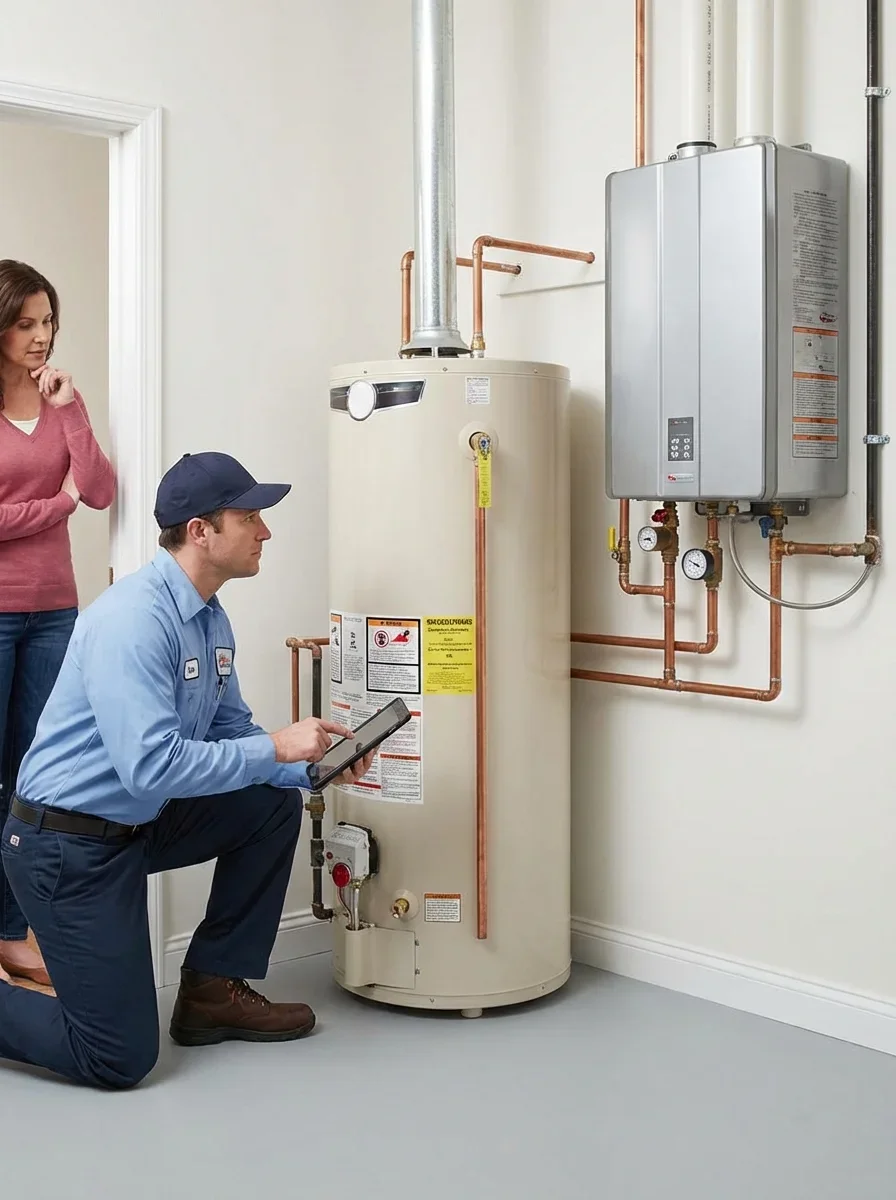
- Explains tank vs tankless options specific to your household size and usage
- Discusses Phoenix hard water impact and recommends treatment solutions
- Provides manufacturer warranty registration and tracks it for you
- Offers maintenance plans for annual descaling (tankless) or anode rod inspection (tank)
- Responds to questions about energy efficiency, recovery rates, and lifespan expectations
The cheapest quote usually costs the most. Water heaters installed wrong leak, fail early, void warranties, and create liability when someone gets scalded or carbon monoxide enters living spaces. Licensed plumbers in Mesa and Tempe charge $1,500-$2,500 for standard tank replacement because they're doing it correctly. With permits, code compliance, and accountability.
You can find someone on Craigslist who'll do it for $800. You'll pay the difference later when you sell the house and the buyer's inspector flags unpermitted work. Or when the unit fails at year three instead of year ten.
Compare at least three licensed contractors. Ask the same questions. Check their references. Verify their ROC license is active and complaint-free.
Then choose based on competence and communication, not just price.
Your water heater is a safety device as much as a convenience. Treat the selection process accordingly.
Top Contractors for Water Heater Repair & Installation
View all →


Frequently Asked Questions
- Arizona Legislature. "Arizona Revised Statutes - Water Heaters." https://www.azleg.gov/ars/36/01361.htm. Accessed April 07, 2026.
- City of Phoenix. "City of Phoenix Residential Building Code Requirements." https://up.codes/viewer/phoenix/irc-2018/chapter/28/water-heaters#28. Accessed April 07, 2026.
Estimate Your Water Heater Repair & Installation Cost
Get an instant price range based on your project details.
Related Articles