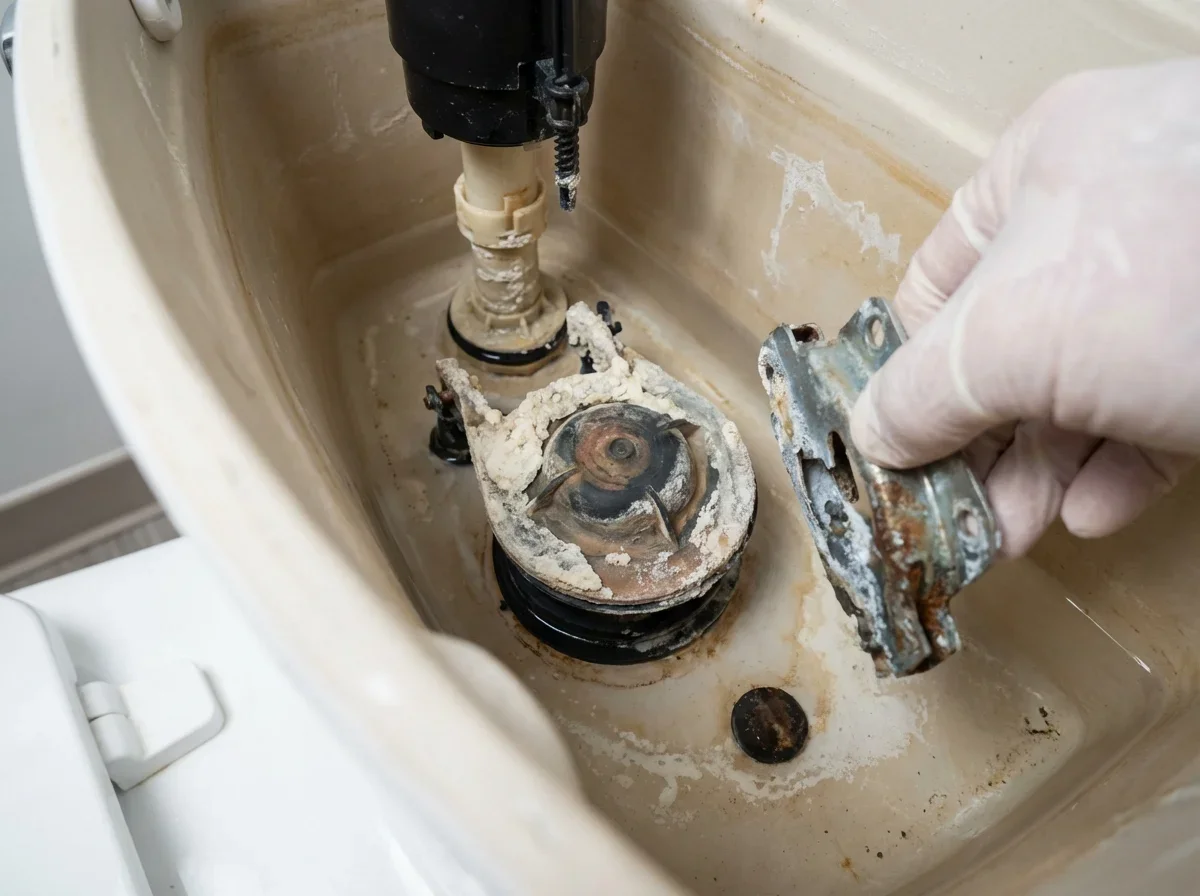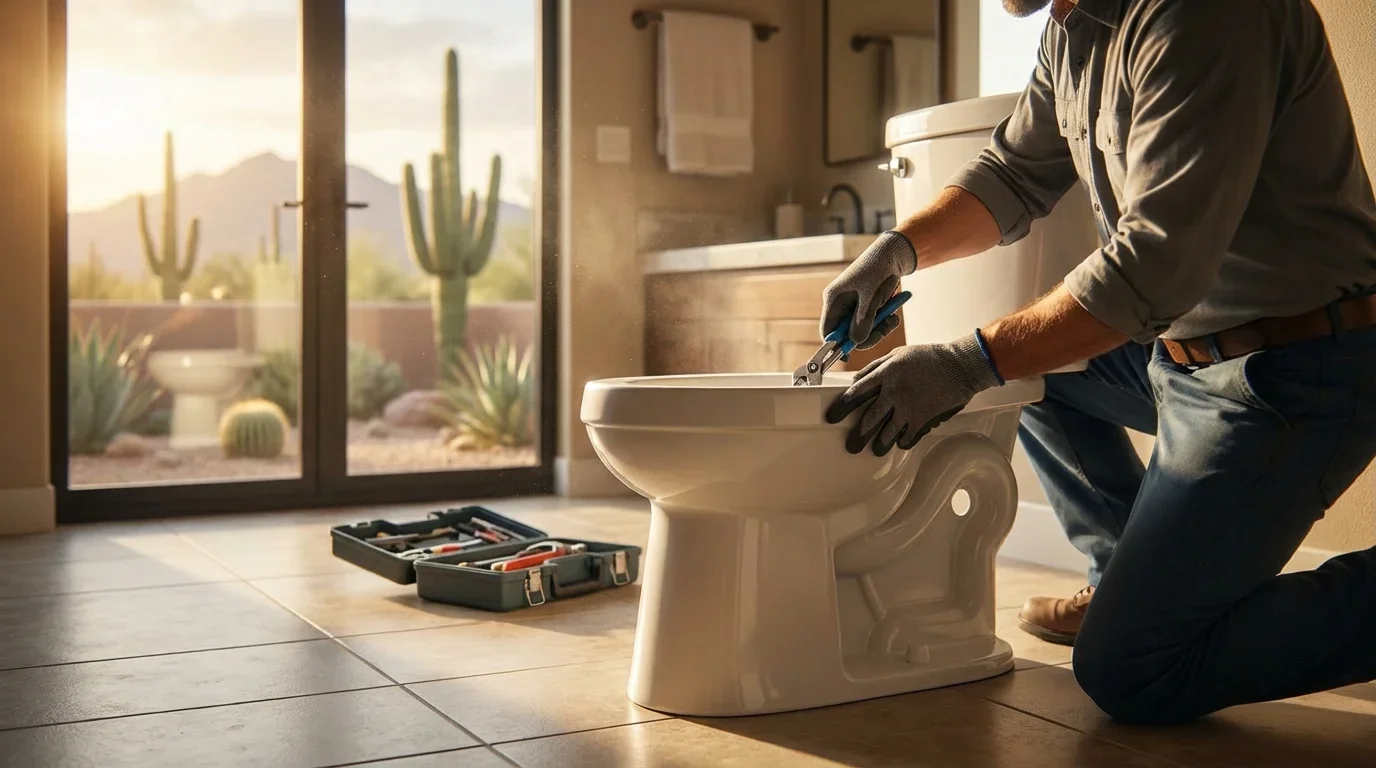
Toilet repair and installation services address common issues like running toilets, weak flushing, leaks, clogs, and outdated fixtures that waste water and money. Phoenix plumbers repair or replace flappers, fill valves, wax rings, and other components, or install new high-efficiency toilets that reduce water consumption—especially valuable with Arizona's water conservation concerns. Professional installation ensures proper sealing, correct rough-in measurements, and code-compliant connections for reliable, leak-free operation.
! Common Issues
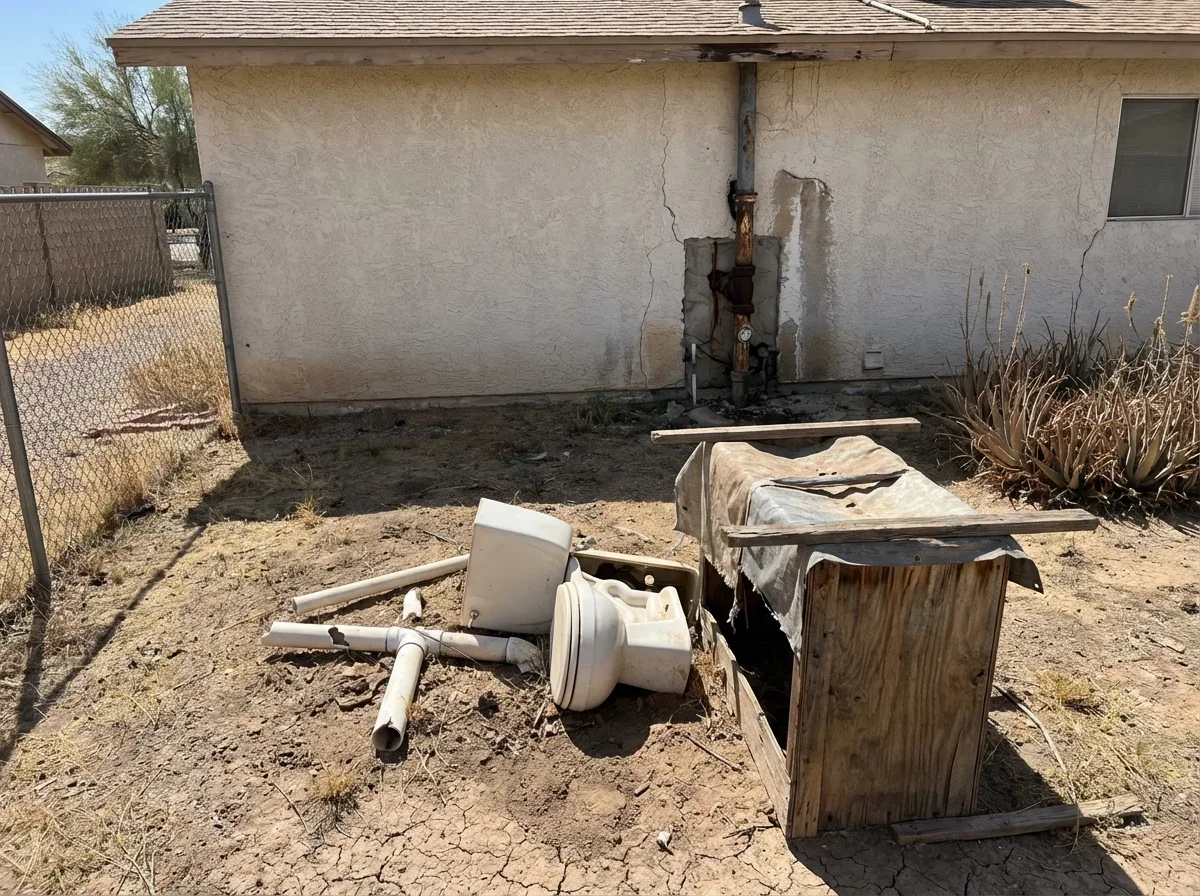
Signs You Need Toilet Repair in Phoenix
You hear it running hours after anyone flushed. You see water creeping across the tile near the base. You jiggle the handle three times before it stops.
These aren't quirks — they're warning signs that cost you money every day.
Phoenix's notoriously hard water accelerates toilet component failure. Mineral buildup from 300+ ppm calcium carbonate clogs fill valves, hardens flappers, and corrodes flush mechanisms. A running toilet wastes 200+ gallons per day. At Phoenix water rates, that's $40-$60 per month literally draining away.
Common problems homeowners in Scottsdale and Chandler face:
- Constantly running toilet — usually a worn flapper or faulty fill valve ($150-$250 repair)
- Weak or incomplete flush — mineral buildup in rim jets or a failing flush valve ($120-$200)
- Water pooling at the base — failed wax ring seal requiring toilet removal ($200-$350)
- Phantom flushing — slow leak from tank to bowl, often unnoticed until the water bill arrives ($150-$225)
- Tank takes forever to refill — clogged fill valve from hard water scale ($125-$200)
Sound familiar? Your toilet runs for 10 minutes after every flush. You replaced the flapper twice last year. It helped for a month, then started again. Now you're jiggling the handle constantly and the water bill jumped $45.
What happens if you wait: A slow leak from a bad wax ring seeps into the subfloor. In Arizona's slab-on-grade construction, that moisture can wick into drywall and create hidden mold.
Toilets older than 15 years (pre-2007) use 3.5-7 gallons per flush. Replacing with a 1.28 GPF WaterSense model saves 10,000+ gallons annually for a family of four.
If your toilet was installed before 1994, it's using at least 3.5 gallons per flush. Modern low-flow models use 1.28 GPF and qualify for Phoenix water rebates.[2]
The payback period is usually under three years just from water savings.
$ Cost Guide
What Does Toilet Repair Cost in Phoenix?
Most toilet repairs in the Phoenix metro fall between $150-$400 depending on the problem and whether the toilet needs to be removed. Installation of a new toilet runs $300-$600 including the fixture, labor, and proper wax ring sealing.
Common Repair Pricing
| Issue | Typical Cost | Parts | Notes |
|---|---|---|---|
| Flapper replacement | $150-$225 | $8-$15 | Hard water = faster deterioration |
| Fill valve replacement | $175-$250 | $12-$25 | Mineral buildup is the #1 cause |
| Wax ring replacement | $200-$350 | $4-$8 | Requires toilet removal |
| Flush valve assembly | $225-$350 | $25-$40 | Complete tank rebuild |
| Tank-to-bowl gasket | $250-$400 | $10-$20 | Involves full toilet disassembly |
Most licensed plumbers in Mesa and Gilbert charge a $95-$150 service call fee that applies toward the repair. Weekend and evening rates run 20-30% higher.
Emergency repairs (overflowing toilet, major leak) can hit $250-$500 depending on timing.
Installation and Replacement Costs
| Toilet Type | Fixture Cost | Install Labor | Total |
|---|---|---|---|
| Basic two-piece | $120-$200 | $180-$250 | $300-$450 |
| Comfort height (ADA) | $180-$300 | $200-$275 | $380-$575 |
| Dual-flush WaterSense | $200-$350 | $200-$275 | $400-$625 |
| One-piece elongated | $250-$450 | $225-$300 | $475-$750 |
Installation labor includes: removing old toilet, inspecting and replacing wax ring, checking flange condition, installing new toilet, testing flush and seal, hauling away old fixture.
Arizona ROC licensing matters here. Any toilet installation requiring a permit (commercial buildings, multi-family properties, or work exceeding $1,000 including related plumbing) must be performed by a licensed contractor holding a CR-37, R-37, or C-37 license.[1]
In Tempe and Glendale, code enforcement occasionally audits unpermitted work during home sales. Unpermitted toilet installs can delay closing.
Phoenix water rebates: The city offers $75-$150 rebates for WaterSense-labeled toilets using 1.28 gallons per flush or less. Your plumber should provide documentation for the rebate application.[2]
DIY vs. Professional Reality
| DIY / Home Depot Special | Licensed Plumber | |
|---|---|---|
| Cost | $150-$250 (fixture + supplies) | $300-$600 |
| Wax ring seal | Hope you got it right the first time | Guaranteed leak-free |
| Flange inspection | You won't know it's cracked until it leaks | Identified and repaired upfront |
| Warranty | 90 days on parts, zero on labor | 1-2 years on labor and installation |
| Permit (if required) | Your problem at sale time | Pulled and closed properly |
That $200 savings disappears fast when you discover the flange was cracked, the wax ring wasn't compressed evenly, and water's been seeping into the subfloor for six months.
> What to Expect
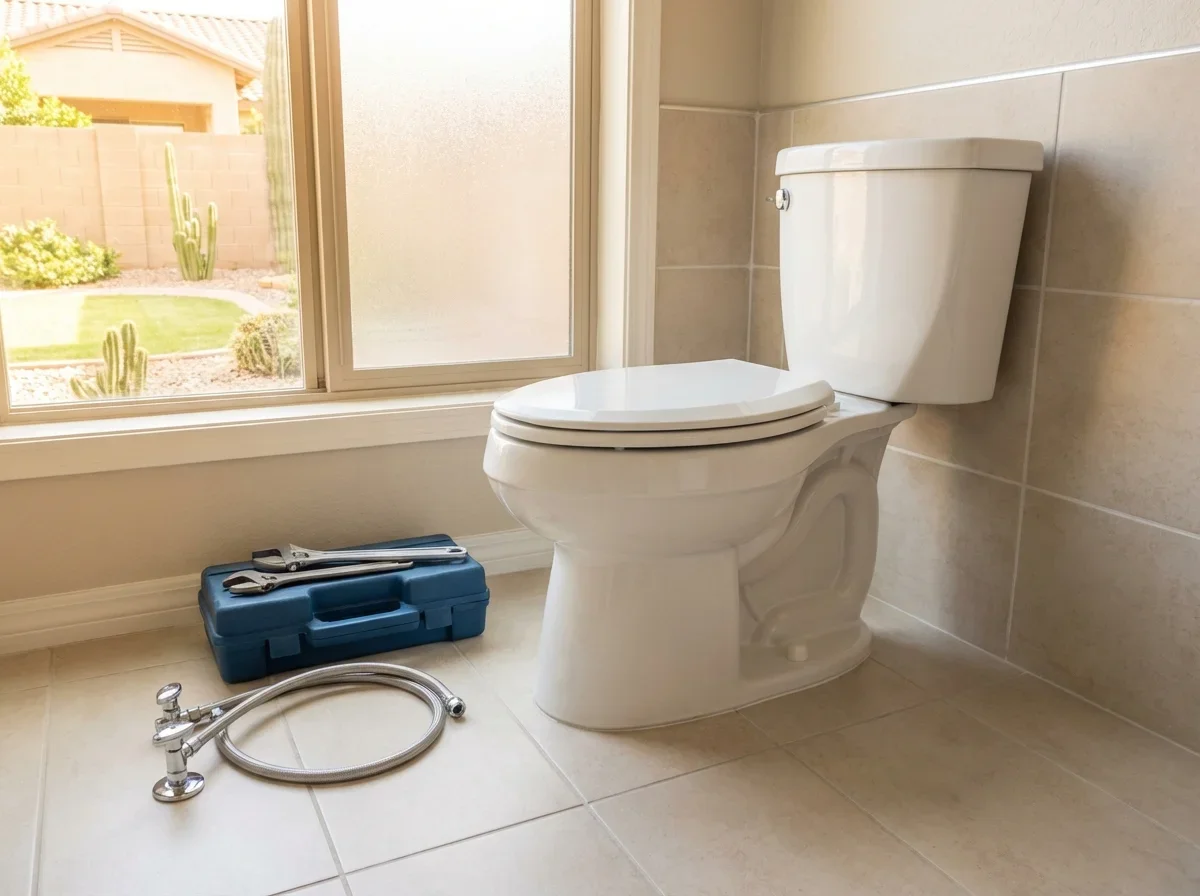
The Toilet Replacement Process
A professional toilet installation in Phoenix takes 1.5-3 hours depending on condition of the existing flange and whether any surprises lurk underneath.
Here's what happens:
1. Assessment and Shut-Off (15 minutes)
The plumber shuts off the water supply valve, drains the tank and bowl, and removes the old toilet. They inspect the closet flange (the ring that connects the toilet to the drain pipe).
In older Peoria and Surprise homes with cast iron drains, corroded or broken flanges are common.
If the flange sits below floor level or shows cracks, it needs repair or replacement before the new toilet goes in. Flange repair adds $100-$250 to the job.
2. Flange Repair and Prep (30-60 minutes if needed)
Cracked flanges get replaced or reinforced with a repair ring. The flange must sit flush with or slightly above the finished floor. If it's recessed, the wax ring won't seal properly.
The plumber scrapes away old wax residue, checks that the drain opening is clear, and ensures the flange bolt slots are intact.
3. New Toilet Installation (30-45 minutes)
A fresh wax ring gets centered on the flange. The plumber carefully lowers the new toilet onto the ring, compressing it evenly to create a watertight seal. Closet bolts get tightened in a criss-cross pattern to avoid cracking the porcelain base.
The water supply line connects to the fill valve, and the plumber tests for leaks.
4. Testing and Adjustment (15-20 minutes)
The toilet gets flushed 3-5 times while the plumber checks for leaks at the base, supply line connection, and tank-to-bowl seal. Fill valve height and flush valve chain length get adjusted for optimal performance.
In Phoenix's hard water, setting the fill level slightly lower extends component life.
Permit and Code Requirements
Most single-family residential toilet replacements don't require a permit in Phoenix, Chandler, or Gilbert. However, permits ARE required for:
- New toilet installations (adding a bathroom)
- Commercial or multi-family properties
- Any plumbing work exceeding $1,000 in total contract value
- Relocating drain lines or moving the toilet location
When a permit is required, only a contractor with an active Arizona ROC license (CR-37, R-37, or C-37) can legally pull it.[1]
Unpermitted work discovered during a home sale can force expensive retroactive permitting or even toilet replacement.
Timeline: Standard replacement takes one service visit. Flange repairs or permit work may require a second visit after inspection approval.
✓ Choosing a Contractor
How to Choose a Toilet Repair Contractor in Phoenix
The barrier to entry for toilet work is low. Anyone with a wrench can swap a flapper.
The difference between a $150 repair that lasts six months and a $200 repair that lasts five years is the plumber's understanding of Phoenix's hard water.
Arizona ROC Licensing Requirements
For simple repairs (flapper, fill valve, wax ring), no license is technically required under Arizona law if the total job is under $1,000 and no permit is needed.
But here's the problem: you have no recourse if unlicensed work goes wrong. The Arizona Registrar of Contractors can't help you recover money from someone who isn't registered.
For toilet installations or any plumbing work requiring a permit, the contractor MUST hold an active CR-37 (Plumbing), R-37 (Residential Plumbing), or C-37 (Dual Residential/Commercial Plumbing) license.[1] Verify at roc.az.gov. It takes 30 seconds and shows complaint history, bond status, and license expiration.
Insurance matters more than you think. Arizona doesn't require contractors to carry workers comp (yes, really). If an uninsured plumber gets hurt in your bathroom, your homeowner's policy could be on the hook.
Ask for proof of general liability AND workers comp before scheduling.
Questions to Ask Before Hiring
"Do you carry workers comp, or are all your technicians covered as employees?"
This eliminates the insurance gap. Many small plumbers operate as sole proprietors with zero coverage.
"What's included in your service call fee?"
Some plumbers charge $100 just to show up, then quote the repair. Others apply the service fee toward work. Know before they arrive.
"Do you inspect the flange before installing a new toilet?"
The right answer is "always." Skipping this step causes 80% of premature wax ring failures in Arizona's shifting soil.
"What brand of parts do you install for repairs?"
Generic flappers and fill valves fail faster in hard water. Quality plumbers use Fluidmaster, Korky, or manufacturer OEM parts.
"Can you provide documentation for the Phoenix water rebate?"
If you're upgrading to a WaterSense toilet, the plumber should give you the model number, receipt, and installation date needed for the city rebate application.[2]
Red Flags
- Quotes over the phone without seeing the toilet or flange condition
- Pressure to replace the toilet when a $150 repair would solve the problem
- No mention of inspecting the wax ring or flange during installation quotes
- Can't produce ROC license number or insurance certificates on request
- Uses phrases like "we don't bother with permits for this" on work that legally requires one
The best plumbers in Scottsdale and Mesa have seen every flange disaster, every hard-water component failure, and every DIY repair gone sideways. They'll tell you honestly whether a $175 fill valve replacement buys you three more years or if the 1987 toilet is costing you $600 annually in wasted water and deserves replacement.
Compare multiple licensed professionals in the directory above. Toilet work is straightforward, but experience with Phoenix's water and slab construction makes all the difference.
Top Contractors for Toilet Repair & Installation
View all →


Frequently Asked Questions
- Arizona Registrar of Contractors. "Plumbing: Residential Permit Exemptions." https://roc.az.gov/sites/default/files/2022-06/PLB%20Residential%20Permit%20Exemptions.pdf. Accessed April 07, 2026.
- City of Phoenix Water Services Department. "Water Efficiency Rebate Programs." https://www.phoenix.gov/waterservices/programs/rebates/water-efficiency. Accessed April 07, 2026.
Estimate Your Toilet Repair & Installation Cost
Get an instant price range based on your project details.
Related Articles