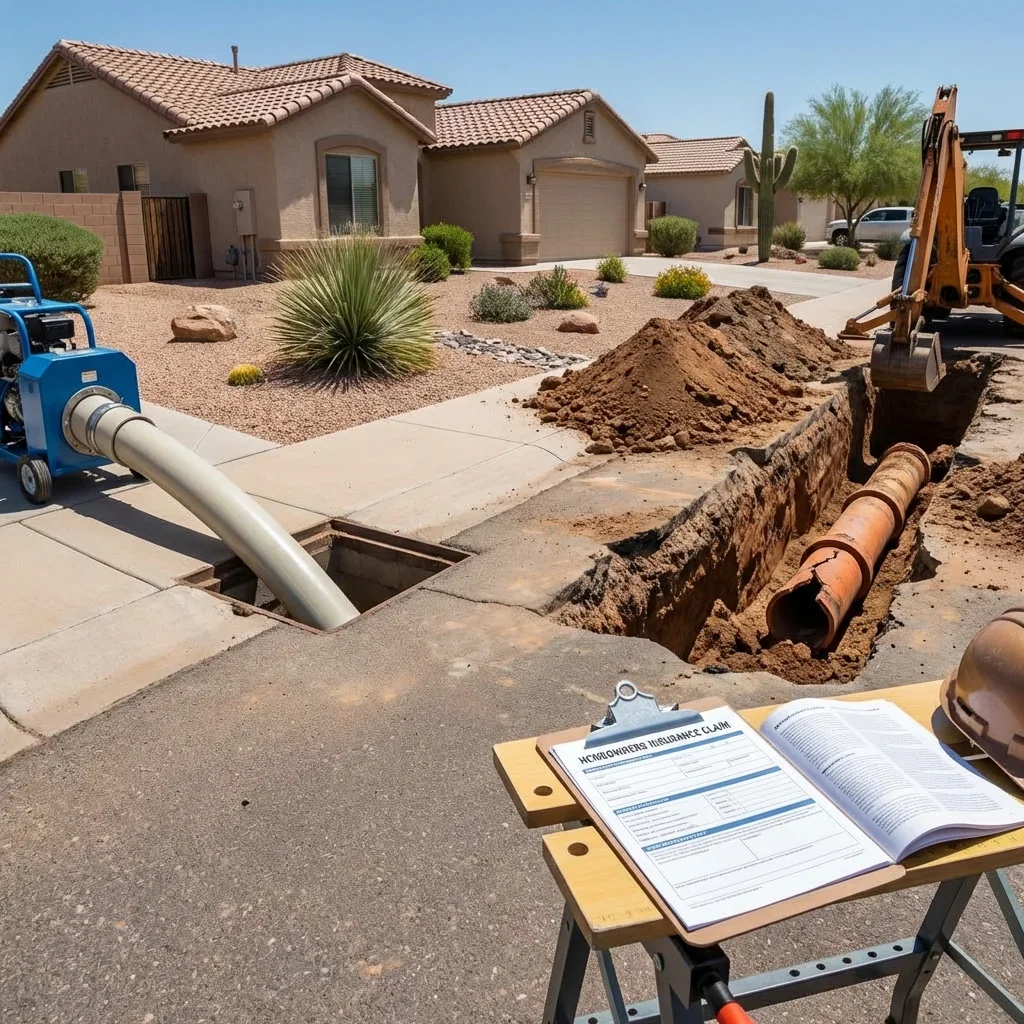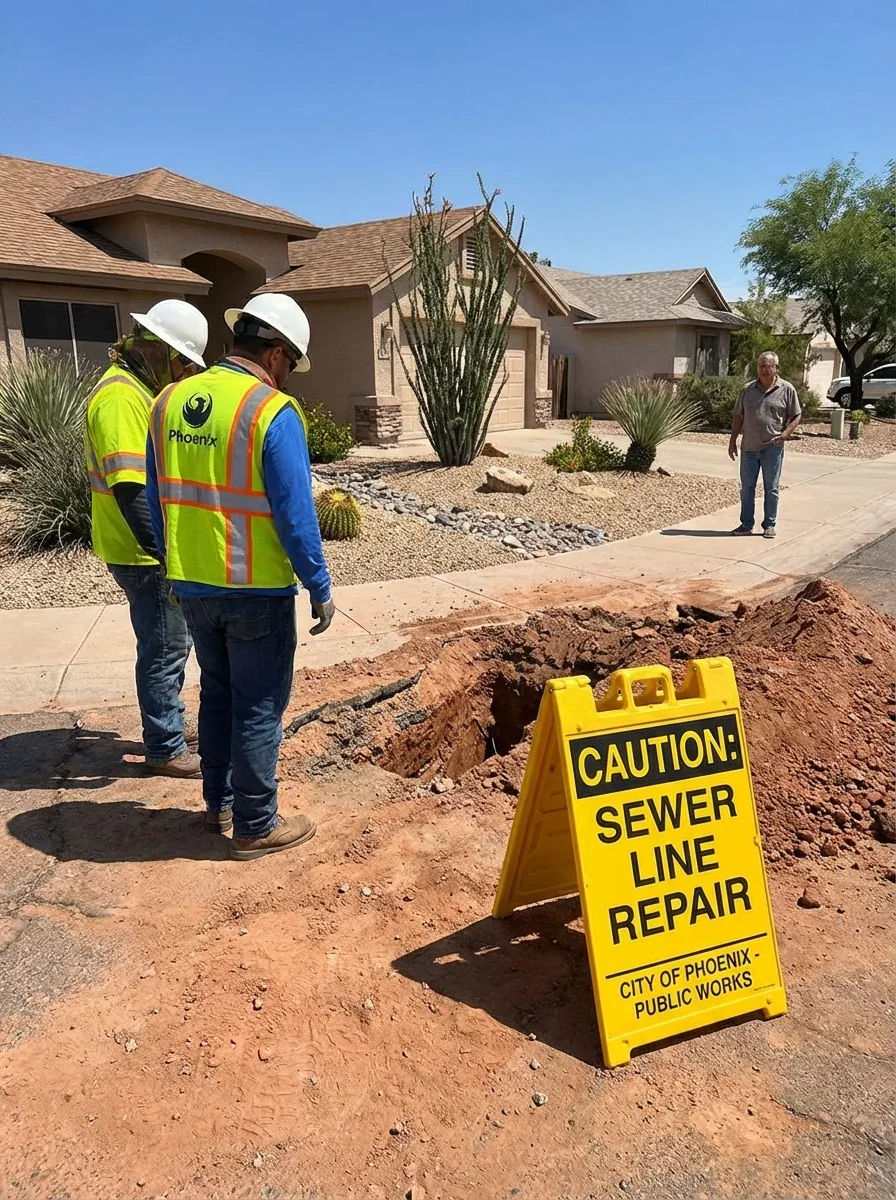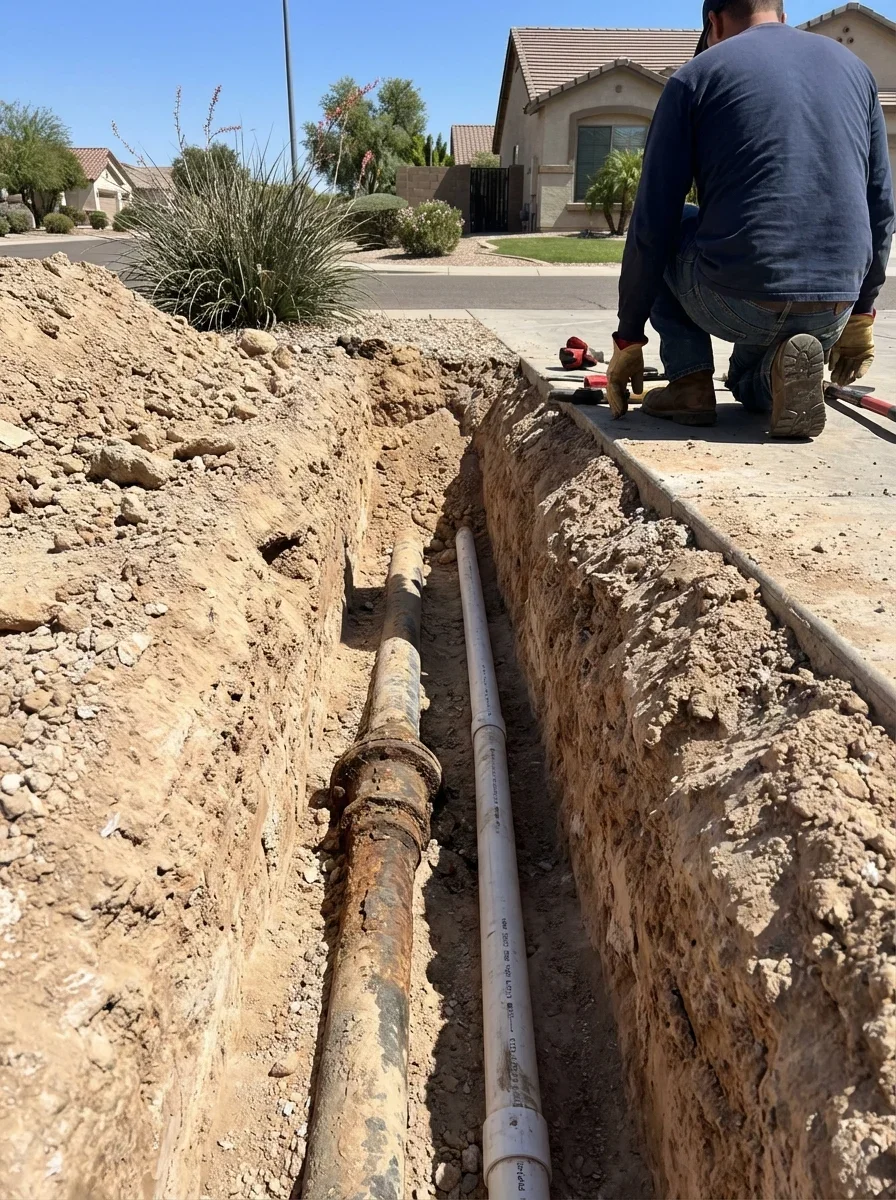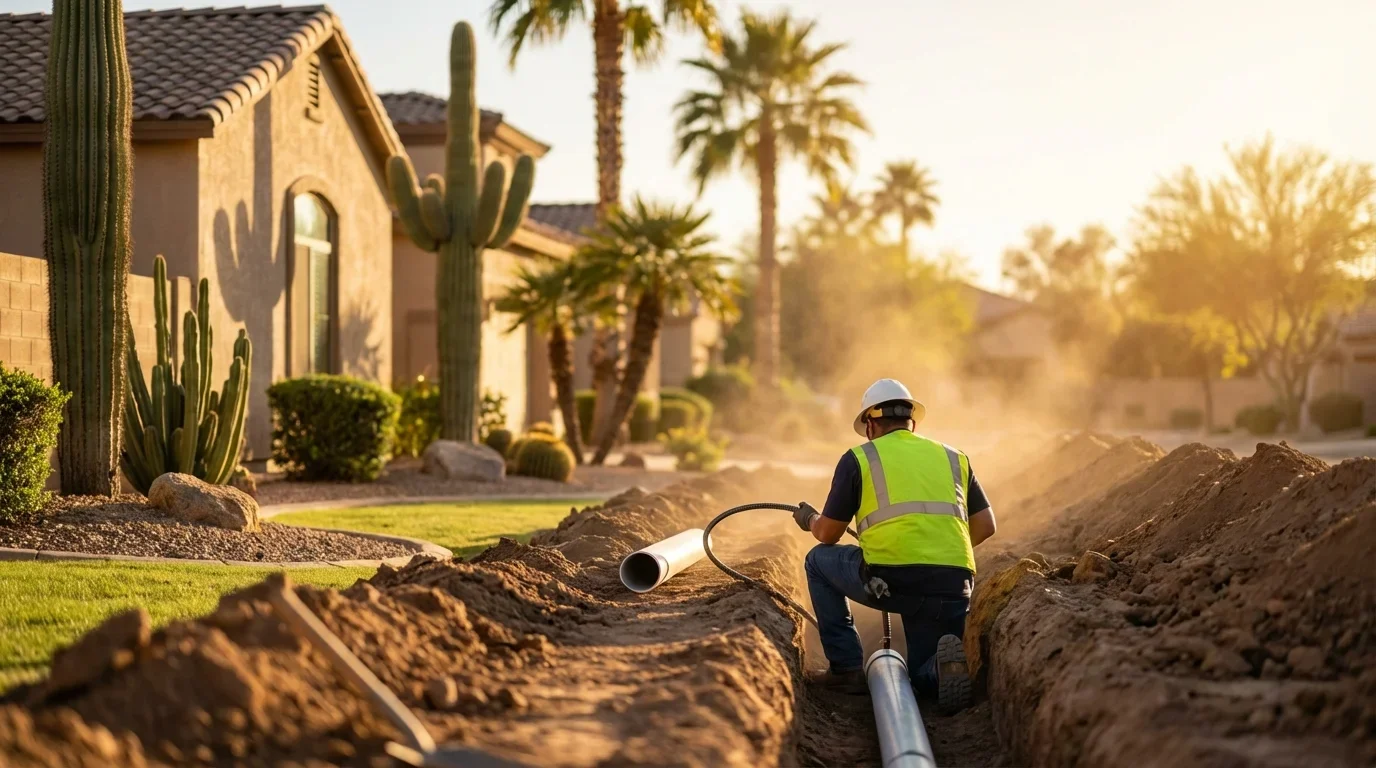
Sewer line problems require immediate professional attention to prevent sewage backups, property damage, and health hazards. Phoenix plumbers offer both traditional excavation and modern trenchless repair methods to fix cracked, collapsed, or root-damaged sewer lines efficiently. From pipe bursting to cured-in-place pipe (CIPP) lining, ROC-licensed contractors provide permanent solutions that restore proper drainage while minimizing landscape disruption and repair time.
! Common Issues
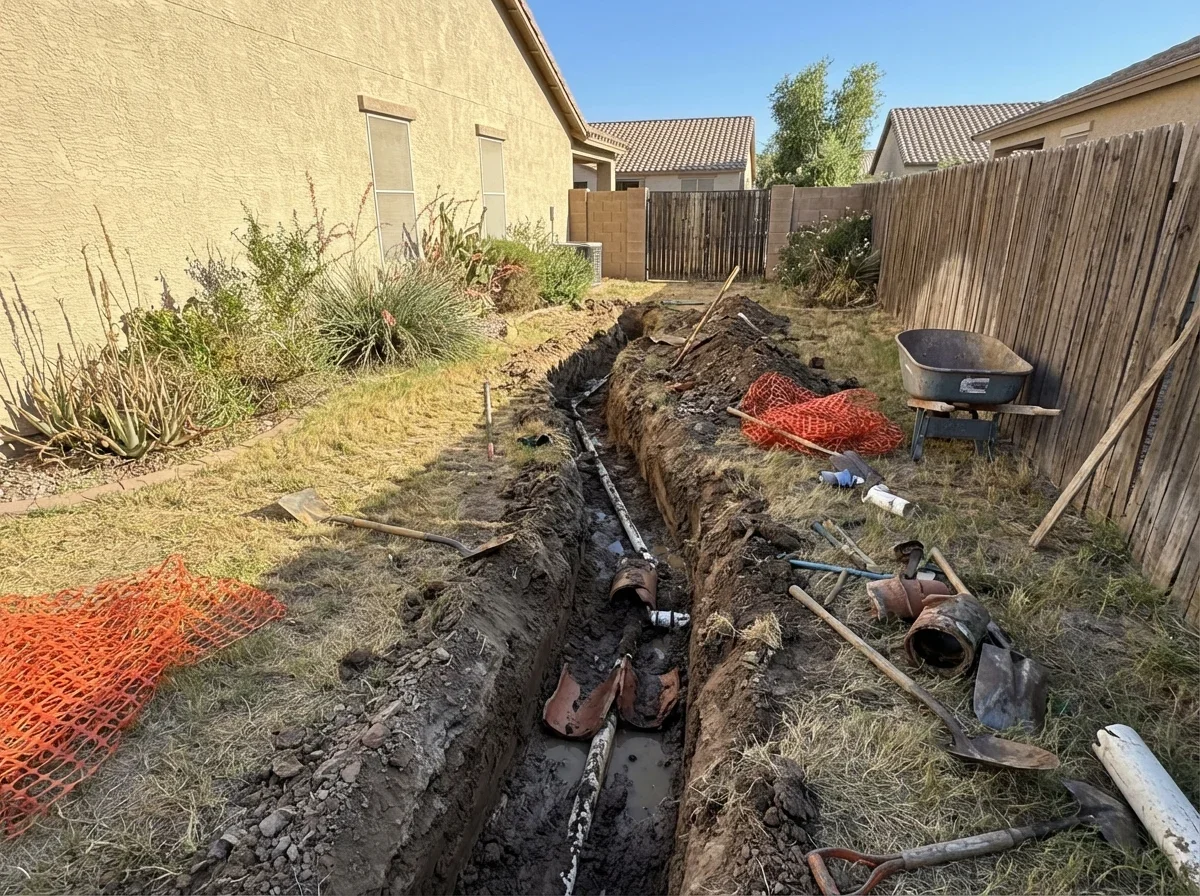
When Do You Need Sewer Line Repair?
You don't wake up one morning with a broken sewer line. It announces itself slowly — then all at once.
The early warnings: Drains throughout the house slow down at the same time. Your shower backs up when you flush the toilet. You smell sewage near your foundation or in the yard, especially after irrigation. Tree roots from those mature mesquites in Arcadia or Encanto neighborhoods don't care about your main line — they go straight for the moisture.
Then the Arizona clay soil does its thing.
Monsoon season floods the ground, the clay swells, your pipes shift. Three months later during the dry season, that same clay contracts and cracks whatever moved. Homes built before 1980 in Phoenix, Tempe, and older Mesa neighborhoods have cast iron drain lines that were never meant to handle this expansion-contraction cycle for 40+ years.
Sound familiar? Multiple drains clogging at once. You called a plumber who snaked the line — it worked for two weeks. Now you're back to square one, except there's a wet spot near your foundation and the smell won't go away.
What happens if you wait: That small root intrusion becomes a complete blockage. The standing sewage finds the lowest point — usually your shower or the cleanout in your garage.
Clay soil around Chandler and Gilbert shifts again during summer heat, and that hairline crack becomes a full break. Now you're not just looking at a repair — you need emergency excavation, possible foundation underpinning if the leak caused settling, and a landscape crew to rebuild whatever got torn up.
The cost difference between addressing this during the camera inspection phase versus after a sewage backup in your home? Typically $3,000-$8,000 more for emergency work, plus hotel stays while your house is uninhabitable.
Warning Signs Requiring Immediate Action
- Sewage backing up into bathtubs, showers, or floor drains
- Water pooling against your foundation after running water inside
- Persistent sewage odor that doesn't go away after drain cleaning
- Multiple toilets gurgling or slow-draining simultaneously
- Sudden drop in water pressure throughout the house
- Patches of extra-green grass in your yard (sewage acts as fertilizer)
- Cracks in your foundation appearing near plumbing cleanouts
Phoenix plumbers see the same pattern in older neighborhoods: homeowner ignores the slow drains, calls for routine cleaning, discovers during the sewer camera inspection that 60% of the pipe has root intrusion and the cast iron is corroded through in three places.
At that point, repair isn't an option.
$ Cost Guide
What Does Sewer Line Repair Cost in Phoenix?
The answer depends entirely on what's broken, where it's located, and whether you're willing to dig up your yard.
Traditional excavation in Phoenix metro runs $50-$250 per linear foot depending on depth and soil conditions. Hit caliche hardpan at 18 inches (and you will in Scottsdale, north Phoenix, and parts of Peoria) and you're paying for jackhammering through concrete-hard calcium carbonate. A typical residential sewer line replacement from house to street (60-100 feet) costs $8,000-$18,000 with excavation.
Trenchless methods cost more upfront but save you thousands in landscape restoration and weeks of construction disruption.
Traditional Excavation Pricing
| Scenario | Depth | Phoenix Area Cost | Timeline |
|---|---|---|---|
| Simple replacement, sandy soil | 2-4 feet | $50-$90/ft | 2-3 days |
| Standard depth, mixed soil | 4-6 feet | $90-$150/ft | 3-5 days |
| Deep line, caliche layer | 6-8+ feet | $150-$250/ft | 5-7 days |
| Emergency repair (weekend/holiday) | Any | Add 50-100% | 1-2 days |
Total project costs (including permits, inspection, backfill, compaction):
- 60-foot residential line: $8,000-$15,000
- 100-foot line to street: $12,000-$25,000
- Commercial property (150+ feet): $20,000-$40,000+
Add $2,000-$5,000 for landscape restoration if your line runs under pavers, irrigation, or mature landscaping.
Trenchless Method Costs (CIPP Lining & Pipe Bursting)
Cured-in-place pipe (CIPP) lining: A resin-saturated liner is inserted through existing cleanouts, inflated, and heat-cured to create a new pipe inside the old one. No digging except at access points.
- Cost: $80-$250 per linear foot
- 60-foot residential line: $8,000-$15,000
- 100-foot line: $12,000-$25,000
- Timeline: 1-2 days including cure time
- Lifespan: 50+ years (manufacturer warranties typically 10-50 years)
- Works for: Root intrusion, corrosion, minor cracks — not for collapsed pipes
Pipe bursting: A hydraulic head breaks apart the old pipe while simultaneously pulling new HDPE pipe into place. Requires access pits at both ends.
- Cost: $60-$200 per linear foot
- 60-foot line: $6,000-$12,000
- 100-foot line: $10,000-$20,000
- Timeline: 1-3 days
- Works for: Collapsed pipes, major breaks, upsizing diameter
Factors Affecting Your Final Cost
Depth and accessibility: Lines under driveways in Gilbert or beneath pool decks in Surprise require special access or directional boring. Add $2,000-$5,000.
Soil conditions: Caliche means renting a mini-excavator with a jackhammer attachment. Sandy loam in Mesa valleys digs easy but requires more shoring to prevent cave-ins.
Permit and inspection fees: Phoenix requires permits for sewer work. Budget $200-$500 for permits, plus inspection scheduling that can delay work 1-2 days.
Tree root removal: Mature trees in older Glendale and Phoenix neighborhoods mean ongoing root intrusion. Hydro jetting clears roots before repair — add $350-$600.
Emergency timing: Weekend or after-hours emergency repairs cost 50-100% more than scheduled work.
That 2 AM sewage backup? You're paying premium rates, but at least it stops the damage.
Phoenix contractors offering "too good to be true" pricing often aren't factoring in caliche excavation or proper compaction. You'll pay later when your driveway settles 4 inches because they didn't compact backfill in 6-inch lifts.
> What to Expect
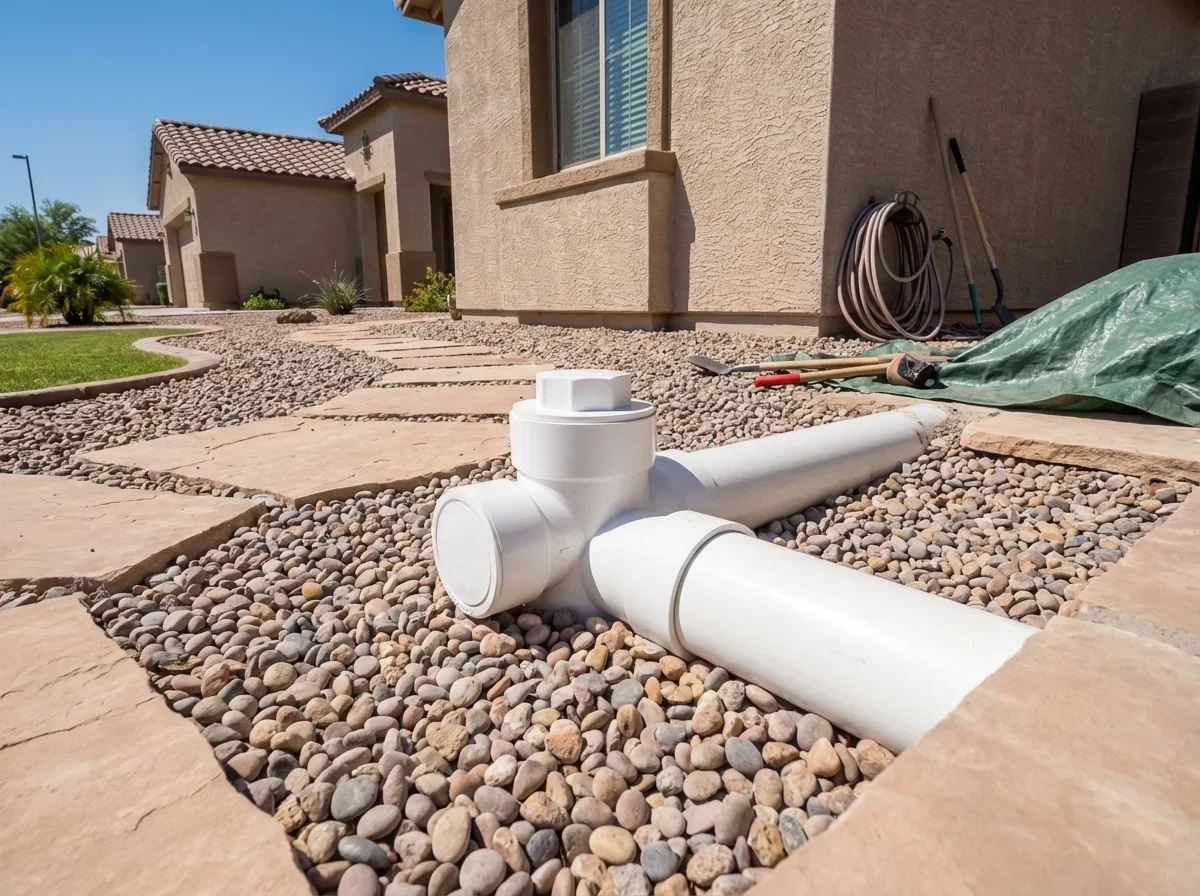
The Sewer Line Repair Process
A legitimate Phoenix sewer contractor doesn't show up and start digging. They diagnose first, explain your options, pull permits, and document everything for your records and future home sales.
1. Sewer Camera Inspection and Diagnosis
Before anyone quotes a price, they need to see what's wrong.
A sewer camera inspection costs $200-$400 and shows exactly where the problem is, what caused it, and whether you need repair or full replacement. The camera records footage that gets saved to USB or email — you'll want this for insurance claims and contractor comparisons.
The plumber locates the break from above ground using a signal transmitter, marks it with spray paint, and measures the depth. In Phoenix homes built before 1990, they're usually finding corroded cast iron, root intrusion at joints, or clay soil shifting that cracked the pipe.
2. Method Selection and Permit Application
You get options — traditional excavation or trenchless, with honest pros and cons for your specific situation:
Excavation makes sense if your line is collapsed, you're already doing major landscape work, or the pipe runs shallow under accessible areas. You'll get a new line with 50-year PVC that handles Arizona's soil movement better than cast iron ever did.
Trenchless makes sense if your line runs under finished driveways in Chandler, beneath pool equipment in Buckeye, or through established landscaping you don't want destroyed. You pay more upfront, save thousands on restoration, and it's done in 1-2 days instead of a week.
The contractor pulls permits through Phoenix, Mesa, Scottsdale, or whichever municipality you're in. This takes 1-3 business days and requires proof of ROC licensing and insurance.
Unpermitted sewer work will haunt you during home sales and void insurance claims if something fails.
3. Excavation or Trenchless Installation
Traditional excavation timeline:
- Day 1: Mark utilities (call 811 at least 2 days prior), excavate trench, expose broken section
- Day 2: Remove old pipe, install new PVC, inspect joints, backfill in compacted lifts
- Day 3: Final grading, compaction testing if required by permit, landscape prep
Trenchless CIPP lining timeline:
- Day 1 morning: Clean line with hydro jetting, measure and prep liner, insert through cleanout
- Day 1 afternoon: Inflate liner, heat-cure with UV light or steam (4-6 hours)
- Day 2: Final camera inspection, reconnect lateral connections, backfill small access points
Trenchless pipe bursting timeline:
- Day 1: Dig small access pits at entry and exit points (4x4 feet typical)
- Day 2: Pull bursting head through, breaking old pipe while installing new HDPE
- Day 3: Backfill pits, final inspection, reconnect to main
4. Inspection and Certification
The municipality inspector reviews the work. They check pipe slope, joint integrity, proper backfill compaction, and that the new line matches permit drawings.
This inspection is required before the trench gets filled completely.
Contractors who "forget" to schedule inspections are gambling with your home's resale value.
You receive a final camera inspection video showing the completed repair, plus permit sign-off documents that stay with your home's records.
Seasonal Considerations in Phoenix
Best timing: October through April. Cooler temperatures, stable soil moisture, predictable weather. Contractors have more availability and pricing is slightly better than peak summer.
Monsoon season (July-September): Flash flooding can delay excavation work. If your line is already compromised, monsoons often trigger the final failure. Emergency repairs during storm season mean working between downpours and paying premium rates.
Summer (June-August): Ground crews working in 110°F heat means shorter work days and heat-safety breaks. Not ideal, but if you have sewage backing up, you don't wait for October.
✓ Choosing a Contractor
How to Choose a Sewer Line Contractor in Phoenix
The contractor you hire is either licensed, insured, and bonded through Arizona ROC — or they're not.
That's the first filter. Everything else is negotiable.
Arizona ROC Licensing Requirements
All plumbing contractors performing work over $1,000 must hold an active Arizona Registrar of Contractors license. For sewer work, you're looking for:
- C-37 Plumbing (commercial)
- R-37 Residential Plumbing (residential)
- CR-37 Dual Plumbing (both residential and commercial)
Verify the license at roc.az.gov before signing anything. Check for:
- Active status (not expired, suspended, or revoked)
- No recent complaints or violations
- Bond amount (minimum $4,000-$15,000 depending on license class)
Red flag: Contractor says "I'm getting my license next month" or "I work under my boss's license but he's not on-site."
Walk away. Unlicensed work voids permits, complicates insurance claims, and leaves you with zero recourse if something goes wrong.
Questions to Ask Before Hiring
"Can I see the camera inspection footage before you quote the work?" Legitimate contractors diagnose first, quote second. If they're quoting a full replacement without showing you the actual damage, they're guessing or padding.
"Will you pull permits and schedule inspections?" The answer must be yes. Contractors who "know a guy at the city" or suggest skipping permits to save money are setting you up for problems during home sales and insurance claims.
"What's included in your quote — excavation, backfill, compaction, hauling, cleanup, permit fees?" Itemized quotes prevent surprise charges. Phoenix contractors working in caliche soil should explicitly mention rock removal and compaction equipment in their bid.
"What warranty do you offer on labor and materials?" Reputable plumbers warranty new PVC installations for 1-2 years on labor, with manufacturer material warranties up to 50 years. Trenchless lining typically carries 10-50 year manufacturer warranties. Get it in writing.
"Do you carry workers comp insurance even though Arizona doesn't require it?" Arizona is one of few states that doesn't mandate workers comp coverage. If a crew member gets hurt on your property and the contractor has no coverage, you're liable. Verify insurance independently.
Don't just take their word.
What Separates Good Contractors from Bad Ones
Good contractors provide camera inspection footage, explain your options without pressure, pull permits without being asked, and give you copies of final inspection sign-offs. They don't bad-mouth trenchless methods if they don't offer them, and they don't oversell excavation if lining would work fine.
Bad contractors quote over the phone without seeing the damage, push one method because it's all they know, suggest skipping permits "to save money," or operate without ROC licenses under someone else's credentials.
The Phoenix metro has hundreds of licensed plumbers. Tempe, Scottsdale, Mesa, Chandler — every city has contractors who specialize in sewer work and know local soil conditions.
The directory on this site filters for active ROC licenses and verified insurance.
Compare at least three quotes, check references from jobs in your neighborhood, and verify everything independently at roc.az.gov before you sign.
You're not just hiring someone to fix a pipe. You're hiring someone whose work will either hold up through Arizona's soil shifts and monsoon flooding — or fail in three years and cost you twice as much to fix right.
Top Contractors for Sewer Line Repair & Replacement
View all →

Frequently Asked Questions
Estimate Your Sewer Line Repair & Replacement Cost
Get an instant price range based on your project details.
Related Articles