See What's Really Happening in Your Sewer Lines
Stop guessing why your drains keep backing up. Our high-definition camera inspections pinpoint exact problems in your pipes—no digging required.
- Find breaks, blockages, and root intrusion fast
- Get video proof before costly repairs
- Save thousands with precise diagnosis
! Common Issues
When Do You Need a Sewer Camera Inspection?
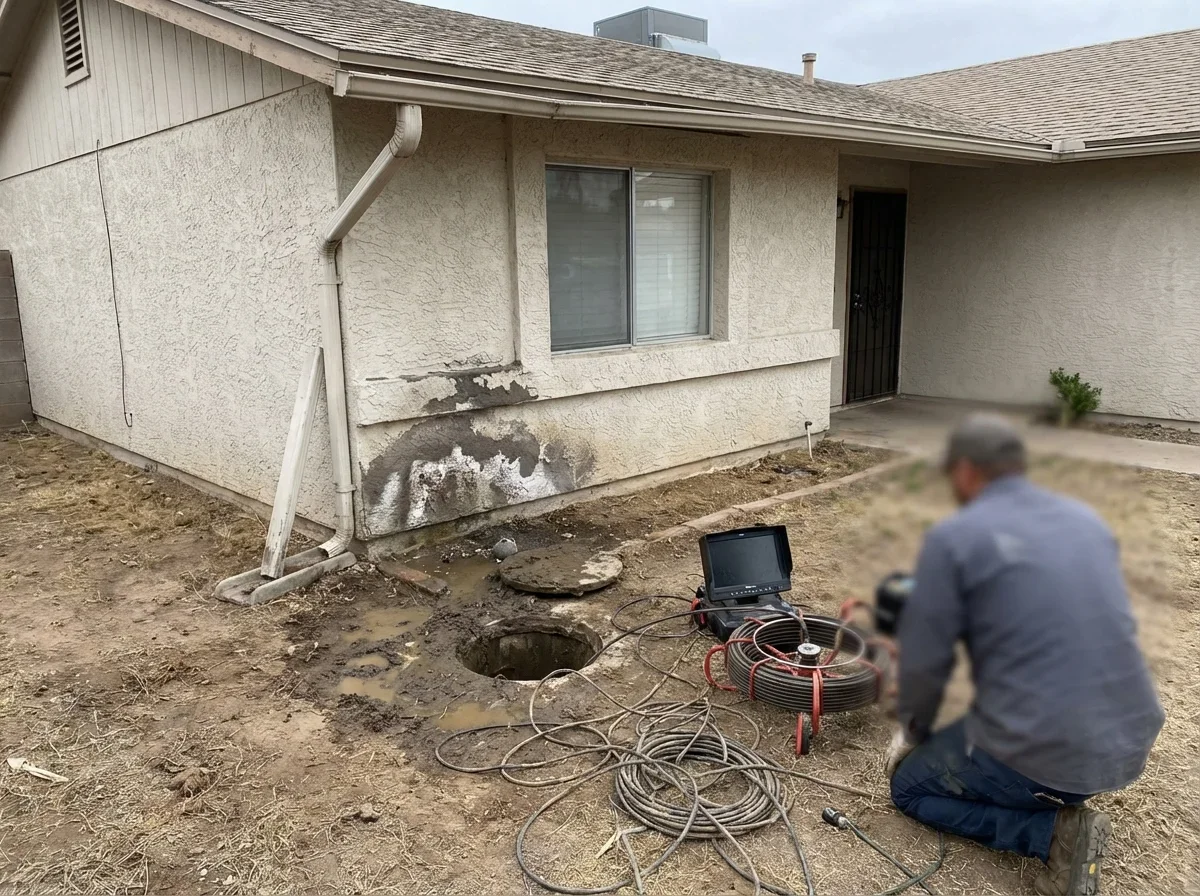
You've plunged the toilet three times this month. The shower drains slower every week. Or you're about to close on a house in Gilbert and the inspector noted "evidence of prior sewer issues" — and now you're wondering what that really means.
Sewer camera inspections turn guesswork into certainty. You stop throwing money at symptoms and start fixing actual problems.
Warning Signs in Your Home
The toilet gurgles when you run the washing machine. That's not quirky plumbing — that's a venting problem or partial blockage.
You smell sewage near your foundation but can't see standing water. Drains work fine until everyone showers in the morning, then the whole house backs up.
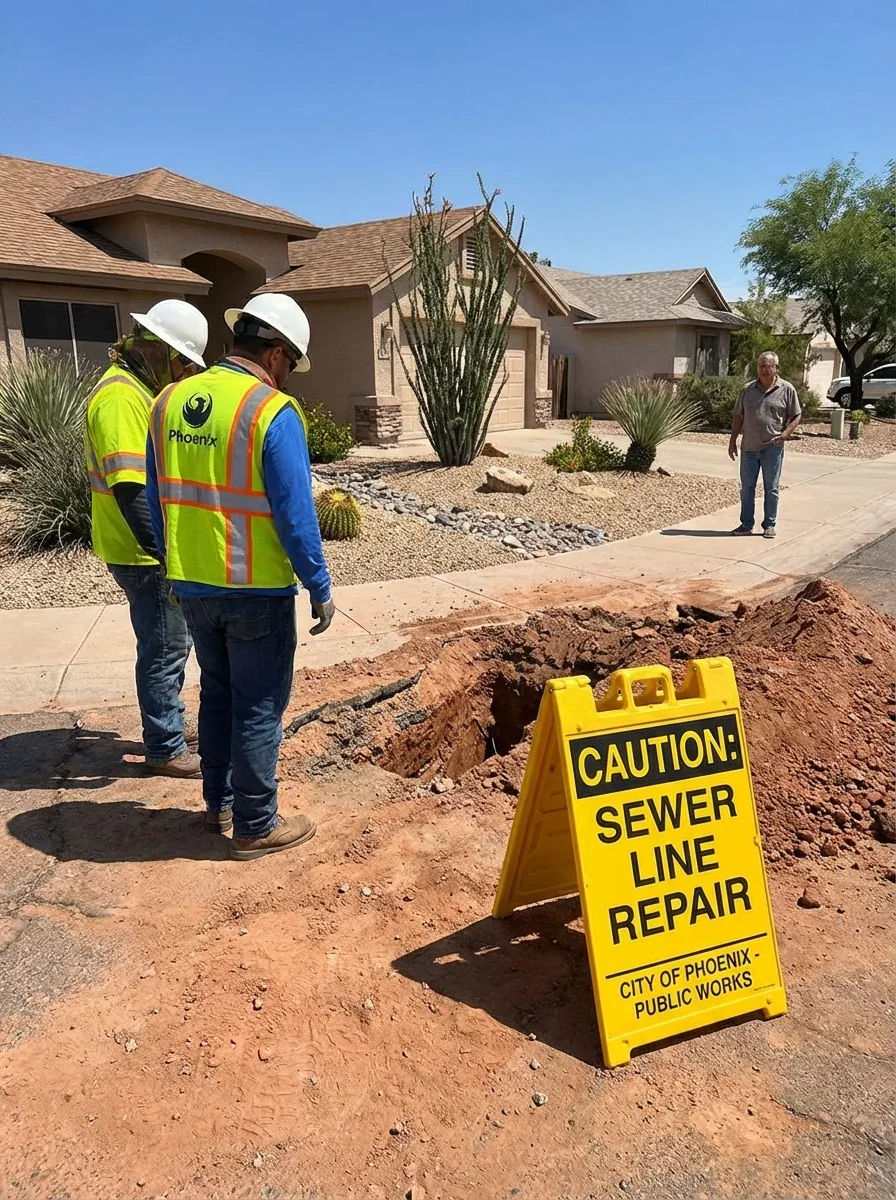
These aren't random failures. They're symptoms of specific problems: bellied pipe sections holding water and debris, root intrusion from Palo Verde trees, or clay pipes that crumbled decades ago and finally collapsed under your driveway.
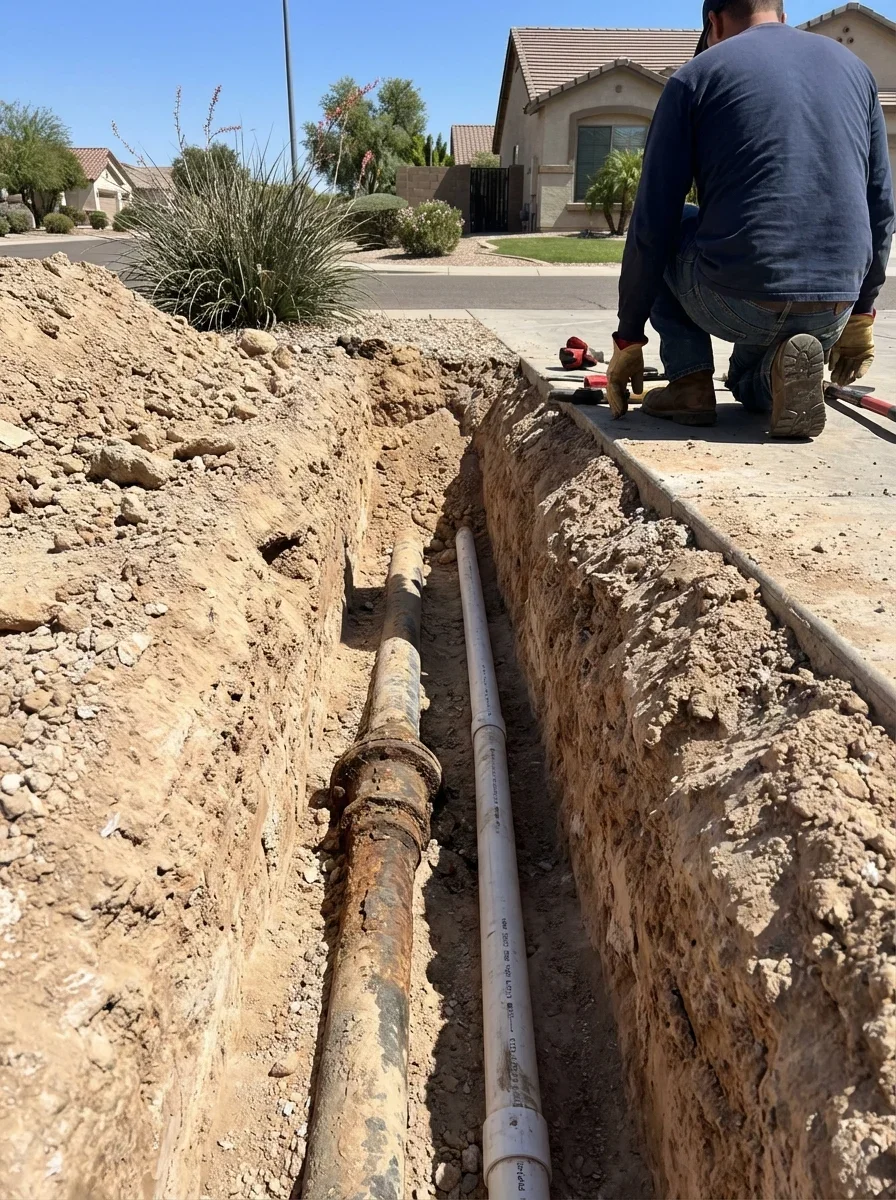
In Phoenix's older neighborhoods — homes built before 1980 in central Scottsdale, Arcadia, or Coronado — you're likely dealing with clay or cast iron sewer lines. Desert soil expansion and contraction cycles crack these materials. Monsoon rains flood the cracks. Roots follow the water.
What started as a hairline fracture becomes a root-filled blockage that no amount of snaking will clear.
Sound familiar? Your drains backed up. You paid $150 for a snake-out. It worked for two weeks. Now it's worse than before.
That's because the camera wasn't used first. The plumber treated the symptom (the blockage) without diagnosing the cause (the broken pipe section or root mass). You'll keep calling them back until someone actually looks.
Pre-Purchase Inspections and Preventive Diagnostics
Buying a home in Chandler built in 1995? The sewer line is nearly 30 years old, buried under caliche soil that shifts with every irrigation cycle.
A $300 camera inspection before closing can save you from a $12,000 sewer line replacement six months after you move in.
Preventive camera work makes sense when you're planning major landscaping, adding a bathroom, or buying rental property in Tempe. You want to know what you're working with before concrete trucks show up.
The video doesn't lie. You'll see cracks, offsets, root penetration, grease buildup — everything that's coming for your wallet if left unchecked.
$ Cost Guide
What Does Sewer Camera Inspection Cost in Phoenix?
Expect to pay $150-$500 for residential sewer camera inspection in Phoenix Metro. That's not a repair cost — it's a diagnostic fee that tells you what repairs you actually need.
| Service Level | Price Range | What's Included |
|---|---|---|
| Basic inspection (main line only) | $150-$250 | Camera run, verbal report, basic location marking |
| Standard inspection with reporting | $275-$400 | Full video recording, written report with images, depth/distance measurements |
| Comprehensive pre-purchase inspection | $400-$500 | Extended camera run, lateral line checks, report for escrow, transmitter locating |
Cost Factors: Line Length and Accessibility
A 50-foot main line from your house to the street cleanout runs $200-$300. A 150-foot line from a Surprise home on a large lot with the cleanout buried under desert landscaping? That's $350-$450 because access takes time and the camera run is three times longer.
Depth matters. Lines 2-4 feet deep are standard. Lines buried 8+ feet (common in some Mesa developments with unusual grading) require more sophisticated transmitter equipment to pinpoint problem areas from ground level.
That adds $75-$150 to the service.
Most Phoenix homes have 4-inch diameter sewer lines. Commercial properties and older homes sometimes run 6-inch or larger. Camera equipment is sized to the pipe — smaller lines need different heads than larger trunk lines.
What's Included in the Service
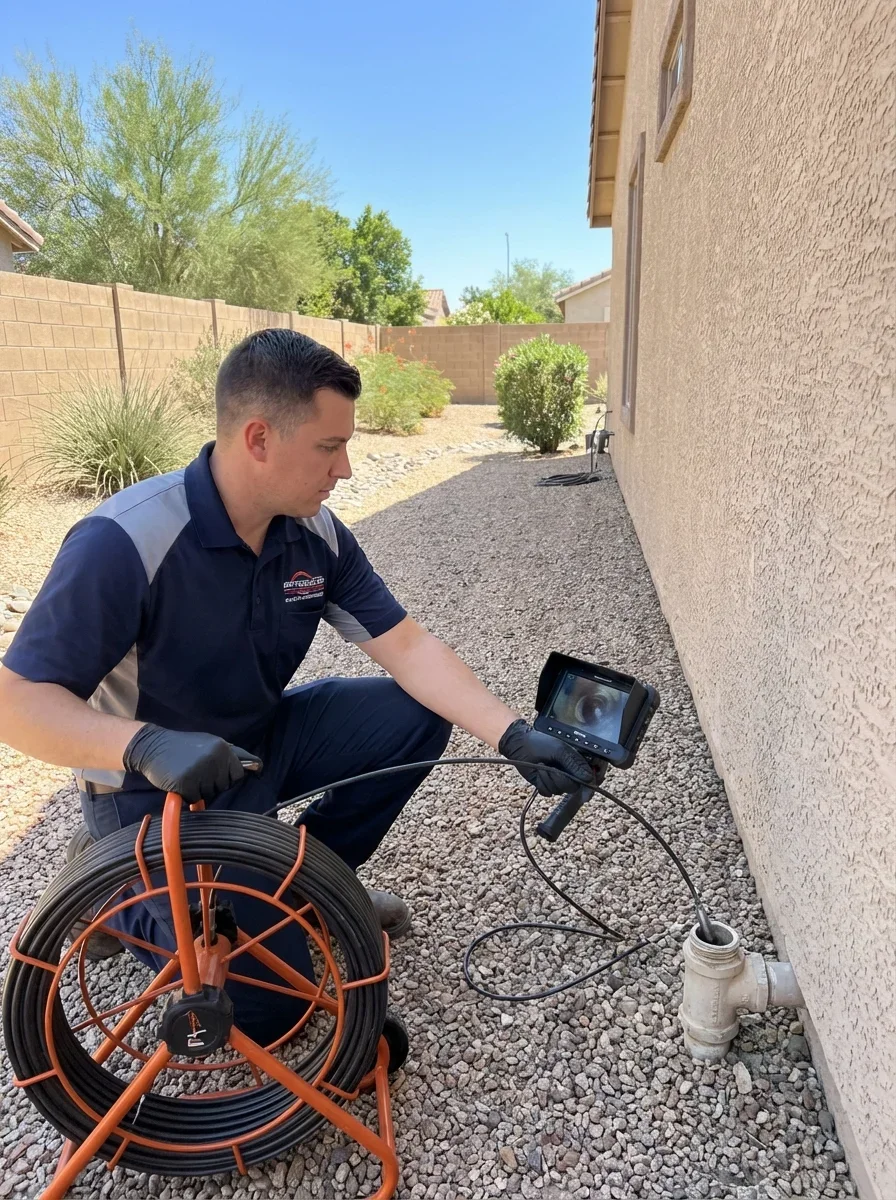
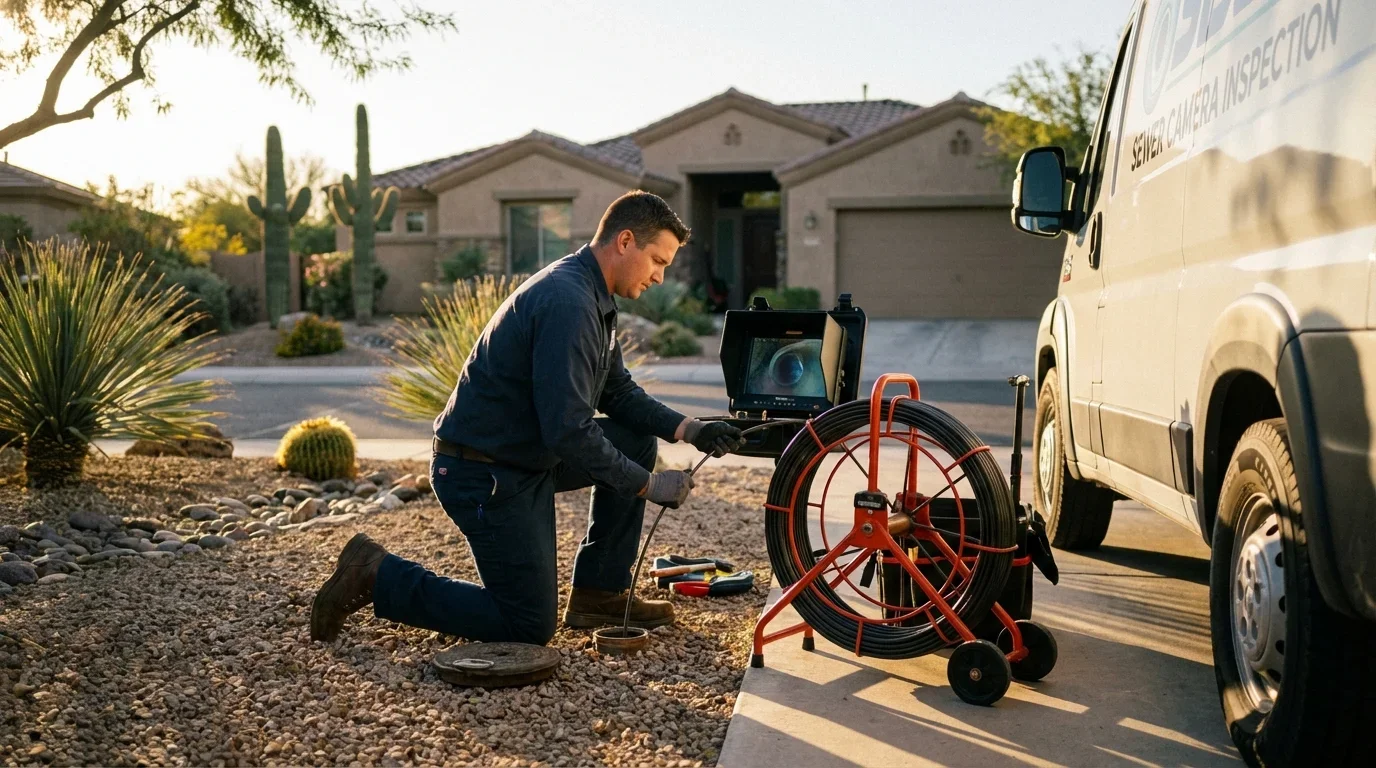
The baseline service runs a waterproof HD camera through your sewer line from an access point (cleanout, toilet flange, or vent stack). You should get:
- Live video feed — watch in real time as the camera moves through the pipe
- Recorded footage — digital file you can review or share with other contractors
- Written report — timestamped images showing problem areas with distance markings from entry point
- Transmitter locating — pinpoints the camera's underground location so repair crews know exactly where to dig
If a company quotes under $150, ask what's NOT included. Some budget services run the camera but don't record footage or provide location data.
That's useless when you're trying to plan a repair or get a second opinion from a sewer line repair contractor.
Good camera work pays for itself immediately. You avoid unnecessary digging, get accurate repair bids, and know whether you're looking at a $400 spot repair or a $15,000 full replacement.
> What to Expect
The Sewer Camera Inspection Process
The whole service typically takes 1-2 hours depending on line length and what the camera finds. Longer if the technician needs to locate multiple problem areas or run laterals to secondary drains.
Equipment and Technology Used
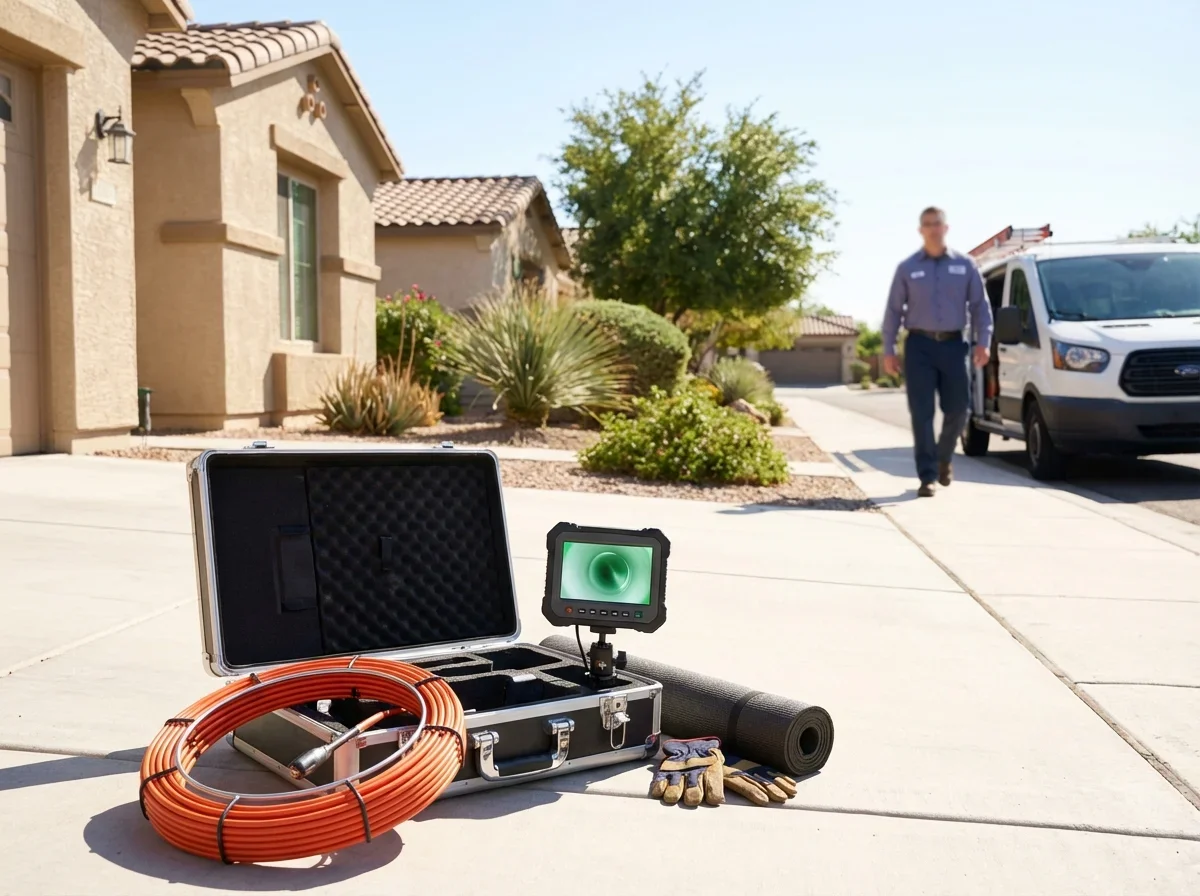
Modern sewer cameras are self-leveling HD units mounted on flexible push cables. The camera head (usually 1-2 inches diameter) fits through standard 2"-36" pipes. Built-in LED lights illuminate the pipe interior.
A transmitter (Sonde) in the camera head broadcasts a radio signal to a handheld receiver above ground. That's how the technician marks problem spots on your driveway or yard.
The monitor displays real-time footage with overlays showing:
- Distance from entry point (measured by the push cable)
- Depth below ground surface (calculated from transmitter signal)
- Time stamp for the recording
Quality equipment matters. Cheap cameras produce grainy, poorly lit footage that misses cracks and joint separation. Professional-grade systems (RIDGID SeeSnake, Envirosight, Pearpoint) deliver crisp video that shows hairline fractures and root intrusion clearly.
What the Camera Reveals
The technician starts at an access point — usually your main cleanout near the foundation or street. The camera pushes through the line toward the city connection. You're watching for:
- Pipe material and condition — Clay? Cast iron? PVC? Is it intact or deteriorating?
- Joint separation — Sections pulling apart from soil settling
- Root intrusion — Fine roots (early stage) or root masses (advanced blockage)
- Bellied sections — Sagging pipe that holds standing water and debris
- Cracks and fractures — From soil movement, tree roots, or age
- Scale and grease buildup — Narrowing the pipe diameter over time
In Phoenix, Palo Verde and mesquite roots are the #1 camera finding. These desert trees aggressively seek water. They'll penetrate any crack or joint in your sewer line and fill it completely within 2-3 years.
The second most common finding? Bellied pipe sections in older Glendale and Peoria homes where soil subsidence dropped sections of the line, creating permanent low spots that trap waste and form blockages.
Understanding Your Video Report
You should receive a written report within 24 hours (same-day from better providers). It includes:
- Annotated video file or image gallery
- Problem locations marked by distance: "Root intrusion at 47 feet from entry, 6 feet depth"
- Severity assessment: "Minor crack — monitor" vs. "Complete separation — immediate repair required"
- Recommended next steps: hydro jetting for roots, spot repair for cracks, full replacement for collapsed sections
This report is what you bring to repair contractors for accurate bids. It eliminates the diagnostic fee from repair quotes because the work's already done.
It also prevents over-selling. Nobody can claim you need a $18,000 full replacement when the camera clearly shows one repairable section.
✓ Choosing a Contractor
How to Choose a Sewer Camera Inspection Provider in Phoenix
Camera inspection requires an Arizona ROC license — specifically R-37 (Residential Plumbing), C-37 (Commercial Plumbing), or CR-37 (Dual Residential/Commercial). If they're running a camera and making repair recommendations, they need to be a licensed plumber.
Verify at roc.az.gov before booking.
Equipment Quality and Reporting Standards
Ask what camera system they use. "Inspection camera" is vague. You want self-leveling HD with transmitter locating.
Ask if they provide recorded footage and a written report. If the answer is "we'll show you on the monitor and tell you what we found," keep looking.
The video recording is your property. You paid for the inspection. You own the footage. Any provider who won't hand over the file is protecting turf — they want you locked into using them for repairs because you have no documentation to shop around.
Request a sample report before you book. Good reports include:
- Clear timestamped images extracted from video
- Distance and depth measurements for each finding
- Plain-language descriptions (not just plumber jargon)
- Severity ratings and recommended timelines for addressing issues
Post-Inspection Recommendations and Transparency
Here's where things get murky. The company that finds the problem often wants to fix it too — which creates financial incentive to overstate severity.
A reputable camera service will:
- Explain what they found without pressure
- Distinguish between "repair now" and "monitor for changes"
- Provide the documentation you need to get second opinions
- Recommend appropriate next steps: drain cleaning for minor root intrusion, spot repair for isolated cracks, full repiping only when truly necessary
Red flags:
- "You need a full replacement" without showing you the video footage to prove it
- Pressure to book repairs on the spot before you've reviewed the recording
- Vague findings: "Your line is bad" instead of specific problem locations
- No written report or refusal to provide video files
The best camera operators in Tempe and Mesa know their value is in honest diagnostics. They're not trying to sell you a $20,000 sewer replacement if you really just need $600 in hydro jetting to clear roots.
Their reputation depends on accuracy, not upselling.
Get camera work done before you commit to expensive repairs. The $300 you spend on inspection prevents the $5,000 mistake of excavating the wrong section or replacing pipe that didn't need it.
Top Contractors for Sewer Camera Inspection
View all →


Frequently Asked Questions
Estimate Your Sewer Camera Inspection Cost
Get an instant price range based on your project details.
Related Articles