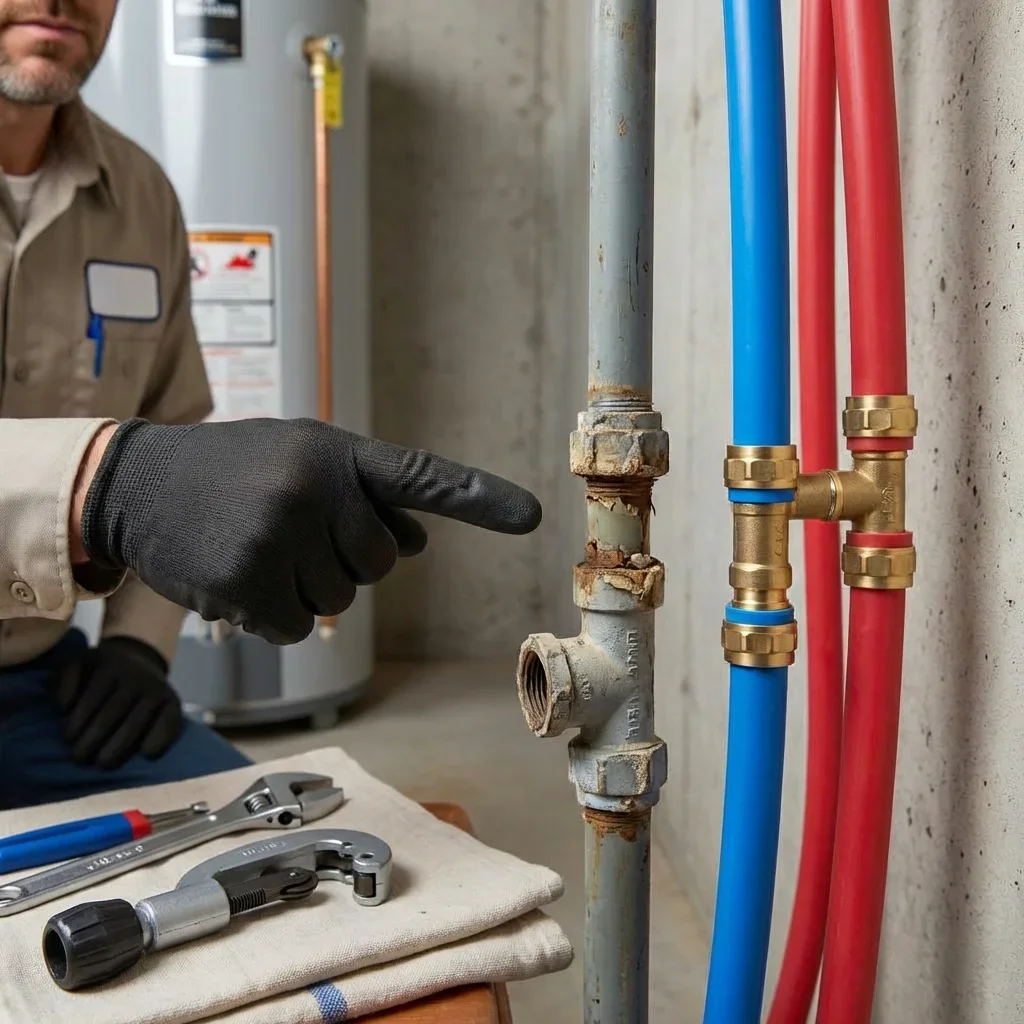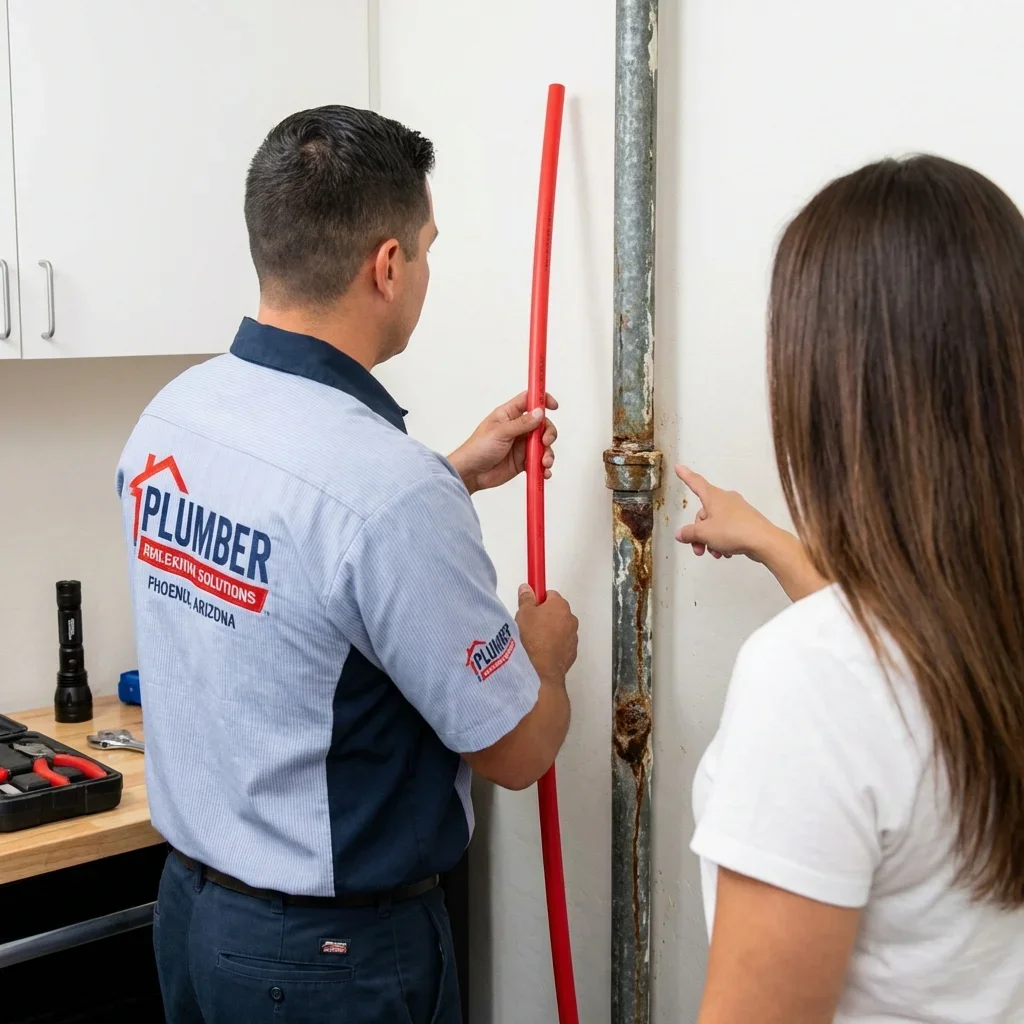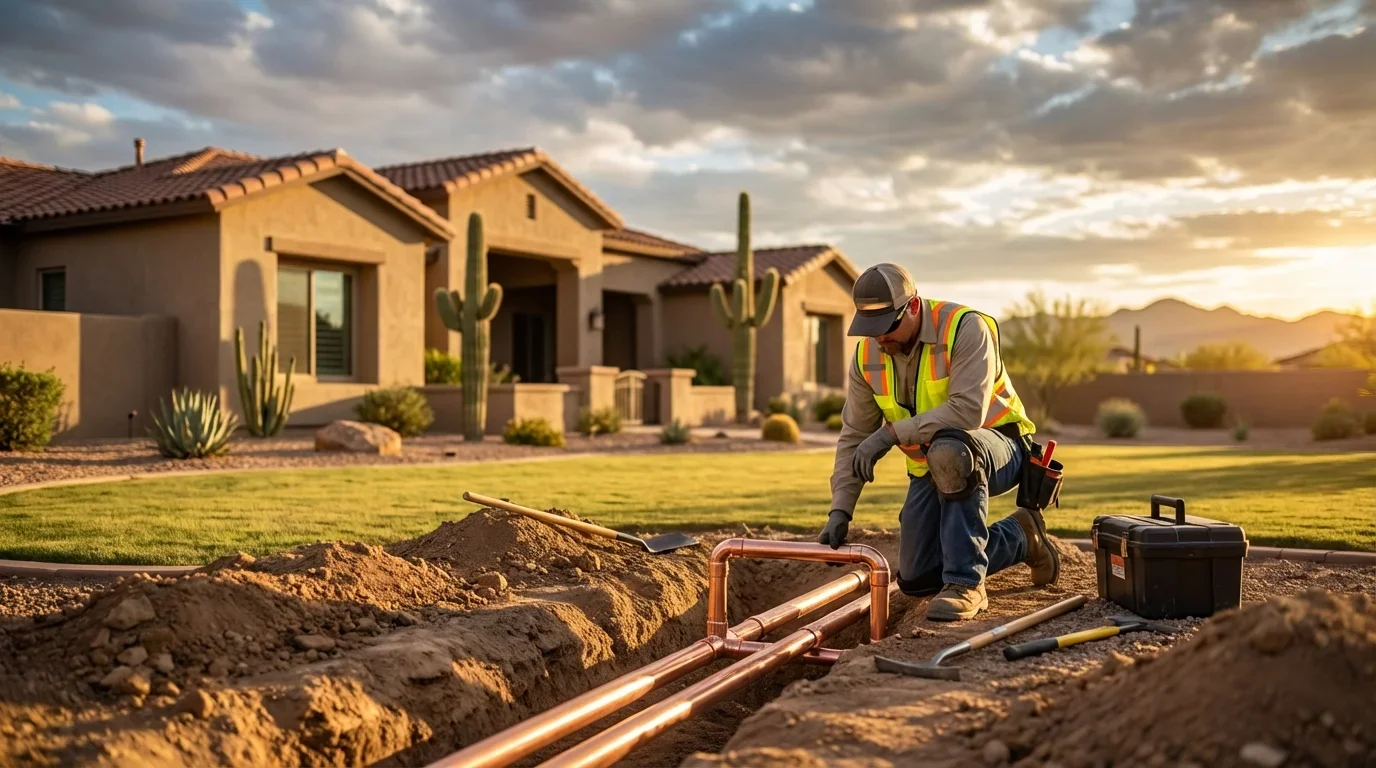
Repiping replaces your home's entire plumbing system with new pipes, addressing widespread corrosion, leaks, or problematic materials like polybutylene common in older Phoenix homes. Licensed plumbers use modern materials like PEX or copper to provide reliable, code-compliant water distribution that improves pressure, water quality, and prevents future failures. Whether you're dealing with failing polybutylene pipes or chronic leak issues, whole-home repiping offers a permanent solution with minimal disruption.
! Common Issues
When Do You Need Repiping?
You don't wake up one day and decide to repipe your house. You patch a leak. Then another. The water starts looking rusty in the morning. Your water heater is ten years old but struggling like it's twenty because scale buildup from Phoenix's hard water — over 300 ppm calcium carbonate — chokes the inlet.
If you're repairing the same section of pipe twice, you're not fixing the problem.
Warning Signs of Failing Pipes
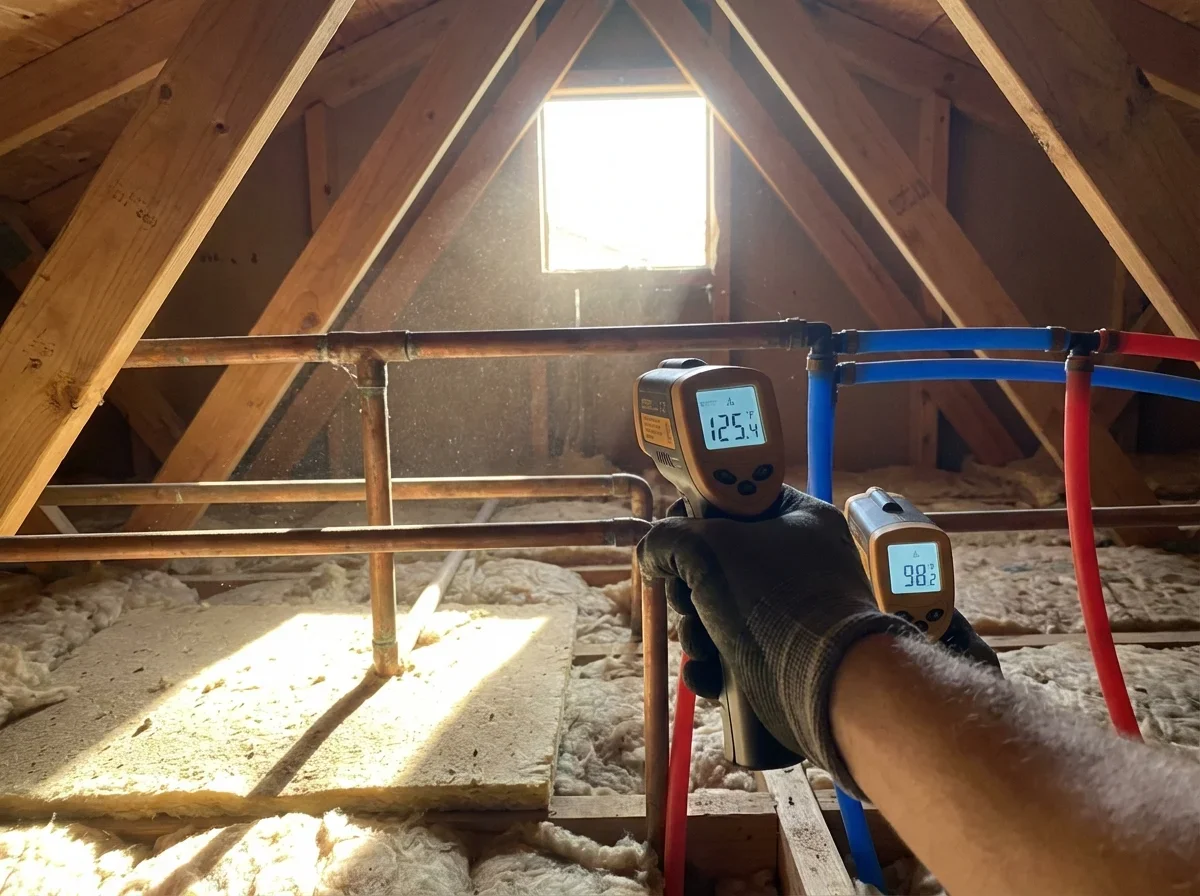
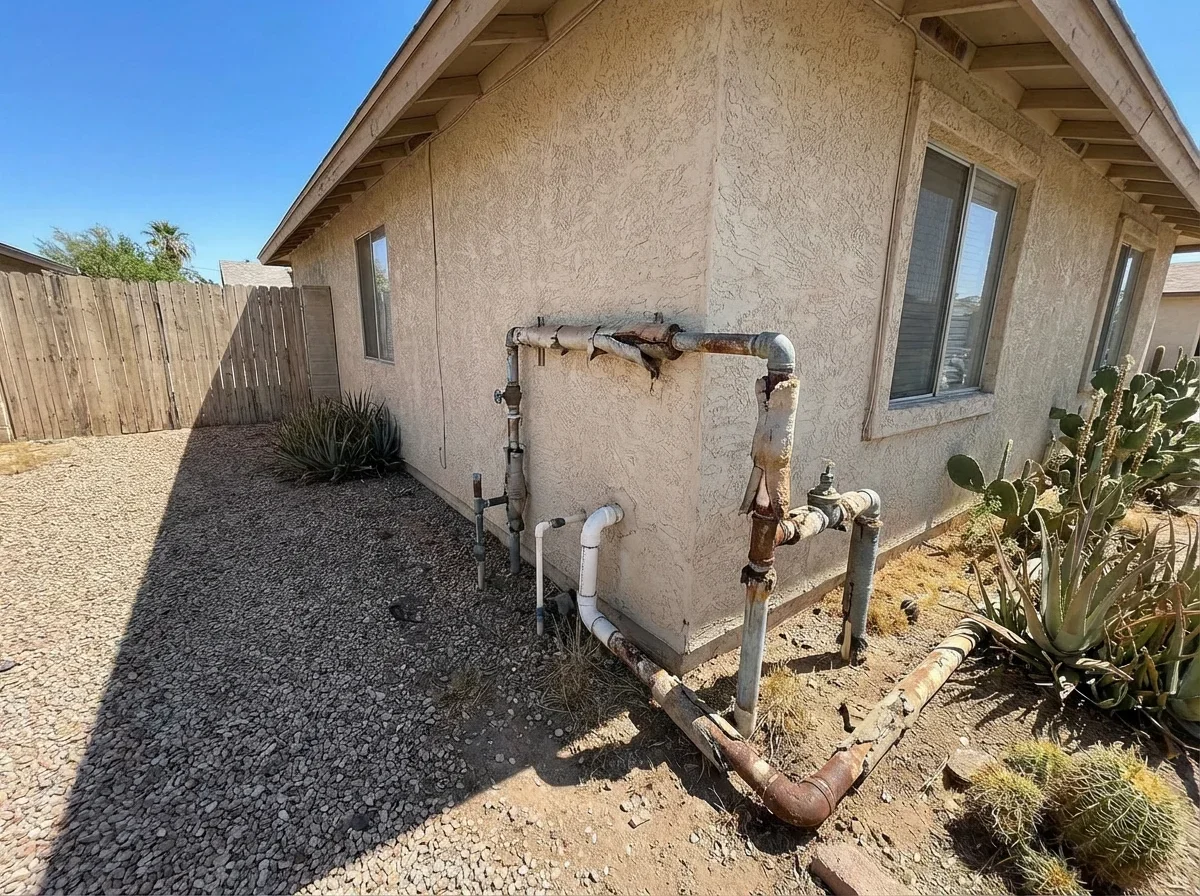
Pinhole leaks in copper pipes are the classic Phoenix problem. Hard water accelerates corrosion from the inside out, especially on horizontal runs in attics where summer heat pushes water temps above 120°F before it even reaches a faucet. You'll see tiny weeps at joints, green oxidation stains, or damp spots on ceilings.
Once you get one pinhole, others follow. Usually within a year.
Discolored water when you first turn on a tap means rust. It clears after a few seconds because you're flushing out sediment that settled overnight. That sediment is your pipes dissolving. Low water pressure across multiple fixtures — not just the shower, not just one bathroom — indicates buildup choking the lines. Scale reduces flow by 30-40% in older copper systems.
Common Problem Pipes in Phoenix Homes
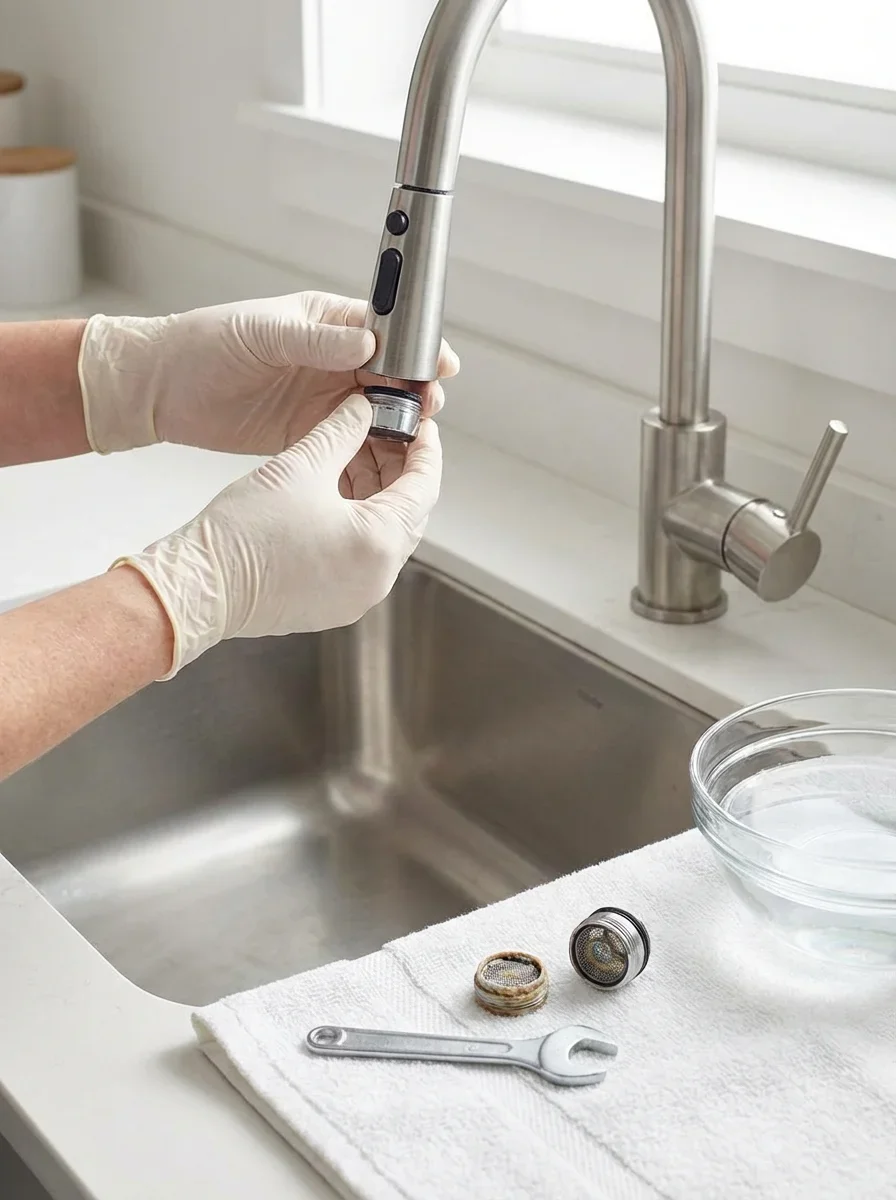
Galvanized steel pipes were standard in Phoenix homes before 1960. If your house is pre-1970 and you haven't repiped, you're on borrowed time. The zinc coating corrodes completely in 40-50 years, leaving bare iron that rusts from the inside. You'll get chunks of rust in aerators and toilet fill valves.
Polybutylene ("poly-B") was installed in the 1980s and early 90s. It was cheap. It also reacts with chlorine in Phoenix water, turning brittle and failing at joints.
If you see gray or blue plastic supply lines, especially with acetal fittings, it's poly-B. Insurance companies in Scottsdale and Mesa ask about it specifically because failure rates are so high.
Sound familiar? You've replaced three sections of copper in the last two years. Each time the plumber says "the rest looks fine." Then you get another leak in a different wall. You're spending $400-$800 per repair on a system that's failing one joint at a time.
Homes built before 2000 in Chandler, Gilbert, and Tempe typically have copper supply lines. That was good plumbing at the time. But copper + Phoenix hard water + 25 years = corrosion you can't see until it leaks.
If your house is slab-on-grade — which is nearly every house here — those leaks under the concrete slab turn into $2,000+ repairs because you're jackhammering to access the line.
$ Cost Guide
What Does Repiping Cost in Phoenix Metro?
Whole-house repiping in Phoenix runs $4,500 to $15,000 depending on square footage, pipe material, and whether your plumbing runs through the attic or under a slab. A single-story, 1,500-square-foot home with attic access and PEX replacement typically lands around $6,000-$8,000. Two-story homes in Surprise or Buckeye with slab plumbing and copper replacement push closer to $12,000-$15,000.
Whole-House vs Partial Repipe Pricing
| Scope | Typical Cost | When It Makes Sense |
|---|---|---|
| Partial repipe (one bathroom group) | $1,800-$3,500 | Isolated poly-B replacement, single slab leak zone |
| Single-story whole-house (PEX) | $5,500-$9,000 | Attic-accessible plumbing, under 2,000 sq ft |
| Two-story whole-house (PEX) | $8,000-$12,000 | Multiple bathrooms, standard access |
| Whole-house copper (any size) | $10,000-$15,000+ | Premium material, longer install time |
| Under-slab reroute (per zone) | +$2,000-$4,000 | Slab leak areas rerouted through attic/walls |
Partial repipes make sense when you've identified a specific problem zone. A bathroom addition with poly-B lines. A slab leak area that can be rerouted overhead.
But if your house is 30+ years old and you're seeing multiple pinhole leaks, patching one section leaves you with the same old pipe everywhere else. Whole-house repiping eliminates the problem instead of chasing it.
Material Cost Comparison: PEX vs Copper
| Material | Cost per Linear Foot (Installed) | Lifespan | Phoenix Performance |
|---|---|---|---|
| PEX (cross-linked polyethylene) | $3-$6 | 50+ years | Excellent — handles heat, no corrosion, fast install |
| Copper (Type L) | $8-$12 | 50+ years (if water quality allows) | Good — durable but vulnerable to hard water corrosion |
PEX costs less upfront and installs faster. A typical whole-house job takes 2-3 days vs 4-5 for copper. It's flexible, so it snakes through walls and attics with fewer joints (fewer potential leak points). Phoenix heat doesn't bother it — PEX is rated to 200°F. It doesn't corrode, so hard water isn't a factor.
Most repipes in Glendale and Peoria use PEX now.
Copper is traditional, and some homeowners prefer it for longevity and the fact that it's been around forever. It's inert — nothing leaches into your water. But in Phoenix, copper + hard water means you're dealing with corrosion again in 20-30 years. Installation is slower because every joint is soldered, and material cost is nearly double.
Factors That Affect Your Final Cost
Access. If your supply lines run through an accessible attic, the install is straightforward. If they're buried in a slab or running through finished ceilings with no attic access, expect drywall demo and patching. Add $1,500-$3,000 for wall repair and paint.
Home size and fixture count. More bathrooms, kitchens, and hose bibs mean more material and labor. A 3-bath home costs more than a 2-bath home even if square footage is similar.
Permit and inspection fees. Phoenix requires plumbing permits for repiping. Budget $200-$400 for permit fees and two city inspections (rough-in and final). Licensed contractors pull these as part of the job.
Seasonal timing. Summer demand (June-August) is high because heat stresses pipes and everyone's calling for leak detection. You'll get faster scheduling and sometimes better pricing in fall or winter.
> What to Expect
The Repiping Process
A whole-house repipe in Phoenix takes 2 to 5 days depending on home size and complexity. You'll have water shut off during work hours, then restored each evening so you can use sinks and toilets overnight.
Here's what happens.
Inspection and Planning
The contractor walks your home and maps every fixture. Sinks, toilets, showers, water heater, hose bibs, appliances. They identify the main shutoff and the route from the meter to your house. For slab-on-grade homes, they determine whether the repipe will run entirely overhead (through the attic and dropped down walls) or if any lines stay in the slab.
If you have active leaks or suspected slab leaks, they may recommend sewer camera inspection or pressure testing to confirm which sections are compromised.
The goal is to replace problem areas and upgrade the rest before it fails.
They'll explain access points — where they'll cut drywall to run new lines, how they'll route through the attic, and where new shutoff valves will go. Most repipes install a shutoff valve at every fixture group (each bathroom, the kitchen) so future repairs don't require shutting off the whole house.
Installation and Drywall Work
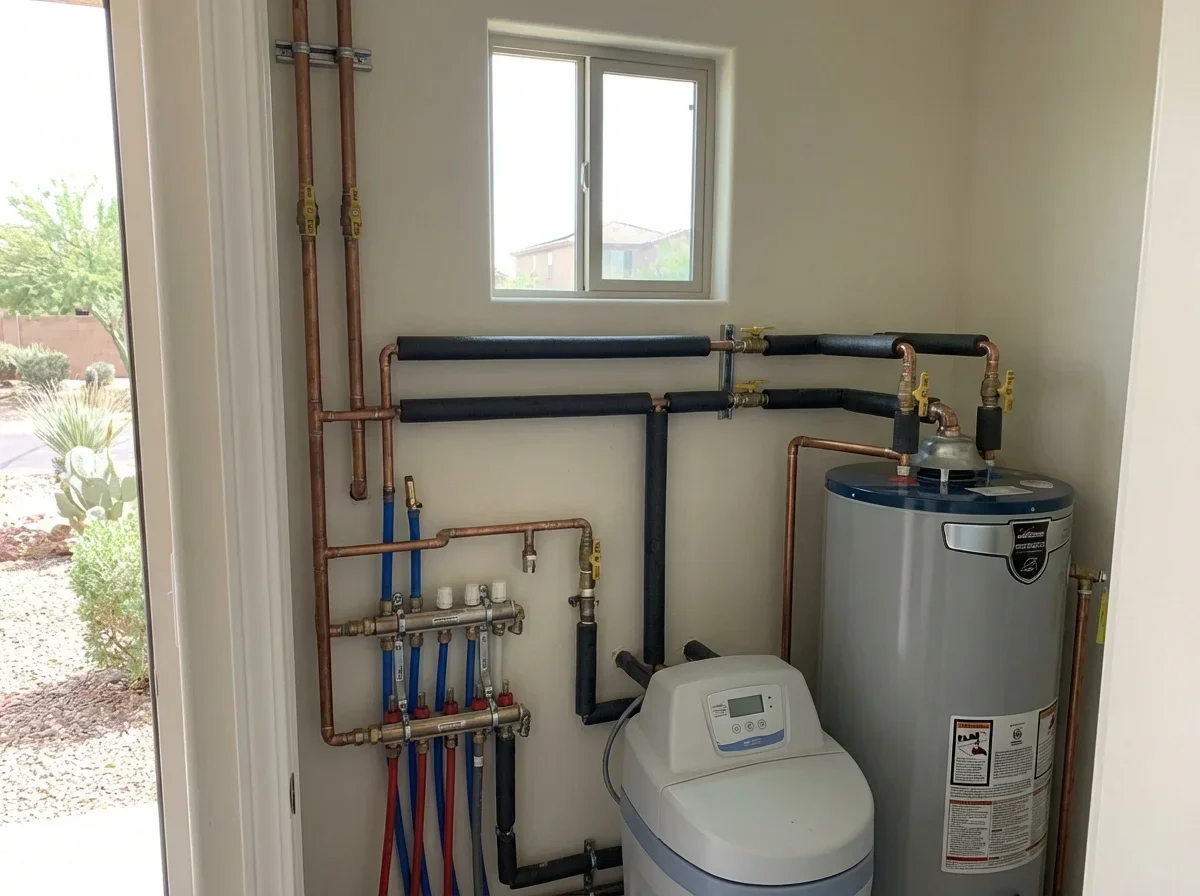
Day one starts with shutting off water at the meter and draining the system. The crew cuts out old supply lines and begins running new PEX or copper from the water heater and main shutoff to each fixture. In attic installations, they secure lines to framing and insulate where necessary (though Phoenix heat rarely freezes pipes, insulation prevents radiant heat damage in summer).
They'll cut small access holes in drywall where lines drop to fixtures. For homes with slab plumbing being rerouted, this means running new lines overhead and abandoning the old slab lines in place. Cutting and capping them is standard — no one digs up the slab unless it's leaking.
Expect your house to look like a construction zone for 2-4 days. Furniture gets moved, access holes appear in ceilings or walls, and the crew is working from 7 AM to 4 PM.
Water comes back on each evening after pressure testing the day's work.
City Inspections and Final Steps
Once all new lines are installed and pressure-tested, the contractor schedules a rough-in inspection with the city. The inspector verifies pipe sizing, support, and code compliance before any walls close up.
This usually happens on day 3 or 4.
After rough-in approval, the crew patches drywall, textures to match, and primes the patches. Some contractors include paint touch-up. Others leave that to you (clarify this in the quote). They reconnect all fixtures, test for leaks, and schedule the final inspection.
The final inspection confirms everything works — no leaks, proper pressure, code-compliant installation. You'll get a signed-off permit card that stays with your home's records.
This matters when you sell. Unpermitted plumbing work is a red flag for buyers and appraisers.
Total timeline: 2 days for a small single-story home with easy attic access, up to 5 days for a large two-story with complex routing. Add a day or two if drywall repairs are extensive or inspections get delayed.
✓ Choosing a Contractor
How to Choose a Repiping Contractor in Phoenix
Repiping is a major project. You're tearing into walls, rerouting your entire water supply, and spending five figures.
The difference between a clean job and a nightmare comes down to licensing, experience, and how the contractor handles the details.
Arizona ROC Licensing Requirements
Every plumbing contractor in Arizona performing work over $1,000 must hold an active Registrar of Contractors (ROC) license. For residential repiping, you want a contractor with an R-37 (residential plumbing) or CR-37 (residential dual — plumbing and HVAC) license. Commercial licenses (C-37) allow commercial work but also cover residential projects.
Verify the license at roc.az.gov before you sign anything. Check for active status, complaint history, and whether they're bonded.
The ROC bond is only $7,000 for R-37 licenses. It's not a substitute for general liability insurance, which should be $1 million minimum. Ask for proof of both.
Unlicensed contractors offer cheaper quotes because they skip permits, inspections, and insurance. You'll save $1,500 up front and lose $10,000 when unpermitted work surfaces during a home sale or fails inspection. Buyers walk. Appraisers flag it. You end up paying a licensed contractor to redo the work AND deal with permit violations.
Questions to Ask Before Hiring
How long have you been doing repipes in Phoenix? You want someone who knows slab-on-grade construction and hard water issues — not a generalist who does one repipe a year.
Do you pull permits and schedule inspections? The answer must be yes. If they say "permits aren't necessary for this" or "we can skip that to save money," walk away.
What's included in drywall repair? Some contractors patch and texture but don't paint. Others include paint match on patches. Get it in writing.
PEX or copper, and why? A good contractor explains material options based on your goals and budget, not just what they prefer to install.
What's your timeline, and will I have water at night? Repipes are disruptive, but you should have water service restored every evening. Multi-day shutoffs mean they're understaffed or disorganized.
Do you handle water heater reconnection? If you're upgrading from galvanized or poly-B, your water heater connections need replacing too. Clarify whether that's included or an add-on.
What to Expect in Your Quote
A detailed quote lists materials (PEX or copper, pipe diameter, fittings), labor, permit fees, drywall repair scope, and timeline. It should specify how many fixtures are being repiped, whether any lines stay in the slab, and what warranty covers the work (most offer 1-2 years on labor, manufacturer warranty on materials).
Red flags: Quotes with round numbers and no material breakdown. "Whole-house repipe: $7,000" tells you nothing. Pressure to sign same-day or "this price expires today" tactics. Contractors who won't provide ROC license numbers or insurance certificates.
Get three quotes from licensed contractors. Compare scope, not just price — the lowest bid often skips steps (no permits, cheap materials, minimal drywall repair) that cost you later.
The middle quote from a licensed contractor with solid ROC history and good communication usually wins.
Repiping is an investment that eliminates chronic leak problems and adds value when you sell. Done right by a licensed pro, it's one of the few major plumbing projects you'll never think about again.
Top Contractors for Repiping
View all →



Frequently Asked Questions
Estimate Your Repiping Cost
Get an instant price range based on your project details.
Related Articles