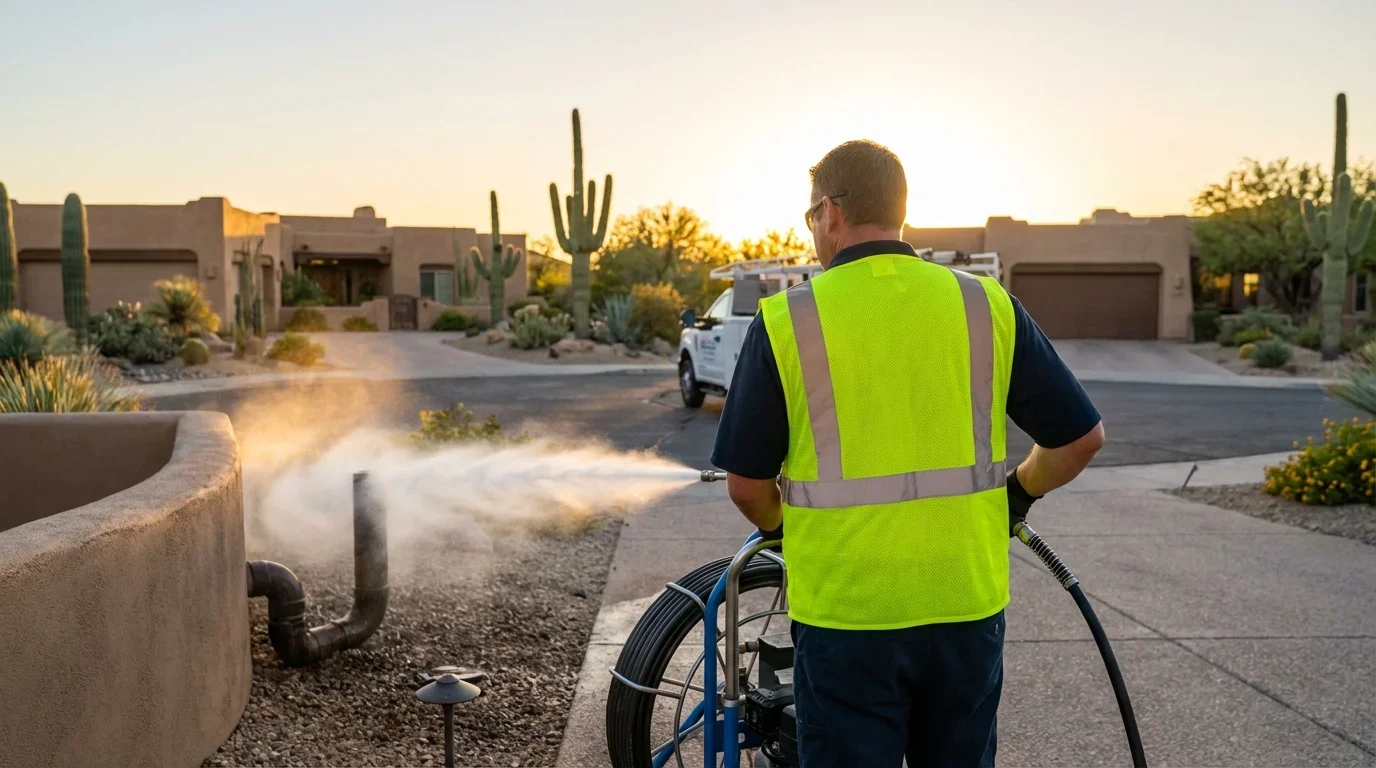
Hydro jetting is a powerful drain and sewer cleaning method that uses high-pressure water streams (up to 4,000 PSI) to completely remove blockages, grease buildup, mineral deposits, and tree roots. Unlike traditional snaking that merely punches holes through clogs, hydro jetting scours pipe walls clean, restoring full flow capacity and providing longer-lasting results. Phoenix plumbers use this professional-grade technique for stubborn or recurring drain issues in both residential and commercial properties.
! Common Issues
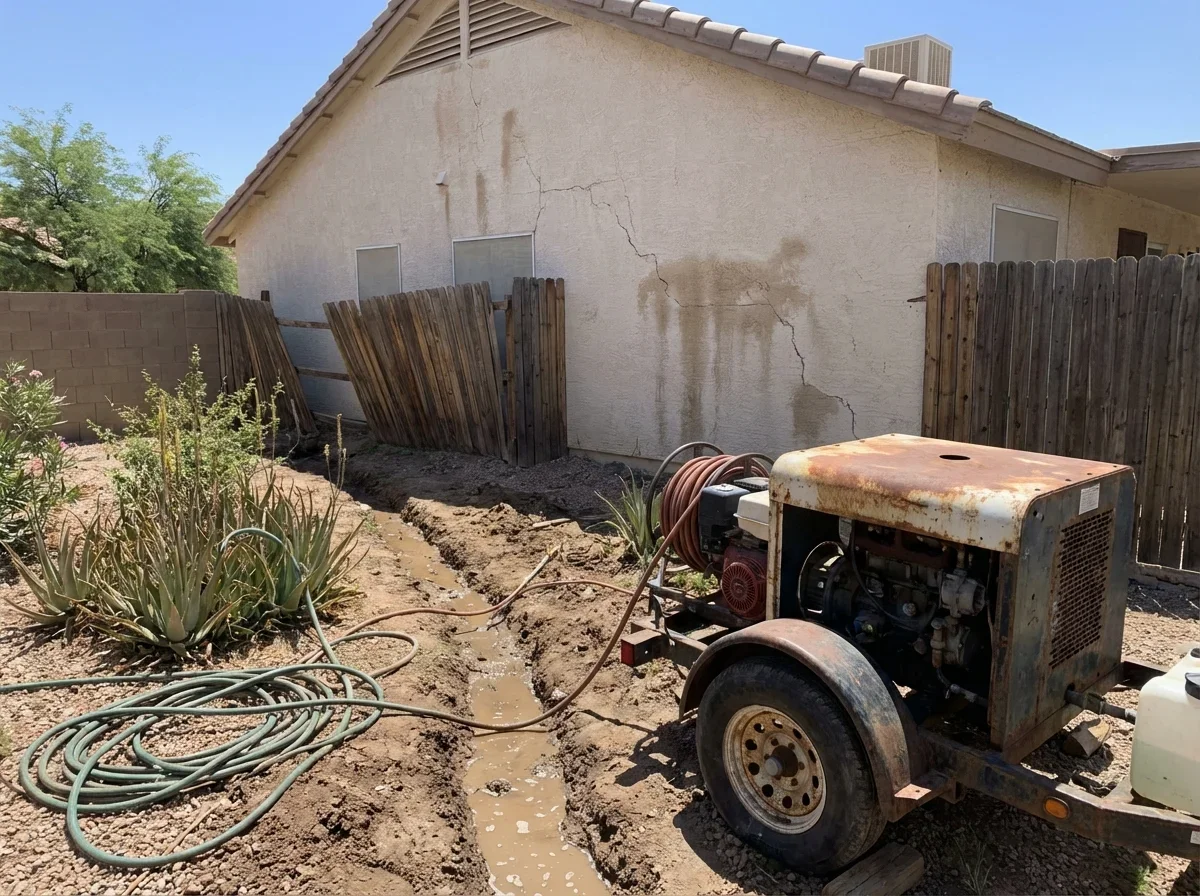
What Is Hydro Jetting?
Hydro jetting uses specialized equipment to blast water through your pipes at 3,000-4,000 PSI — powerful enough to cut through tree roots and scour away hardened grease that's been building up for decades. It's not a drain snake.
It's a complete pipe restoration.
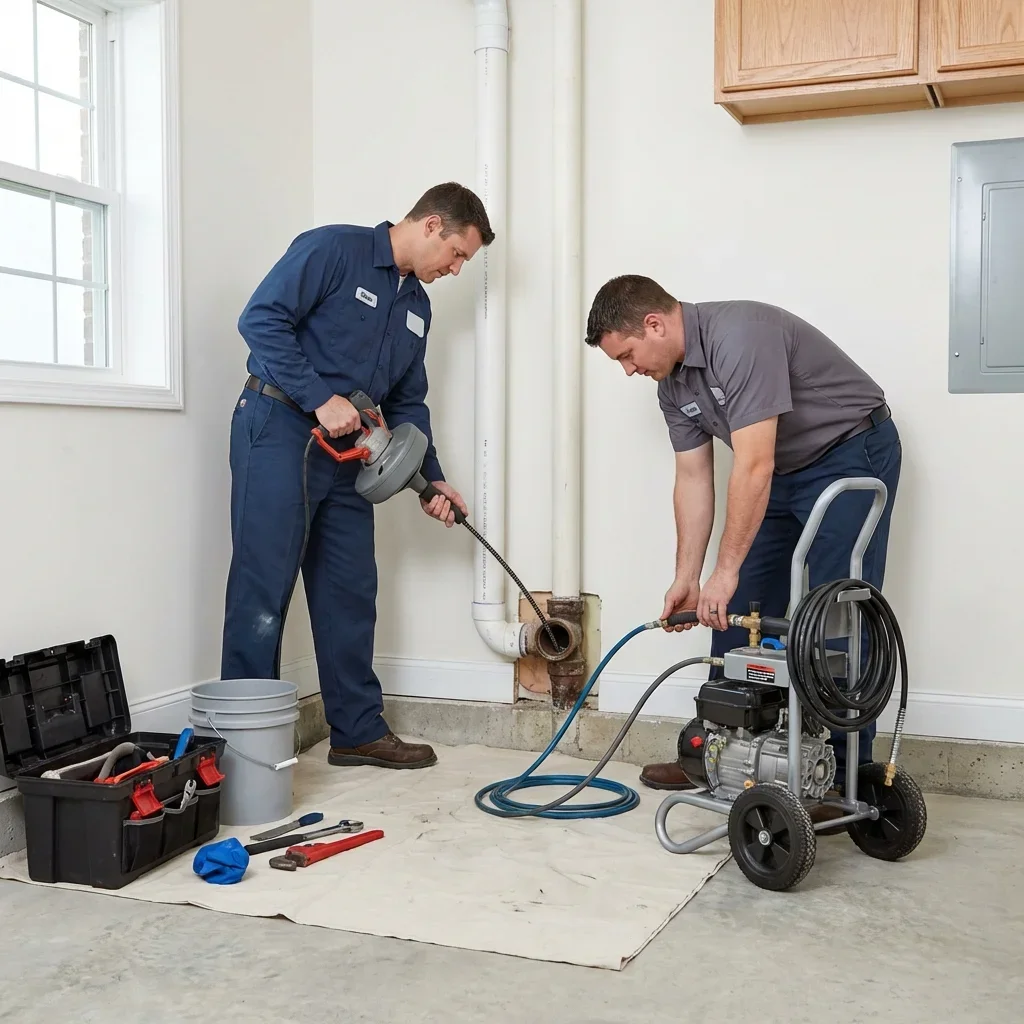
A trained operator threads a specialized nozzle through your cleanout or access point. The nozzle sprays water in multiple directions, pulling itself forward while scouring the pipe walls. The debris flushes downstream into the sewer system. What you're left with is a pipe that looks factory-new inside.
How High-Pressure Water Jetting Works
The nozzle design matters. Forward-facing jets pull the hose through the line. Rear-facing jets scour the pipe walls at angles that reach every surface. Specialized nozzles exist for root cutting, grease removal, and mineral scale.
The operator controls pressure based on pipe material and condition. Cast iron can handle full pressure. Older clay or Orangeburg pipe requires reduced PSI to avoid damage.
This is why camera inspection comes first — you need to know what you're working with before you start blasting water through 50-year-old pipes.
When You Need Hydro Jetting vs. Traditional Drain Cleaning
A drain snake punches a hole through the blockage.
Hydro jetting removes the blockage entirely.
You need hydro jetting when:
- Snaking only works for a few weeks — the clog keeps coming back because the buildup remains
- You're selling a home and the sewer inspection shows heavy buildup
- Grease has narrowed your commercial kitchen lines to half their diameter
- Tree roots have infiltrated your mainline (common with older neighborhoods in Phoenix and Tempe due to mature mesquite and citrus trees)
- You're buying an older home and want clean pipes as a condition of purchase
- Hard water mineral deposits have reduced flow in your galvanized supply lines
Sound familiar? Your kitchen drain clogs every few months. You've snaked it four times. It works for three weeks, then slows down again. The problem isn't the snake — it's that the grease coating inside your pipe keeps narrowing the opening.
In Phoenix Metro, hard water compounds the problem. The 300+ ppm calcium carbonate in our water creates mineral scale that combines with grease and soap residue. Homes built before 2000 with cast iron drain lines see this constantly.
Scottsdale and Gilbert neighborhoods with mature landscaping also deal with aggressive root intrusion from citrus and mesquite trees seeking water.
$ Cost Guide
What Does Hydro Jetting Cost in Phoenix Metro?
Expect to pay $350-$900 for residential mainline hydro jetting in Phoenix, Chandler, Mesa, and surrounding areas. That includes camera inspection before and after the jetting to verify results.
The price depends on access, severity, and pipe length.
Residential Hydro Jetting Pricing
| Service Type | Typical Cost | What's Included |
|---|---|---|
| Standard mainline cleaning (under 100 ft) | $350-$600 | Pre/post camera inspection, single-pass jetting |
| Heavy buildup or roots | $600-$900 | Multi-pass cleaning, root-cutting nozzle, extended runtime |
| Multiple cleanouts or difficult access | $500-$800 | Additional setup time, multiple access points |
| Pre-sale sewer cleaning | $400-$700 | Full documentation, video footage for buyer |
Commercial and Severe Blockage Costs
Commercial properties and severe residential problems cost more due to equipment requirements and complexity:
- Commercial kitchen grease lines: $500-$1,200 (depending on line length and grease severity)
- Multi-unit residential buildings: $800-$1,500 (multiple lateral lines)
- Severe root intrusion with cutting: $1,000-$2,000 (may require multiple sessions)
- Full-system hydro jetting (all drain lines): $1,500-$3,000+ (typically older homes preparing for sale)
Factors That Affect Phoenix-Area Pricing
Access points matter. If your home lacks a proper cleanout and the plumber needs to pull a toilet or cut into the line, add $150-$300 for access setup.
Pipe material affects the approach. Cast iron and PVC handle full pressure. Older clay tile or Orangeburg pipe (common in pre-1970 Phoenix homes) requires reduced pressure and gentle nozzles. That means more passes and more time.
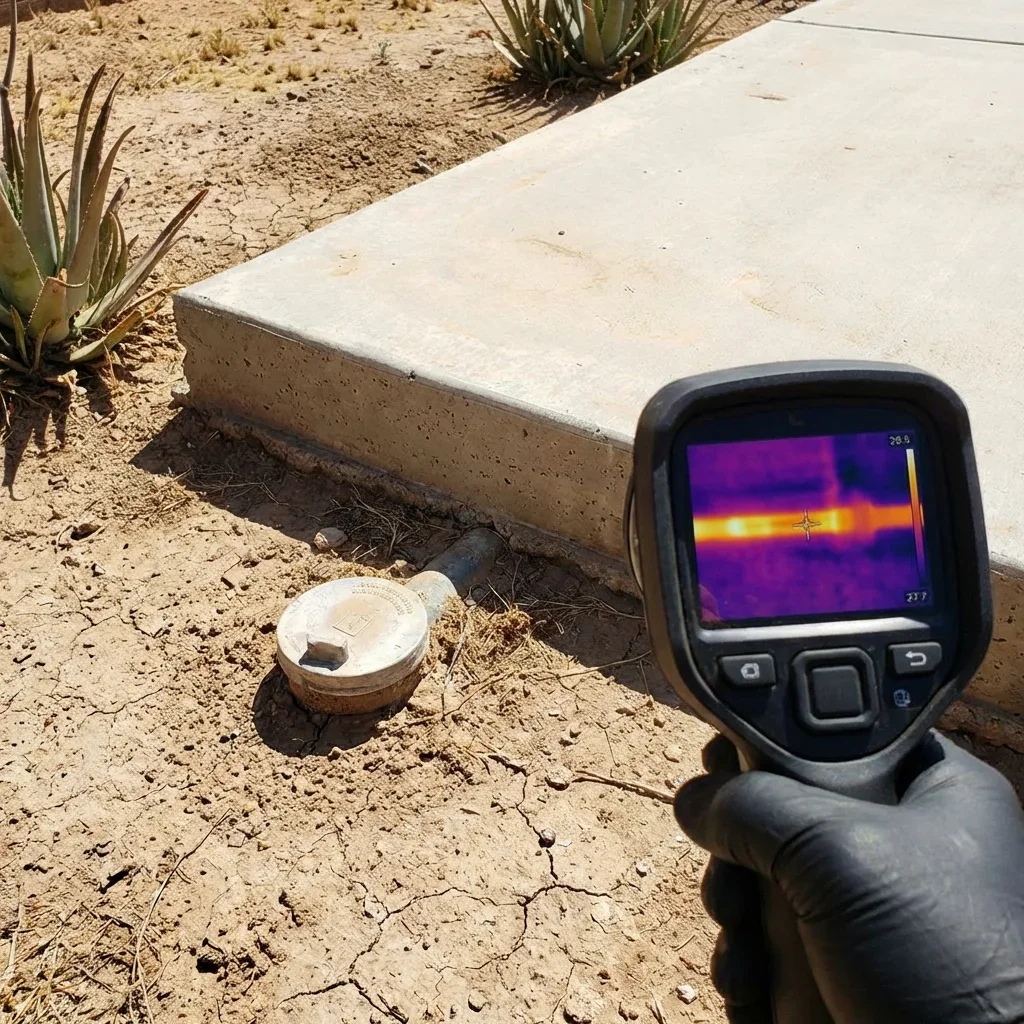
Caliche soil complications. If your cleanout is buried or damaged and needs excavation, caliche hardpan makes digging expensive. That's not a hydro jetting cost — that's a site prep issue. But it's common enough in Mesa and Surprise that you should ask about access before getting a quote.
| Traditional Snaking | Chemical Drain Cleaner | Hydro Jetting | |
|---|---|---|---|
| Cost | $150-$250 | $15-$50 (DIY) | $350-$900 |
| Removes Buildup | No — punches hole only | Minimal, temporary | Complete pipe restoration |
| Effective on Roots | Temporary | No | Yes — cuts and removes |
| Lasts | Weeks to months | Days to weeks | 2-5+ years |
| Pipe Damage Risk | Low | High (corrodes pipes) | Low with proper inspection |
| Pipe Inspection | Rare | Never | Standard pre/post |
The real cost comparison is annual spending. Snaking three times a year at $200 each = $600/year. Hydro jetting once every three years at $600 = $200/year.
The math favors hydro jetting when you have recurring problems.
> What to Expect
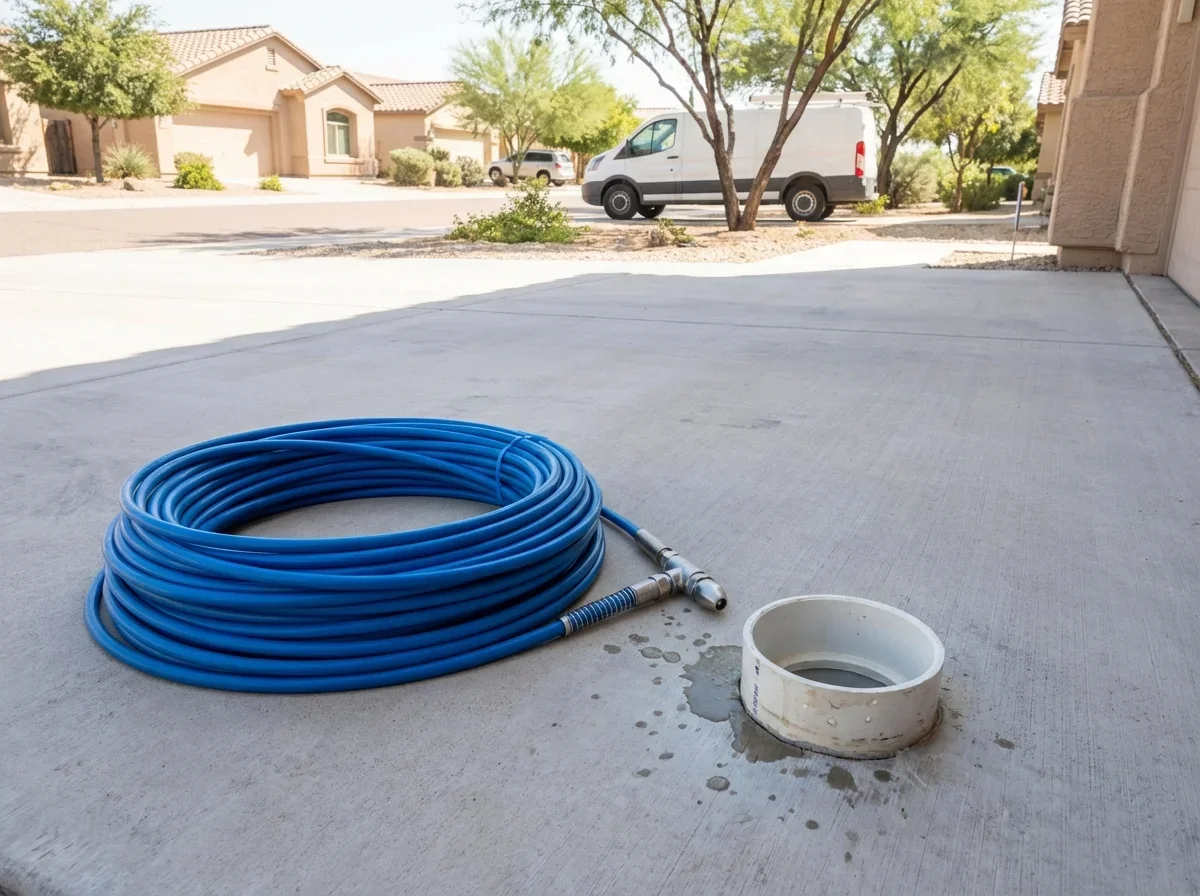
The Hydro Jetting Process
Professional hydro jetting takes 2-4 hours for a standard residential mainline. Commercial or complex jobs may require a full day or multiple sessions.
Pre-Service Camera Inspection
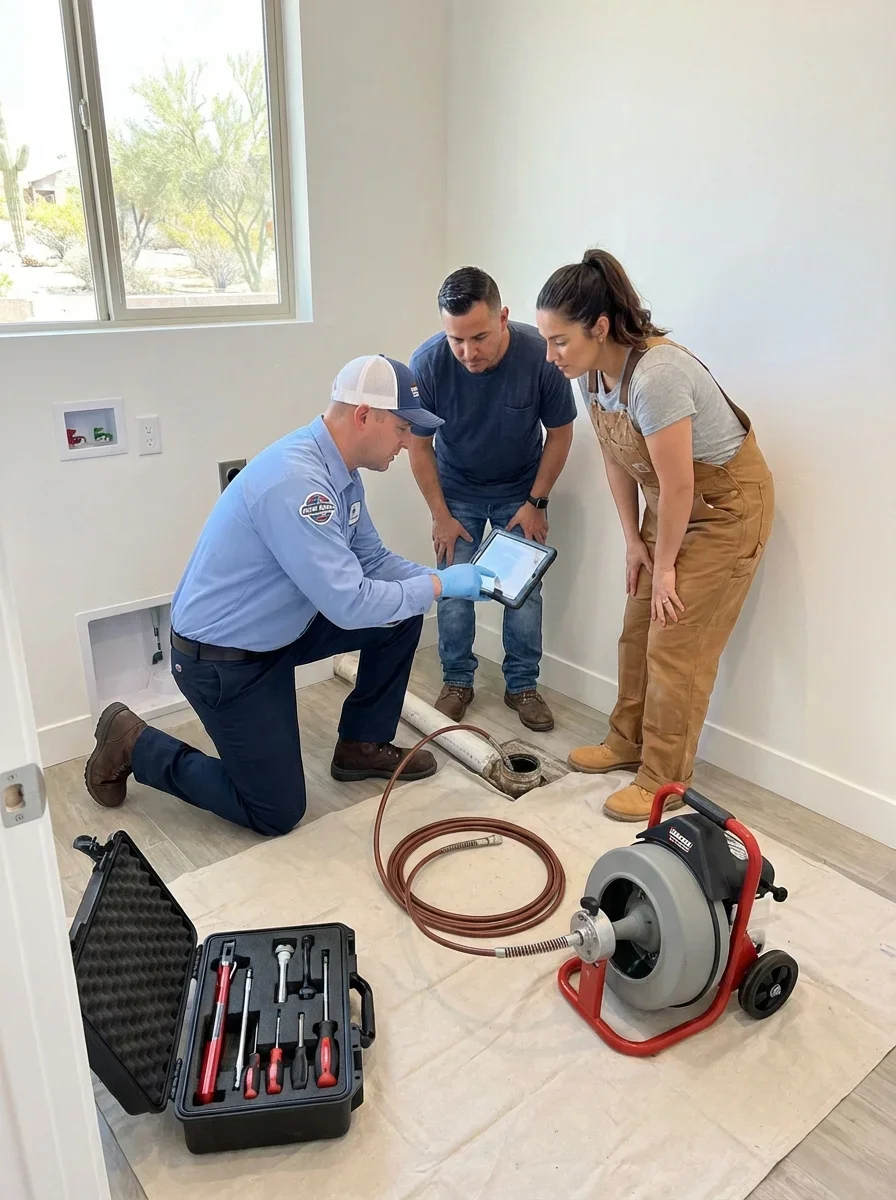
This step is non-negotiable. The plumber threads a camera through your drain line to identify:
- Pipe material and condition (cast iron, PVC, clay tile, Orangeburg)
- Blockage type and severity (grease, roots, mineral scale, collapsed sections)
- Existing damage (cracks, belly sags, offset joints)
- Safe pressure limits for your specific pipes
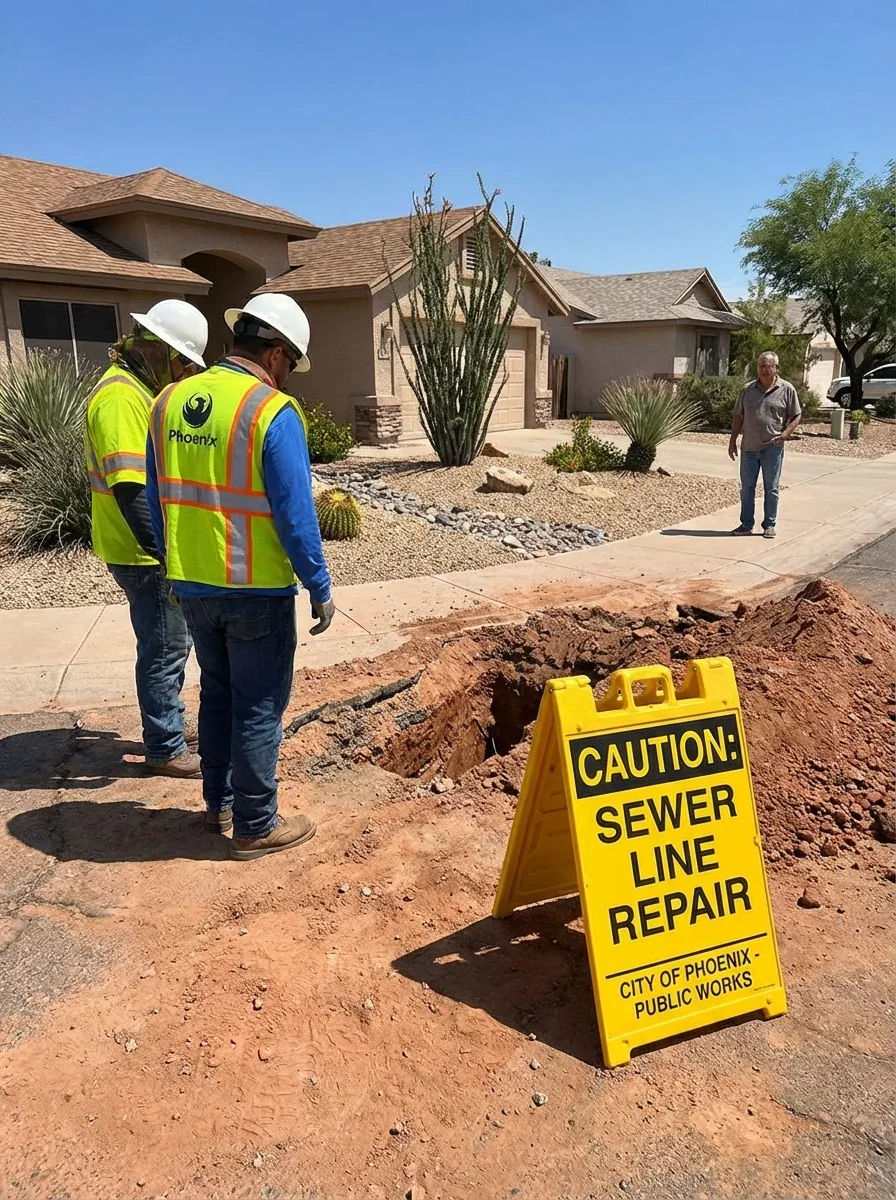
If the camera reveals a collapsed section or severely damaged pipe, hydro jetting won't fix it. You're looking at sewer line repair or replacement. Better to know before starting.
The inspection also identifies the best access point and nozzle strategy.
Pressure Calibration and Equipment Setup
The operator sets up at your cleanout (or creates access if needed). Residential jobs typically use truck-mounted or trailer-mounted units capable of 3,000-4,000 PSI at 4-8 gallons per minute.
Pressure calibration matters. PVC and cast iron can handle 3,500-4,000 PSI. Older clay tile needs 2,000-2,500 PSI maximum. Damaged pipe may require 1,500 PSI or less.
The nozzle selection depends on what the camera revealed:
- Penetrating nozzles for heavy root cutting
- Grease nozzles with rotating jets for kitchen lines
- Finishing nozzles for final wall scouring
For Phoenix homes with both grease and mineral scale buildup (common in hard water areas), the operator may switch nozzles mid-job.
Multi-Pass Cleaning and Post-Inspection
The operator makes multiple passes. Forward to break up blockages, backward to scour walls, forward again to flush debris. Severe buildup may require 3-4 complete passes.
You'll hear water rushing through your vents (that's normal — it means the line is clearing). You may see debris flushing into the street sewer if your cleanout is near the property line.
Post-inspection verification is critical. The operator runs the camera again to document results and verify complete cleaning. Professional contractors provide before/after video footage, which is valuable if you're selling your home or need documentation for insurance.
Total water usage is 200-400 gallons for a typical residential job. In Phoenix's water-conscious climate, some homeowners ask about this. The water goes into the sewer system (not wasted), and it's a one-time use that prevents future water waste from inefficient fixtures and recurring plumbing calls.
Seasonal timing note: Phoenix contractors often see hydro jetting demand spike in late spring (pre-summer maintenance) and after monsoon season when heavy rains expose drainage issues. Schedule during fall or winter for faster availability and potentially better rates.
✓ Choosing a Contractor
How to Choose a Hydro Jetting Contractor in Phoenix
Not every plumber owns hydro jetting equipment or knows how to use it properly.
This is specialized work that requires specific licensing, equipment, and training.
Arizona ROC Licensing and Insurance Requirements
Verify the contractor holds an active ROC license — either R-37 (residential plumbing), C-37 (commercial plumbing), or CR-37 (dual residential/commercial). Unlicensed operators can't legally perform hydro jetting in Arizona for jobs over $1,000.
Check the license at roc.az.gov. Look for:
- Active status with no disciplinary actions
- Proper license classification for your property type
- Current bond and insurance (Arizona doesn't mandate workers comp, so verify general liability independently)
Ask for proof of insurance. Hydro jetting done incorrectly can damage pipes. You want a contractor with $1-2 million general liability coverage, not just the minimum $4,000-$15,000 ROC bond.
Equipment Standards and Operator Experience
Professional-grade hydro jetting units cost $15,000-$40,000. Contractors using cheap rental units or undersized equipment can't deliver proper results.
Questions to ask:
- "What PSI and GPM is your equipment rated for?" — You want 3,000-4,000 PSI capability with 4-8 GPM flow.
- "Do you perform camera inspection before and after?" — If they say it's optional, walk away.
- "What nozzles do you stock for different blockage types?" — One-nozzle-fits-all is a red flag.
- "How do you calibrate pressure for different pipe materials?" — They should ask about your home's age and construction before quoting.
- "Can you provide before/after video documentation?" — Professional contractors include this automatically.
Experience matters with older Phoenix homes. Cast iron drain lines installed in the 1960s-1980s may have interior corrosion that's invisible from the outside. An inexperienced operator using full pressure can crack weakened pipes.
You want someone who's worked on your home's vintage before.
Red Flags and Questions to Ask
Walk away if the contractor:
- Quotes without camera inspection or even asking about pipe material
- Offers hydro jetting for significantly less than $300-350 (they're cutting corners)
- Doesn't ask about your home's age or drain history
- Can't explain how they'll adjust pressure for your specific pipes
- Pushes hydro jetting when traditional drain cleaning might solve the problem
Good contractors offer alternatives. If your issue is a simple hair clog in a bathroom sink, hydro jetting is overkill. If you've got recurring mainline backups or pre-sale inspection requirements, it's the right tool.
Ask for references from similar properties. A contractor who mainly works on new Peoria subdivisions may lack experience with 1970s cast iron in central Phoenix.
Match the contractor's background to your home's profile.
The best contractors in Glendale, Tempe, and throughout Phoenix Metro will walk you through the camera footage before and after jetting. They'll explain what they found, show you the results, and give you documentation you can keep.
That's the standard you should expect.
Top Contractors for Hydro Jetting
View all →
Frequently Asked Questions
Estimate Your Hydro Jetting Cost
Get an instant price range based on your project details.
Related Articles