Unexplained Water Pooling or Damp Spots
Water doesn't typically migrate through concrete slabs unless it's under pressure. If you're seeing puddles on your floor with no clear source, or if certain areas of your tile or carpet stay damp even when you haven't spilled anything, you're likely dealing with a pressurized leak beneath the slab.
In Phoenix's caliche soil conditions, water from a slab leak doesn't always drain away cleanly. Caliche — that cement-hard layer of calcium carbonate that sits 1-6 feet below grade across the Valley — acts like a bathtub liner. Water pools under your foundation and eventually wicks upward through cracks or seams in the concrete.
You'll often see this along exterior walls first, where the slab edge meets the soil.
Damp baseboards, carpet that smells musty in just one room, or tile grout that stays darker than surrounding areas are all red flags. These aren't condensation issues. Phoenix's average humidity hovers around 20-30% most of the year. If something's wet indoors without an obvious cause, start looking down, not up.
Hot Spots on Your Floor
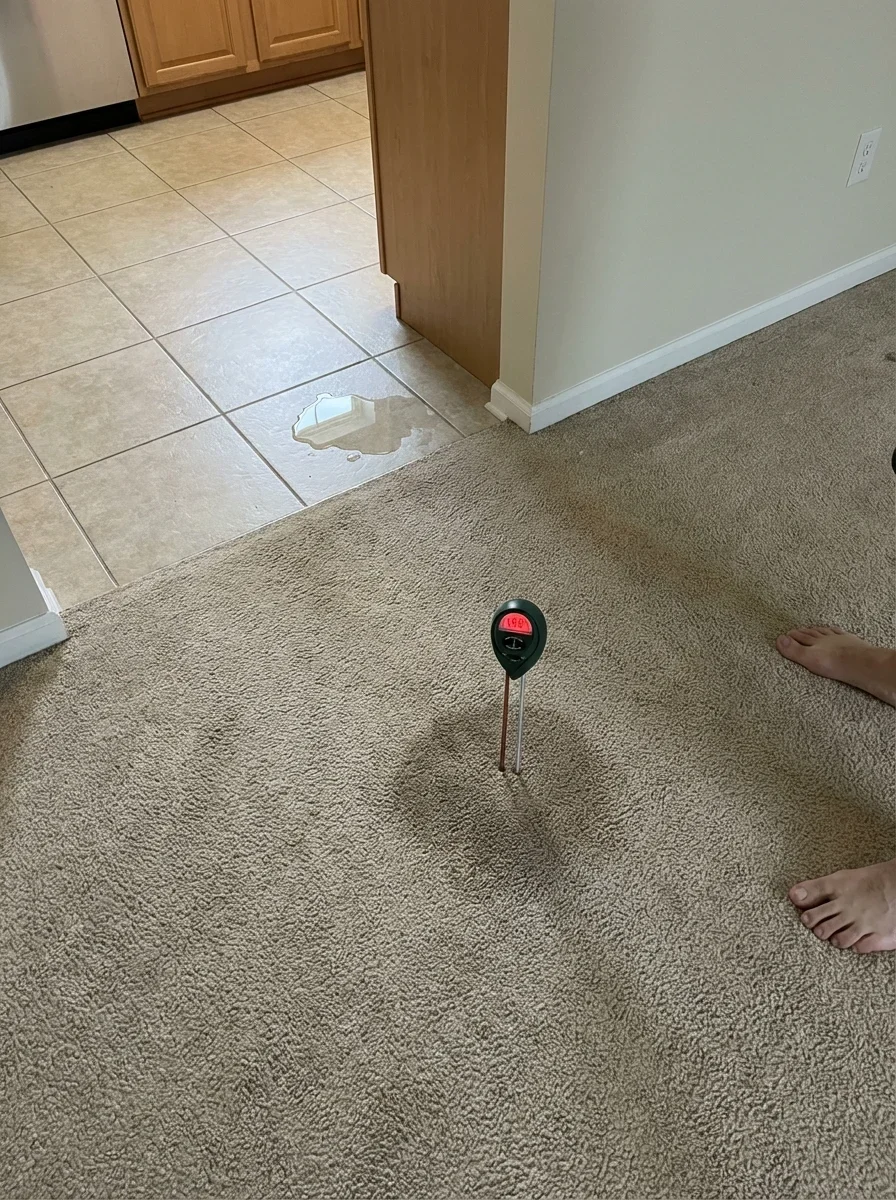
This is the signature Phoenix slab leak tell. You walk across your living room and hit a patch of floor that's noticeably warmer than the surrounding tile or carpet.
That warmth is coming from a hot water line leaking under the slab.
Your water heater pushes out water at 120-140°F. When that hot water escapes into the cool concrete foundation, it creates a localized heat signature you can feel with bare feet. Some homeowners describe it as walking over a heating vent that isn't running. In winter months when the slab is cooler, the contrast is even more pronounced.
The heat doesn't always appear directly above the leak. Water can travel laterally through gravel or sand layers beneath the slab before finding a path upward. But if you've got a warm spot that persists 24/7 and isn't near a refrigerator, water heater closet, or other heat source, your foundation is taking a hot bath.
A Water Bill That Jumps Without Explanation
Phoenix water rates in 2026 run about $5 per 1,000 gallons for residential customers. A slow slab leak — even a pinhole crack you'd barely notice if it were visible — can dump 30-50 gallons per day into your foundation. That adds up to $5-8 per month in wasted water.
Most slab leaks don't stay slow. As hard water scale and corrosion expand the initial pinhole, flow rates increase. Homeowners routinely report water bills spiking $40-$100 month-over-month with no change in usage patterns.
One family in Ahwatukee noticed their bill jump from $85 to $160 in a single billing cycle. Turned out a 20-year-old copper supply line under their master bathroom had corroded through.
Check your water meter when nothing in the house is running. Turn off all faucets, ice makers, toilets, swamp coolers, and irrigation. If the meter dial is still spinning, you've got a leak somewhere. If your toilet flappers and hose bibs check out fine, the leak is probably in a line you can't see.
Seasonal Usage Patterns vs. Real Leaks
Summer water bills in Phoenix naturally run higher — irrigation, pools, and increased indoor use all spike consumption. But that spike should be consistent year-over-year.
If your June 2026 bill is double your June 2025 bill and your landscaping hasn't changed, that's not heat. That's a leak.
The Sound of Running Water When Everything's Off
You're lying in bed at night and you hear water moving through pipes. But no one's using a sink, the toilets aren't refilling, and the dishwasher isn't running.
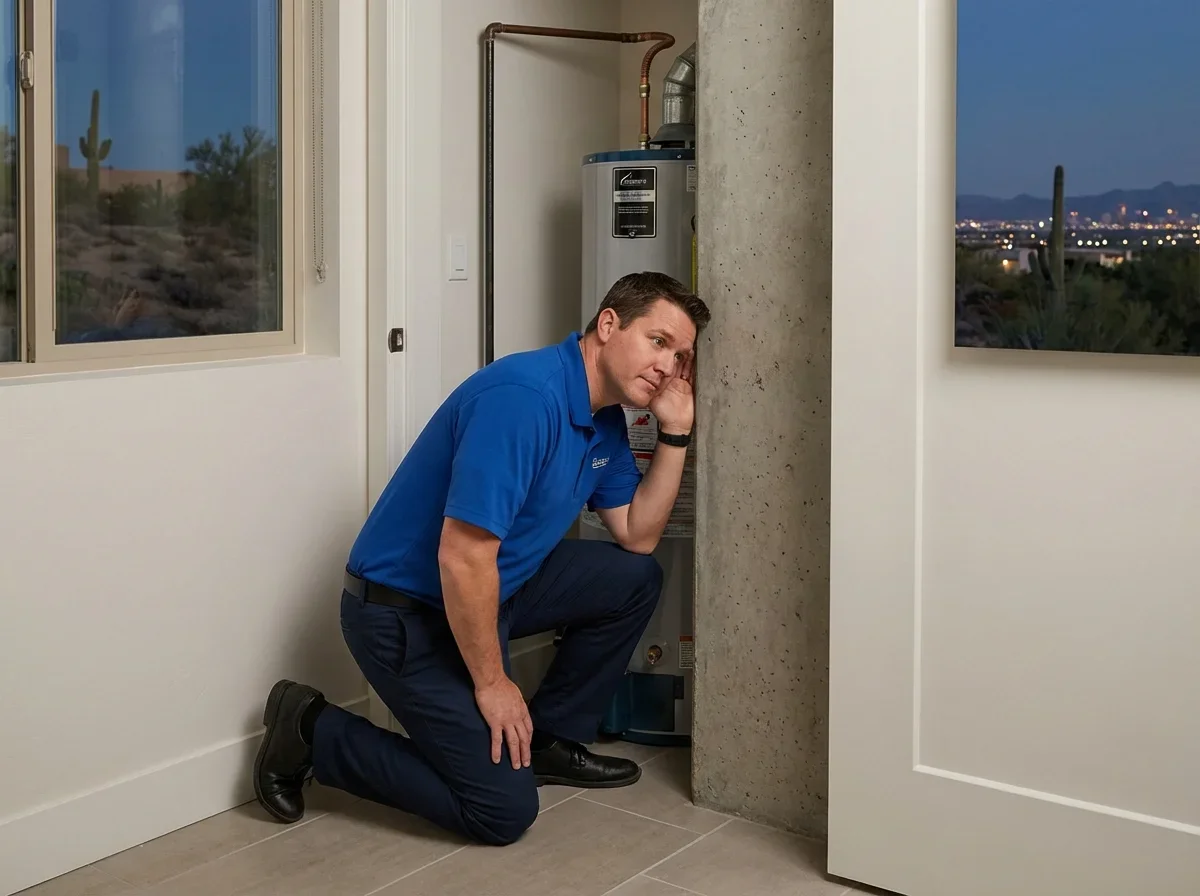
That faint hiss or trickle you hear is pressurized water escaping somewhere in your system.
Slab leaks on the supply side (hot or cold water) run continuously because your municipal water supply maintains constant pressure. Unlike a dripping faucet that only wastes water when the valve is open, a slab leak bleeds 24/7 at 50-80 PSI. You might hear it through the floor in quiet rooms, or notice it's louder near certain walls where pipes run vertically to reach fixtures.
Some homeowners describe it as white noise they didn't realize was there until it stopped after the repair. Others only notice it during overnight hours when background noise drops. If you're hearing water movement and you've confirmed every fixture and appliance is off, call for leak detection before it gets worse.
Cracks in Your Slab or Foundation
Arizona's clay and caliche soils are reactive. They expand when wet and contract when dry. A slab leak introduces moisture into soil that's been stable for decades, causing localized swelling beneath your foundation.
That swelling creates uneven pressure that can crack the slab from below.
You'll typically see hairline cracks first, radiating from the leak point. These aren't the cosmetic shrinkage cracks that appear in new concrete — those are usually straight and shallow. Leak-induced cracks often branch or widen over time as soil movement continues. In severe cases, you'll see differential settling where one section of the floor sits higher or lower than adjacent areas.
Exterior foundation cracks are another signal. If you're seeing new vertical or stair-step cracks in your block or stem wall, especially if they coincide with damp soil at the base, suspect a slab leak on the exterior side of the foundation.
Phoenix homes built before 1980 often have copper supply lines that run through the slab and exit near exterior hose bibs. Prime spots for corrosion and leaks.
Quick Reference: Most Common Slab Leak Signs
- Unexplained damp spots or water pooling on floors
- Warm spots on tile or carpet (indicates hot water line leak)
- Water bill jumps $40-$100+ without usage changes
- Sound of running water when all fixtures are off
- New cracks in slab or foundation walls
- Musty smell isolated to one room or area
- Low water pressure throughout the house
Mold or Mildew Smell in One Area
Mold needs three things: moisture, organic material, and time. In Phoenix's arid climate, you don't usually get sustained indoor moisture unless something's broken.
If one room or corner of your house smells musty while the rest of the house is fine, you've got a localized water source.
Slab leaks create perfect mold conditions underneath flooring materials. Carpet padding, subfloor adhesives, and the paper backing on vinyl or laminate all provide food. The moisture from the leak keeps everything damp, and the enclosed space under the flooring restricts airflow. You might not see visible mold for months, but you'll smell it.
Pay attention to where the smell is strongest. Mold tends to concentrate near the leak source but can spread along wet areas. If the smell is near baseboards or where tile meets carpet, water is often wicking upward through the slab. Once you start seeing visible mold on drywall or baseboards, the leak has been active long enough to saturate surrounding materials.
Low Water Pressure Throughout the House
A leak in your main supply line robs pressure from every fixture downstream. If your showers, faucets, and outdoor spigots all suddenly feel weaker, and you've ruled out low water pressure from other causes like clogged aerators or a failing pressure regulator, a main line slab leak is a likely culprit.
Phoenix water pressure typically runs 50-80 PSI at the meter. A significant leak on the main line before it branches to individual fixtures can drop that to 30-40 PSI, which you'll feel as weak flow everywhere.
The pressure loss is usually gradual as the leak develops. You might not notice it day-to-day. Then you realize one morning that your shower takes twice as long to rinse shampoo.
Branch Line Leaks vs. Main Line Leaks
If low pressure is isolated to one bathroom or one side of the house, the leak is likely on a branch line serving just those fixtures. Main line leaks affect the whole house.
Both are problems, but main line leaks waste more water and cause broader pressure issues.
What Causes Slab Leaks in Phoenix Homes
Understanding why these leaks happen helps you assess your home's risk. Phoenix isn't unique in having slab leaks, but several local factors accelerate the timeline.
Hard Water and Copper Pipe Corrosion
Phoenix's municipal water supply contains 300+ ppm of dissolved calcium carbonate. Well into the "very hard" category. When hard water flows through copper pipes, it deposits scale on interior walls. Over decades, that scale buildup restricts flow and creates localized corrosion cells where the copper oxidizes and thins.
Homes built between 1960 and 2000 almost universally used copper supply lines embedded in the slab. If your home was built in that window and still has original plumbing, you're in the prime age range for pinhole leaks.
A water softener can slow future corrosion, but it won't reverse damage already done.
Soil Movement and Pressure on Pipes
Caliche soil doesn't compress evenly. It's brittle when dry and expands unevenly when wet. As the soil beneath your slab shifts — even a fraction of an inch — it puts stress on rigid copper pipes that were laid 30-40 years ago. Add in thermal expansion cycles from hot water lines, and you've got metal fatigue over time.
Homes near washes or areas with poor drainage are especially vulnerable. Seasonal moisture changes from monsoon rains can cause enough soil movement to stress pipe joints or create micro-fractures that eventually leak.
Poor Installation and Pipe Contact Points
Not all slab leaks are caused by age or water quality. Poor installation — pipes laid directly on rebar, sharp turns without proper supports, or kinked lines — creates weak points from day one.
When a copper pipe rubs against rebar or concrete every time water flows through it, friction wears through the pipe wall over thousands of cycles.
Homes built during Phoenix's rapid expansion periods (1970s, 1990s-2000s) sometimes saw rushed construction where quality control slipped. If you're the second or third owner of a home from those eras, you might be inheriting installation issues that are only now becoming leaks.
When to Call for Professional Leak Detection
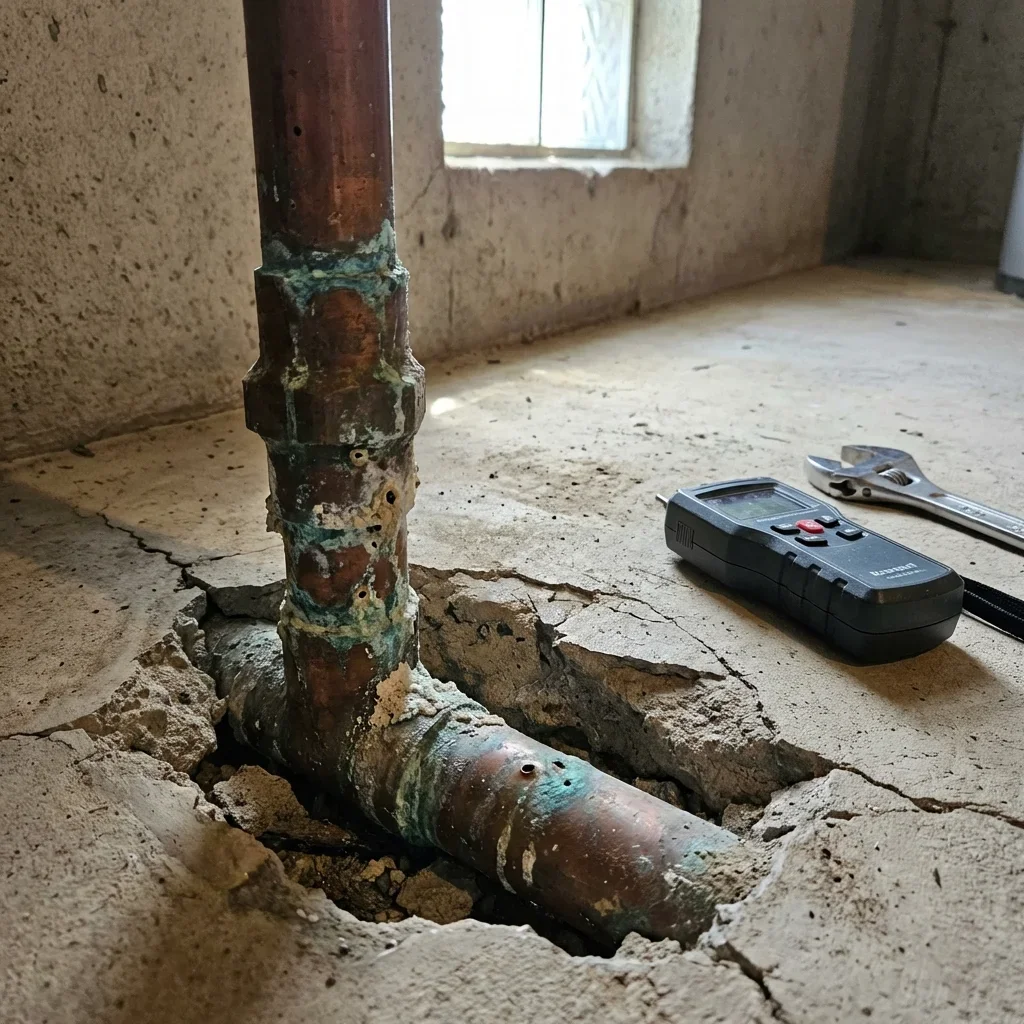
The moment you suspect a slab leak, call a licensed plumber with electronic leak detection equipment. Arizona ROC-licensed contractors can use acoustic listening devices, infrared cameras, and pressure testing to pinpoint the leak location without tearing up your entire floor.
Early detection saves you thousands. A pinhole leak caught early might only require jackhammering a 2x2 foot section of slab, repairing the pipe, and patching concrete.
Wait until you've got foundation cracks and mold remediation needs, and you're looking at a bill that climbs into five figures. Some homeowners who ignored early signs for a year or more ended up needing partial repiping because multiple lines had corroded beyond spot repair.
Verify your plumber's ROC license at https://roc.az.gov/ before they start work. Licensed contractors carry insurance and post a bond, which gives you recourse if something goes wrong. The investment in proper leak detection — typically $200-$400 — is money well spent compared to guessing and cutting into your foundation blindly.
Insurance Coverage Considerations
Most Arizona homeowners policies cover the cost of accessing and repairing the leak, but not the cost of damage the leak caused before you discovered it. They'll pay for jackhammering the slab and fixing the pipe, but not for mold remediation or foundation stabilization.
The faster you catch it, the less out-of-pocket expense you'll face beyond the repair itself.
Pro Tip: Take photos of your water meter reading before bed and again first thing in the morning. If no one uses water overnight and the meter has moved, you have a leak running 24/7 — a clear sign of a slab leak or other hidden plumbing issue.
Repair Options: Spot Repair vs. Rerouting vs. Repiping
Once the leak is located, you've got three main repair paths. The right choice depends on the age of your plumbing, the location of the leak, and your budget.
Spot repair involves breaking through the slab at the leak point, cutting out the damaged section of pipe, and installing a new coupling or length of pipe. This is the most affordable option for isolated leaks on newer copper or PEX systems. Cost typically runs $1,500-$3,000 depending on access difficulty and whether you need to remove tile or other finished flooring.
Rerouting bypasses the leaking section entirely by running a new line through the attic or walls. If the leak is under a kitchen island or in another hard-to-access spot, rerouting can be faster and cheaper than jackhammering. The old pipe stays in place but is capped off and abandoned.
This works well for branch lines but isn't practical for main supply lines.
Repiping replaces all supply lines, usually by routing new PEX lines through the attic and down through walls to fixtures. If your home is 30+ years old with original copper plumbing, and you've already had one or two slab leaks, repiping is often the smarter long-term investment. You'll spend $4,000-$8,000 now, but you eliminate the risk of future slab leaks and gain better water pressure. See our repiping cost guide for Phoenix-specific pricing.
| Repair Method | Best For | Typical Cost | Pros | Cons |
|---|---|---|---|---|
| Spot Repair | Single leak, newer plumbing | $1,500-$3,000 | Most affordable, preserves slab | Doesn't address aging pipes elsewhere |
| Rerouting | Hard-to-access locations | $800-$2,500 | No slab demolition, quick fix | Old pipe remains in slab (future risk) |
| Whole-House Repiping | Homes 30+ years old, multiple leaks | $4,000-$8,000 | Eliminates all slab leak risk, better pressure | Highest upfront cost, more invasive |
Preventing Future Slab Leaks
You can't eliminate the risk entirely, but you can reduce it. Installing a water softener reduces scale buildup in copper pipes and extends their lifespan. Maintaining steady water pressure — not letting it spike above 80 PSI — reduces stress on joints and fittings.
If you're renovating and opening walls anyway, consider having accessible portions of your copper supply lines inspected. A plumber can check for thinning, scale buildup, or signs of corrosion that suggest you're approaching the failure point.
Catching these during planned work is far cheaper than waiting for an emergency.
For homes with original 1960s-1990s copper plumbing, budgeting for eventual repiping is smart financial planning. You're not throwing money away. You're replacing infrastructure that has a finite lifespan, just like a roof or water heater.