What Is Polybutylene Pipe and Why Was It Used?
Polybutylene (PB) is a form of plastic resin that was manufactured into piping for residential water supply systems. Between 1978 and 1995, builders installed it in an estimated 6 to 10 million U.S. homes. The appeal was obvious: polybutylene cost about a third less than copper and could be installed faster because it came in long, flexible coils instead of rigid sections.
In Arizona's hot construction market during the 1980s and early 1990s, that cost advantage mattered. Developers building entire subdivisions in Phoenix, Tucson, and Mesa used polybutylene to save labor and materials. The pipe was approved by all major building codes at the time, so there was no regulatory reason to avoid it.
The problem emerged gradually.
Chlorine and chloramines — disinfectants used by nearly every municipal water system in Arizona — react with polybutylene over time. The pipe breaks down from the inside, becoming brittle and developing micro-cracks. Leaks start small, often as pinhole drips, then escalate. Because most polybutylene runs under concrete slabs in Arizona homes (basements don't exist here), a small leak can turn into thousands of dollars in foundation damage before you even notice it.
How to Identify Polybutylene in Your Home
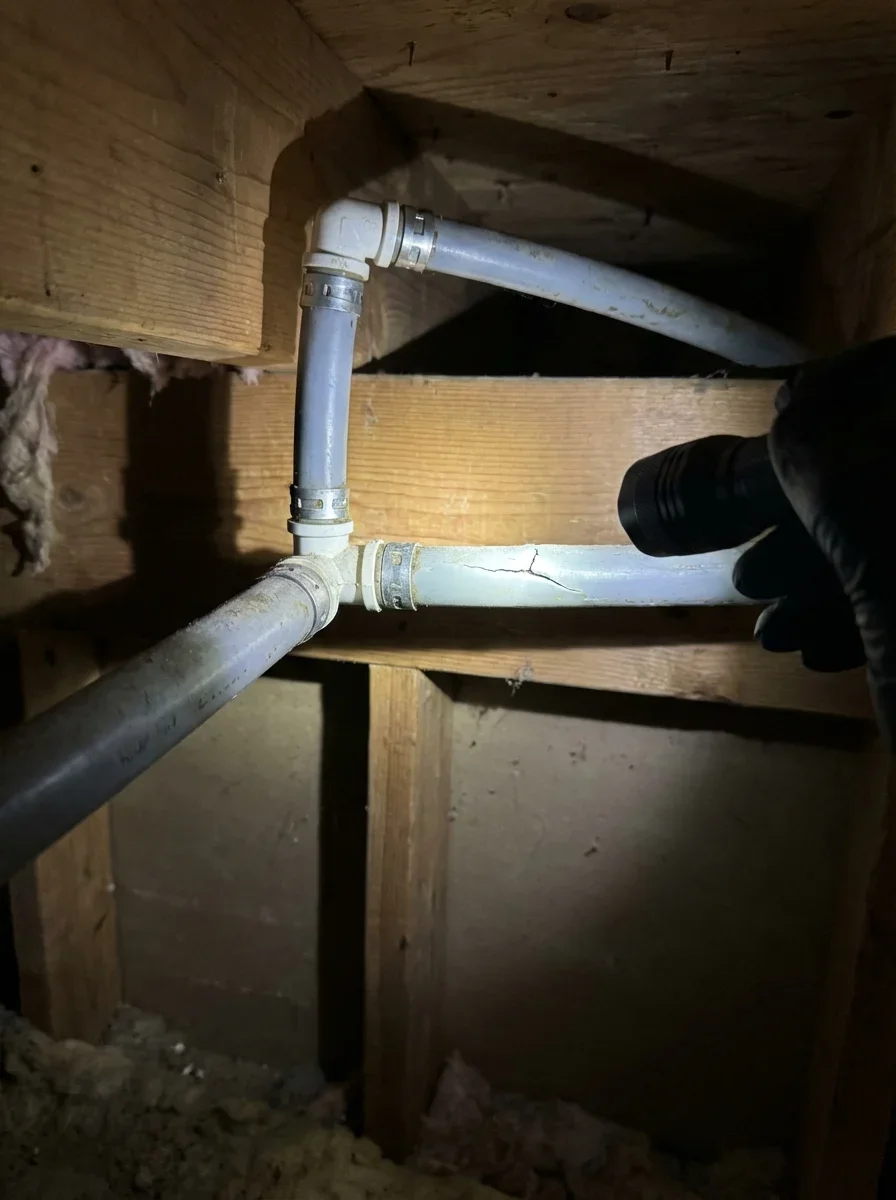
Polybutylene pipe is typically gray, but you might also find it in blue, black, or silver-gray. The key identifier is a "PB2110" stamp on the pipe itself, sometimes accompanied by the manufacturer's name (Vanguard, Shell, or others).
Check these locations:
- Water heater connections — Look at the supply lines coming into and out of your water heater. If they're gray plastic, that's likely polybutylene.
- Under sinks — Open the cabinet and inspect the hot and cold supply lines.
- Main water shutoff — Where the city line enters your home, usually in the garage or near the front exterior wall.
- Attic or crawl space — If your home has horizontal pipe runs visible anywhere, check them directly.
Polybutylene fittings are often gray plastic (acetal) and can also fail. Even if the pipe sections look fine, the fittings may crack or leak at the threaded connections.
If you're buying a home built during the polybutylene era, have your inspector specifically check for it. Many sellers won't disclose it unless asked directly, and some homeowners genuinely don't know it's there.
Why Polybutylene Fails in Arizona Homes
Arizona's water chemistry accelerates the degradation process. Most Valley cities treat water with chloramines (a combination of chlorine and ammonia) because they're more stable in hot climates than chlorine alone. Chloramines are effective disinfectants, but they're also more aggressive toward polybutylene.
Phoenix water contains roughly 300+ ppm of dissolved minerals — calcium carbonate, magnesium, and other compounds that make it "very hard." That mineral content doesn't directly damage polybutylene the way it does copper, but the oxidizing agents in treated water do. Every time water flows through a polybutylene pipe, trace amounts of chlorine or chloramines contact the interior surface. Over 20 to 30 years, that contact weakens the molecular structure.
Temperature extremes don't help.
Arizona summer heat pushes attic temperatures well above 120°F, and even pipes buried in slabs experience thermal cycling as the ground heats and cools. Polybutylene becomes more brittle with age and heat exposure, increasing the likelihood of stress cracks at joints and bends.
You'll also see failures at connection points. The acetal fittings — those gray plastic elbows and tees — are a weak link. They crack under pressure changes, especially after decades of expansion and contraction. A fitting failure under your slab can mean excavating concrete just to replace a $2 part.
Pro Tip: Arizona's combination of hard water, chloramines, and extreme heat creates the perfect storm for polybutylene failure. Pipes that might last 40 years in cooler climates often fail in 20-25 years here.
Should You Repipe Before a Leak Happens?
The standard advice: if you have polybutylene and you plan to stay in the home more than a few years, repipe now.
The cost of a proactive repipe is almost always less than the cost of repairing water damage from a catastrophic leak. Here's the math that usually tips the decision. A whole-home repipe in Phoenix typically runs $4,000 to $8,000 for a 1,500-square-foot home with two bathrooms, depending on access and pipe material. That's not cheap. But a single slab leak — water pooling under your foundation for days or weeks before you notice — can cause $10,000+ in damage when you factor in foundation repair, flooring replacement, mold remediation, and increased water bills.
Insurance companies in Arizona are increasingly denying claims related to polybutylene. Some policies exclude coverage entirely if the adjuster determines the pipe was a "known issue" or if the failure resulted from long-term degradation rather than a sudden accident. Even if your insurer does pay, expect a fight and a likely premium increase.
When Waiting Makes Sense
If you're selling within the next year or two, repiping may not be your decision to make. Disclose the polybutylene to buyers and let them negotiate. Many buyers will ask for a price reduction or a repipe as a condition of closing, but that's easier than managing a mid-sale leak.
If your home has already had polybutylene replaced in some areas (say, the hot water lines but not the cold), you're in a gray zone. Partial repipes can buy time, but they don't eliminate risk. The remaining original pipe is just as old and just as likely to fail.
What to Expect During a Polybutylene Repipe
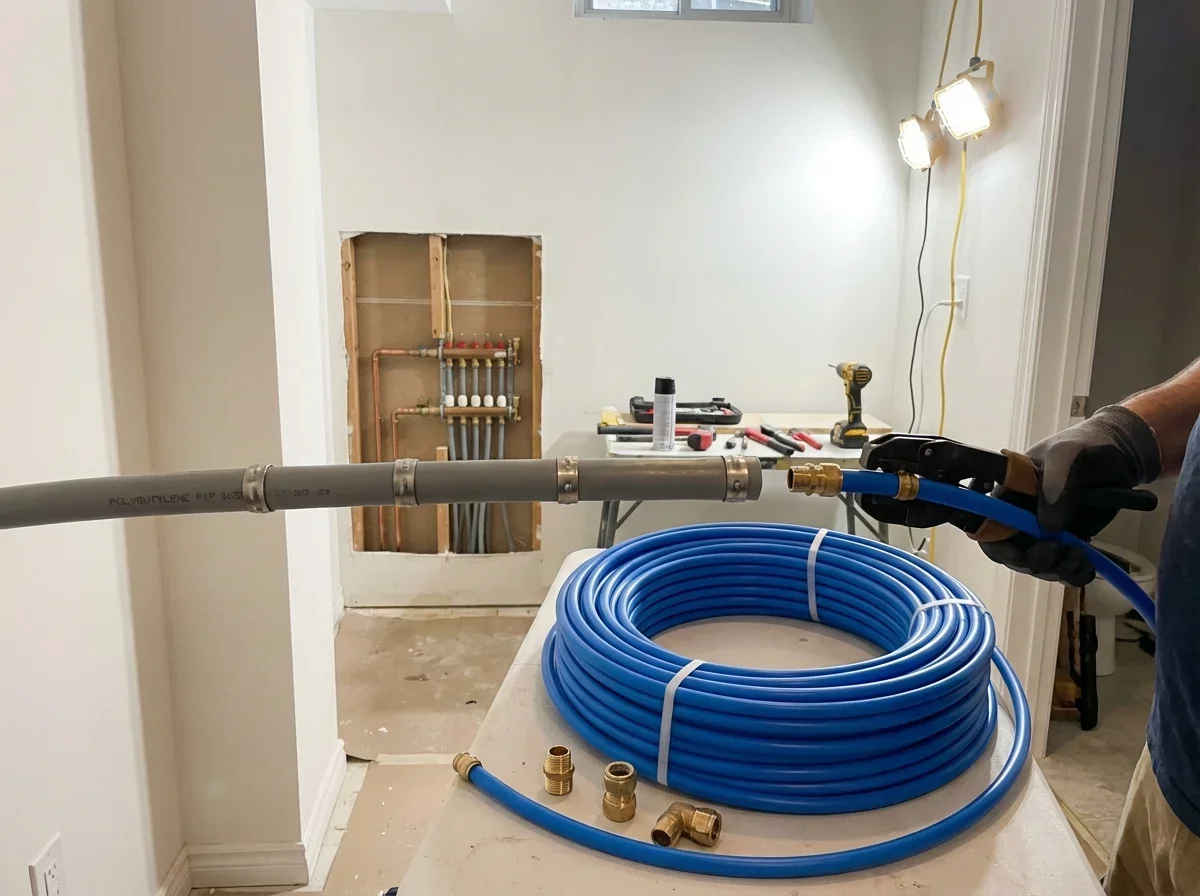
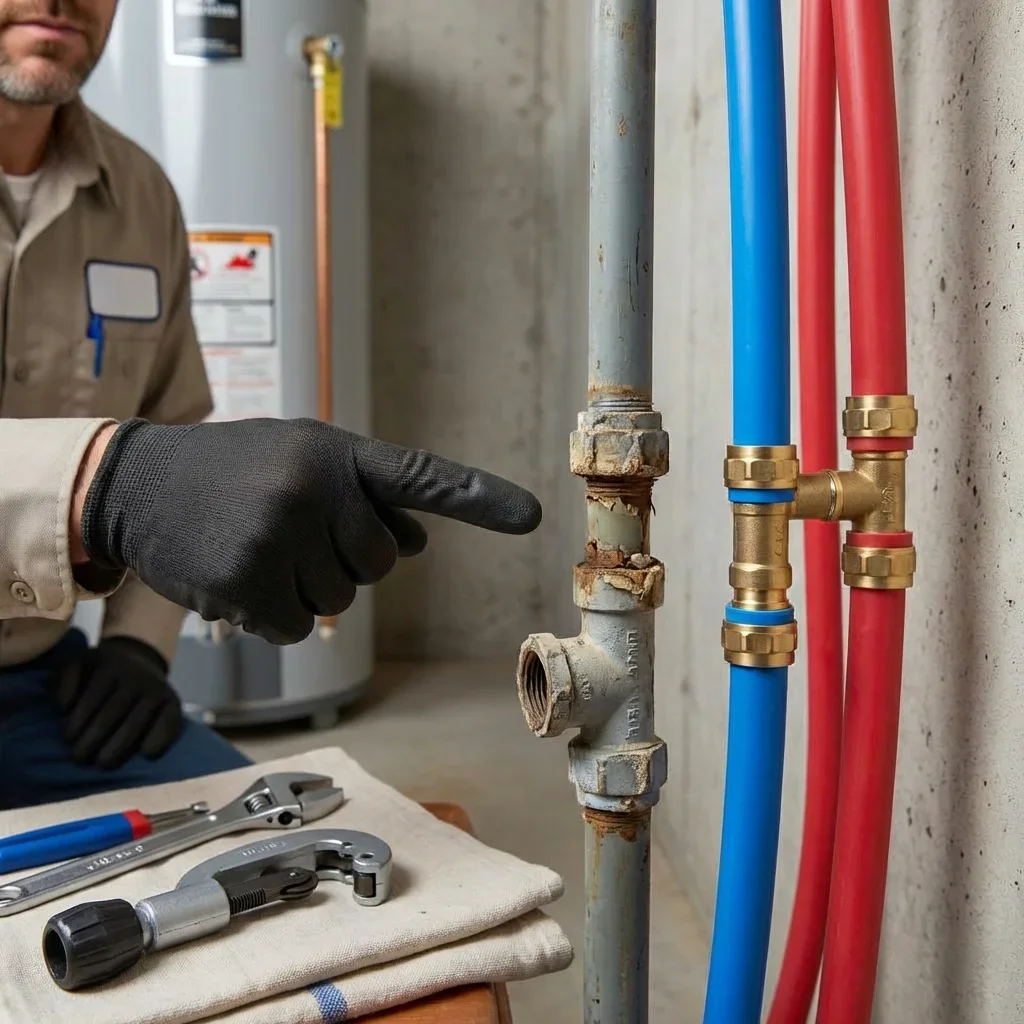
A full repipe means removing all polybutylene supply lines and replacing them with modern materials — typically PEX (cross-linked polyethylene) in Arizona, though copper is still an option if you prefer it. The process takes 2 to 5 days depending on your home's size and layout.
Most Arizona homes are slab-on-grade, meaning all supply lines run either through the slab or overhead in the attic. Contractors will usually re-route new lines through the attic wherever possible to avoid slab demolition. Expect some drywall cutting to access vertical pipe runs (called risers) inside walls.
Patching and paint are typically not included in the plumbing quote.
The crew shuts off your water at the meter, then systematically removes old pipe and installs new. You'll have no water during active work hours, but most contractors can restore service each evening if the job runs multiple days. Plan to flush toilets with buckets and avoid laundry during the project.
Repipe Timeline Quick Reference:
- Day 1: Initial demolition, old pipe removal begins
- Days 2-3: New pipe installation, manifold setup
- Day 4: Connections, pressure testing, fixture hookups
- Day 5: Final inspection, cleanup, water restoration
- Post-repipe: Drywall patching (typically separate contractor)
PEX vs. Copper for Arizona Repipes
PEX has become the default choice for Arizona repipes. It costs about 30% less than copper, installs faster (fewer joints = fewer potential leak points), and doesn't corrode in hard water. Phoenix's 300+ ppm calcium carbonate concentration eats copper over time, causing pinhole leaks in older homes. PEX is chemically inert — hard water flows through it with no effect.
Copper advocates point to its proven track record and slightly higher resale perception, but those advantages are fading as PEX becomes standard in new construction.
If you're undecided, read our Copper vs. PEX Repiping guide for a detailed comparison. Either way, make sure your contractor uses manifold distribution with PEX. This setup runs a dedicated line from a central manifold to each fixture, eliminating pressure drops and making future repairs simpler. It's a newer method than the old "trunk and branch" system, and it's worth specifying in your contract.
How to Find a Repipe Contractor in Arizona
Verify the contractor holds an active ROC license at roc.az.gov. You're looking for a residential plumbing contractor license (K-38 or similar). Arizona requires contractors performing work over $1,000 to be licensed, but enforcement varies.
Don't skip this step.
Unlicensed work voids permits, complicates insurance claims, and leaves you with no recourse if something goes wrong. Ask for proof of liability insurance. Unlike many states, Arizona does not require contractors to carry workers' compensation insurance, which means if a worker gets injured on your property and the contractor is uninsured, you could be liable. Get a certificate of insurance naming you as an additional insured before work starts.
Request a written estimate that itemizes labor, materials, and permit fees. Repiping requires a permit in every Arizona municipality. If your contractor offers to "skip the permit to save money," walk away. Unpermitted plumbing work will surface during a future home sale and tank your closing.
Get at least three quotes, but don't automatically pick the lowest. Repipe quality varies wildly based on the fittings used, the routing strategy, and how much restoration is included. A $4,500 quote that includes drywall patching is better than a $4,000 quote that leaves you with holes in every wall.
What Happens If You Ignore Polybutylene
Polybutylene doesn't fail all at once. It fails incrementally — a pinhole here, a weeping joint there. The first leak might be minor, showing up as a damp spot on the ceiling or a small puddle near the water heater. You call a plumber, they patch it, and things seem fine.
Then six months later, another leak.
Then another. Each repair costs $300 to $800 depending on access. After three or four repairs, you've spent $2,000+ and you still have the same aging pipe waiting to fail somewhere else.
The worst-case scenario is a slab leak that goes undetected. You notice your water bill creeping up, or a section of floor feels warm (from hot water leaking underneath), or you hear running water when nothing's on. By the time you call for leak detection, water has been pooling under your foundation for weeks. The concrete becomes saturated, the soil beneath erodes, and you're looking at foundation leveling in addition to pipe repair.
Insurance and Polybutylene Claims
State Farm, Farmers, and several other major carriers either exclude polybutylene from coverage or heavily restrict claims. If your policy was written after 2010, read the exclusions section carefully. Some insurers will cover "sudden and accidental" leaks but deny claims for "slow leaks" or "pipe deterioration."
Even if you get coverage, the deductible often exceeds the cost of a small repair.
Once you file a claim, your policy may not renew, or your rates will spike. Many Phoenix homeowners have learned the hard way that insurance is not a substitute for proactive repiping.
| Cost Comparison | Proactive Repipe | Reactive Repairs + Damage |
|---|---|---|
| Initial cost | $4,000-$8,000 | $0 (until first leak) |
| 3-5 years of repairs | $0 | $2,000-$4,000 (4-6 leaks) |
| Slab leak damage | $0 | $10,000-$25,000 (foundation, flooring, mold) |
| Insurance impact | None | Denied claims, premium increases, non-renewal risk |
| Total exposure | $4,000-$8,000 | $12,000-$29,000+ |
Polybutylene and Home Sales in Arizona
If you're selling a home with polybutylene, expect buyers to notice. Home inspectors in Arizona routinely flag it in their reports, and buyer's agents will push for a price reduction or a seller credit to cover repiping.
You have three options:
- Repipe before listing — Costs $4,000-$8,000 but eliminates the issue and likely increases your sale price by more than that.
- Offer a credit at closing — Negotiate a $5,000-$7,000 credit and let the buyer handle it. This works if you need to sell quickly.
- Price it in — Reduce your asking price to reflect the needed work. Expect buyers to low-ball even further.
FHA and VA loans can complicate sales. Some appraisers flag polybutylene as a "health and safety" issue, which can delay or kill a federally-backed loan. Cash buyers and conventional loans have more flexibility, but you're still limiting your buyer pool.
If you're buying a home with polybutylene, negotiate hard. A $10,000 price reduction is reasonable for a full repipe, and you should plan to get three quotes immediately after closing.
Don't wait.
Common Questions About Polybutylene
Can polybutylene be repaired instead of replaced?
You can repair individual leaks, but you're not solving the underlying issue. Every repair is a temporary fix. The pipe's degradation is systemic — if one section failed, the rest is on the same timeline. Most Arizona plumbers will tell you to stop throwing money at repairs and just repipe.
How long does polybutylene last in Arizona?
Most polybutylene installed in the 1980s started failing in the 2000s — roughly 20 to 30 years. If your home still has original polybutylene from 1990 or earlier, you're on borrowed time. Even pipe from the mid-90s is approaching 30 years old now in 2026.
Does homeowners insurance cover polybutylene repiping?
No. Insurance covers sudden, accidental damage (like a burst pipe), not preventive maintenance or upgrades. Repiping is considered a capital improvement, not a covered peril.
Is PEX safe for drinking water?
Yes. PEX is approved by NSF International and meets all U.S. drinking water standards. It's been used in Europe since the 1980s and in the U.S. since the 1990s. Arizona's extreme heat doesn't affect PEX performance the way it does polybutylene.
Can I finance a repipe?
Some ROC-licensed plumbing contractors offer financing through third-party lenders. You can also use a home equity line of credit (HELOC) or a personal loan. The monthly payment on a $6,000 repipe financed over 24 months is roughly $270-$300, depending on your rate.
Making the Decision
Polybutylene removal isn't legally required in Arizona. You can keep living with it, keep repairing leaks as they happen, and hope for the best.
But the risk compounds every year.
If you're planning to stay in your home long-term, the financial case for repiping is straightforward. If you're selling soon, the decision depends on your timeline and how much you want to simplify the transaction. Either way, don't ignore it — polybutylene is a problem that only gets worse, and Arizona's hard water and aggressive water treatment don't slow the process down.
Get quotes from at least three licensed contractors, verify their credentials at roc.az.gov, and ask for references from recent repipe jobs. A quality repipe will outlast your ownership of the home, eliminate a major insurance and resale liability, and end the cycle of surprise leaks every few months. For most homeowners, that's worth the cost.
Sources
- Water Resources Research Center, University of Arizona — "Leaks Plague Polybutylene Plumbing" https://wrrc.arizona.edu/sites/wrrc.arizona.edu/files/awr_1994_nov_dec_v3_n6_w.pdf
- Water Resources Research Center, University of Arizona. "Leaks Plague Polybutylene Plumbing." https://wrrc.arizona.edu/sites/wrrc.arizona.edu/files/awr_1994_nov_dec_v3_n6_w.pdf. Accessed April 07, 2026.
- Arizona Department of Education. "PLUMBING 46.0503.00 TECHNICAL STANDARDS." https://www.azed.gov/sites/default/files/2024/07/PlumbingTS.pdf. Accessed April 07, 2026.