Check the Obvious Culprits First
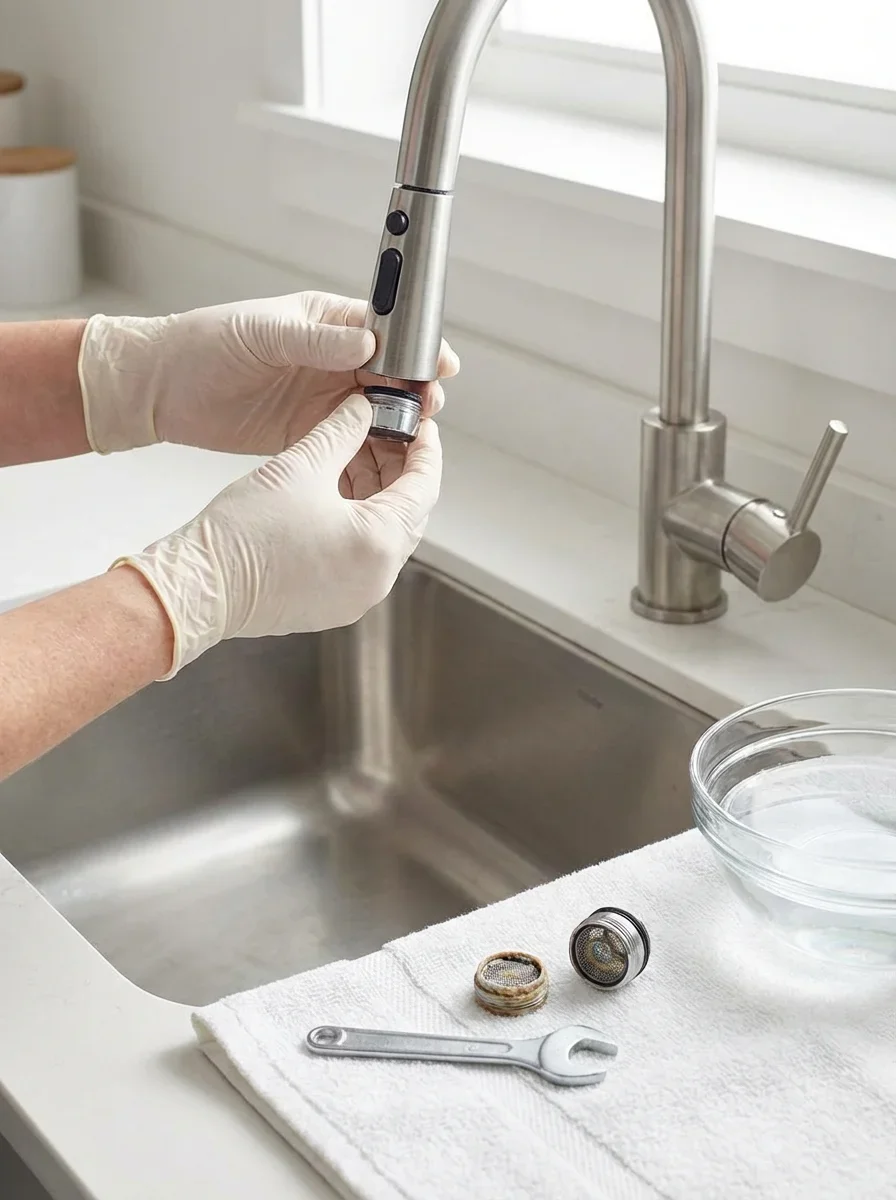
Before you assume the worst, rule out the simple fixes. Clogged aerators account for about 40% of single-fixture pressure complaints — and they take two minutes to clean.
Unscrew the aerator at the tip of your faucet. If it's coated in white or greenish buildup, that's calcium carbonate and copper corrosion from Arizona's hard water (typically 300+ ppm). Soak it in vinegar for 20 minutes, scrub with an old toothbrush, and screw it back on.
If pressure returns to normal, you just saved yourself a service call.
Check your main shut-off valve and the fixture-specific shut-offs under sinks. Valves can get accidentally bumped or partially closed during maintenance. The main valve should be fully open: parallel to the pipe, not perpendicular.
Water Heater Isolation Valve
If only your hot water has low pressure, check the shut-off valve on the cold water supply line entering your water heater. It should be fully open.
If you recently had water heater repair or maintenance, someone may have closed it partway and forgotten to reopen it completely.
When the Problem Is Building-Wide vs. Isolated
Low pressure in one fixture suggests a local blockage or valve issue. Low pressure throughout your entire house points to a main line problem or municipal supply issue.
Call your water utility to ask if there's scheduled maintenance, a main break, or pressure reductions in your area. Phoenix and Scottsdale occasionally reduce pressure during peak summer demand when reservoir levels drop. That's temporary and out of your control.
If your neighbors have normal pressure but yours is weak, the issue is on your property.
That narrows it down to your main supply line, pressure regulator, or whole-house piping.
Pro Tip: Before calling a plumber, do a quick neighbor check. If surrounding homes have the same issue, it's a municipal problem that will resolve on its own. If you're the only one affected, the problem—and the solution—is on your property.
Pressure Regulator Failure
Homes built after 1990 in Arizona typically have a pressure regulator (also called a PRV, pressure-reducing valve) installed where the main water line enters the house. This bell-shaped device protects your plumbing from excessive municipal pressure (often 100+ psi).
Regulators fail gradually. Internal diaphragms wear out, springs weaken, and sediment jams the valve seat. When they fail closed, pressure drops throughout the house. When they fail open, you get dangerously high pressure that can burst supply lines and damage fixtures.
Test your pressure with a screw-on pressure gauge from any hardware store (around $15). Attach it to an outdoor hose bib, turn off all water inside, and open the valve.
Normal residential pressure is 50-70 psi. Anything below 40 psi indicates a problem. Anything above 80 psi means your regulator has failed open and you're at risk for pipe damage.
Replacing a pressure regulator costs $300-$600 in Phoenix, including parts and labor from an ROC-licensed plumber. DIY replacement is possible if you're comfortable soldering copper or working with compression fittings, but you'll need to shut off the main and drain the system.
Hard Water Buildup in Pipes
Arizona's hard water doesn't just leave spots on your glassware. Over decades, calcium carbonate and magnesium deposits accumulate inside galvanized steel and copper pipes, narrowing the diameter and choking flow.
Homes built before 1980 with original galvanized supply lines often see a 50-60% reduction in pipe diameter after 40 years.
You can't fix this with descaling chemicals. The buildup is too extensive and the pipe walls are often corroded underneath the scale.
Repiping is the only permanent solution. In Phoenix, whole-house repiping costs $4,000-$12,000 depending on square footage and whether you choose PEX or copper. PEX has become the standard for Arizona repiping because it resists corrosion, doesn't accumulate scale as aggressively as copper, and costs 30-40% less to install.
One homeowner in Tempe reported gradual pressure loss over five years in a 1970s home with original copper lines. After repiping with PEX, pressure increased so dramatically they had to install a new regulator to bring it back to safe levels.
That's common. You don't realize how much flow you've lost until you restore it.
| Repiping Material | Lifespan | Corrosion Resistance | Phoenix Install Cost | Best For |
|---|---|---|---|---|
| PEX | 50+ years | Excellent | $4,000-$8,000 | Most Arizona homes; budget-conscious |
| Copper (Type L) | 30-50 years | Moderate (hard water issues) | $8,000-$12,000 | High-end remodels; municipal requirements |
| CPVC | 40-50 years | Good | $5,000-$9,000 | Hot water lines; DIY-friendly |
Slab Leaks and Hidden Corrosion
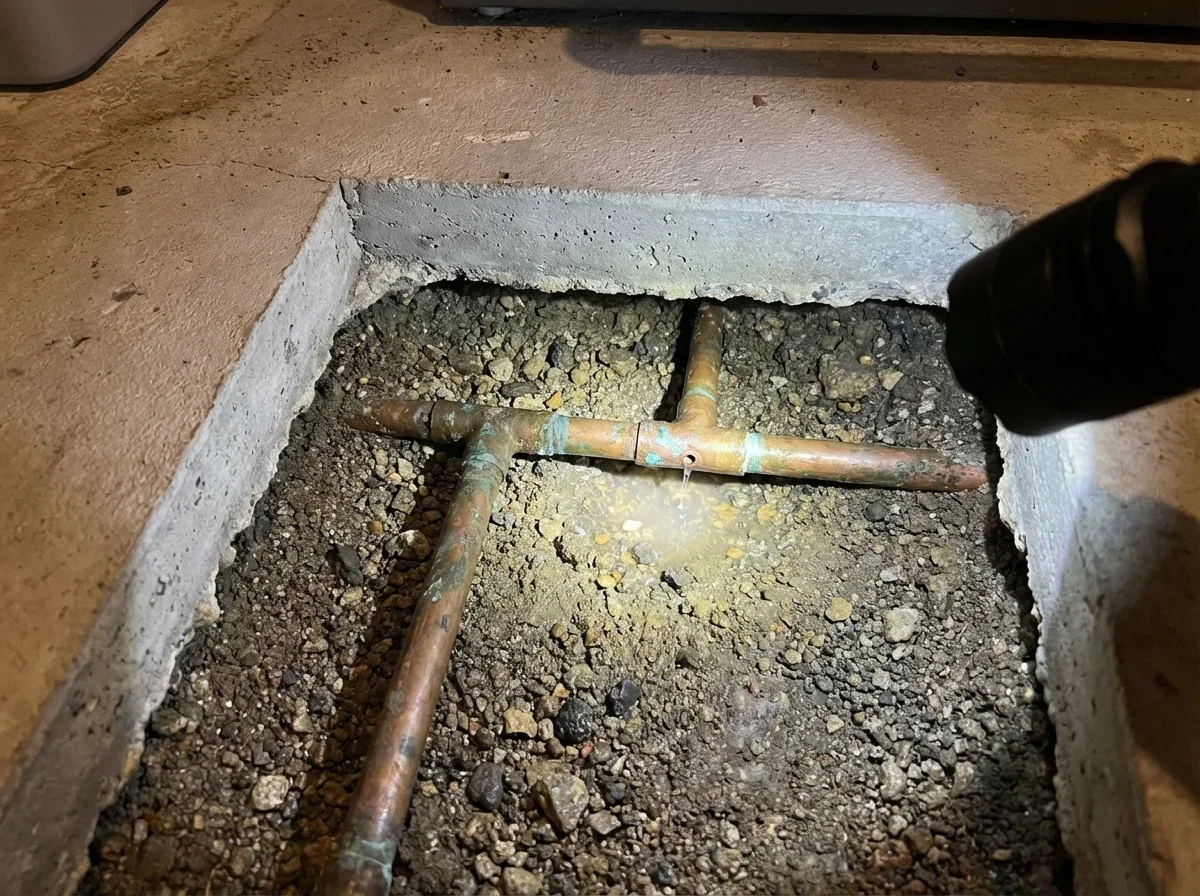
Arizona's slab-on-grade construction means all your supply lines run under or through the concrete foundation. When those pipes corrode or develop pinhole leaks, water escapes before it reaches your fixtures.
Slab leaks are especially common in Phoenix homes built between 1970-2000 with copper supply lines. The combination of hard water, high water temperature during summer months (municipal lines can hit 90°F+), and thermal expansion cycles causes copper to corrode from the inside out.
Symptoms include low pressure at multiple fixtures, unexplained water bills, warm spots on the floor, or the sound of running water when everything is off.
If you suspect a slab leak, shut off all fixtures and check your water meter. If the meter is still spinning, water is escaping somewhere in your system.
Professional leak detection uses electronic equipment and acoustic sensors to pinpoint the leak location without tearing up your entire slab. Expect to pay $200-$500 for detection, then $1,500-$4,000 for repair depending on whether the plumber can access the pipe through the slab edge or needs to tunnel under the foundation.
Caliche Soil Complications
Arizona's caliche layer (a cement-hard calcium carbonate hardpan 1-6 feet below the surface) makes exterior line repairs significantly more expensive than other regions. If the leak is in the yard rather than under the slab, excavation costs can double due to specialized equipment needed to break through caliche.
This is one reason many Phoenix plumbers recommend rerouting supply lines through the attic instead of repairing underground sections.
Failing Well Pumps (For Rural Homes)
If you're on a well system in Scottsdale, Cave Creek, or Queen Creek, low pressure often indicates a failing pump or pressure tank. Well pumps gradually lose capacity as impellers wear out and sediment accumulates.
Check your pressure tank's gauge. It should read 40-60 psi when the pump is off.
If it's consistently low or fluctuating wildly, the bladder inside the tank may have failed. Pressure tank replacement costs $300-$800. Submersible well pump replacement runs $1,200-$3,000 depending on depth.
Arizona's deep wells (often 300-600 feet) and hard water create harsher conditions for pumps than humid climates. Expect a well pump lifespan of 10-15 years here versus 20+ years in softer water regions.
Municipal Supply Issues and Shared Lines
Older Phoenix neighborhoods sometimes have undersized main lines serving too many homes. This was common in subdivisions built during the 1950s-1970s boom when builders underestimated future demand.
You'll notice this pattern: normal pressure early morning and late evening, weak pressure during peak hours (6-9 AM, 5-8 PM).
If your entire street has the same complaint, petition the city for a main line upgrade. Individual homeowners can't fix infrastructure problems.
Some pre-1980 Arizona homes have shared service lines: one supply line feeding two properties. This was legal at the time but creates pressure issues when both homes use water simultaneously. The only fix is installing a dedicated service line from the main to your property, which costs $2,500-$6,000 depending on distance and whether caliche excavation is required.
Corroded or Closed Gate Valves
The main shut-off valve where your service line enters the house (usually in the garage, near the water heater, or on an exterior wall) can corrode partially closed over time. These are typically gate valves, which have internal gates that slide up and down.
Gate valves that sit unused for years can seize in place or develop mineral buildup that prevents them from opening fully.
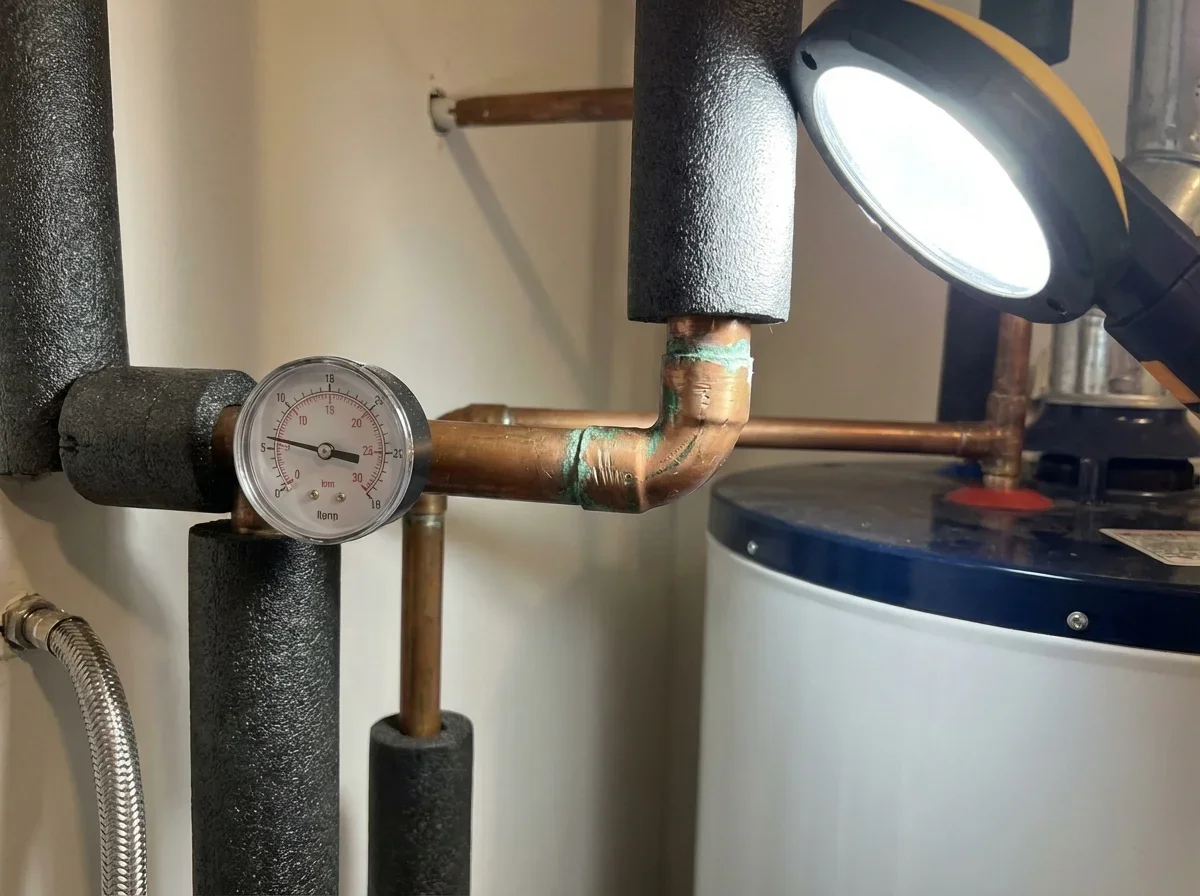
If your main valve looks crusty, has green corrosion (copper), or won't turn smoothly, it may be restricting flow even when you think it's fully open.
Replacing a main shut-off valve requires shutting off water at the street (homeowners can do this with a curb key, about $25 at hardware stores). Licensed plumbers charge $200-$400 for valve replacement. This is also a good time to upgrade to a quarter-turn ball valve, which is more reliable than old-style gate valves.
Water Softener Malfunction
If you have a whole-house water softener, a malfunctioning control valve or resin tank can choke flow. Softeners should be bypassed during troubleshooting. Most systems have a bypass valve that routes water around the softener temporarily.
If pressure returns to normal in bypass mode, the softener is the problem.
Resin beds can become compacted or fouled after 10-15 years. Control valves can stick due to sediment or mineral buildup. Water softener service typically costs $150-$350 depending on whether you need cleaning, parts replacement, or full resin bed replacement ($400-$800).
Some homeowners report that overly aggressive regeneration settings (too much salt, too frequent cycles) can cause temporary pressure drops during the backwash cycle. If pressure drops every night around the same time, check your softener's programming.
Thermal Expansion and Summer Pipe Stress
Phoenix's extreme summer heat causes copper pipes to expand and contract daily. Over time, this flexing loosens joints, cracks solder connections, and accelerates corrosion at bends and elbows.
You might notice pressure drops that coincide with the hottest months (June-August) but improve slightly in winter.
That's thermal stress opening micro-cracks that constrict flow. These often turn into full leaks within a year or two.
If you're experiencing summer-specific pressure issues in a home with copper lines older than 20 years, schedule a leak detection inspection before monsoon season. Catching a slow leak early is far cheaper than dealing with water damage after a pipe bursts.
Arizona-Specific Pressure Loss Factors:
- Hard water mineral content: 300+ ppm (national average: 60-120 ppm)
- Summer municipal water temps: 85-95°F (causes accelerated copper corrosion)
- Caliche soil layer: adds $1,000-$3,000 to excavation costs
- Thermal expansion cycles: 40-50°F daily swings in summer months
- Well depths: 300-600 feet (vs. 100-200 feet in humid regions)
Sediment in the Water Heater Tank
If only your hot water pressure is weak, the problem might be sediment buildup in your water heater tank. Arizona's hard water deposits calcium and magnesium at the bottom of the tank, which can clog the outlet pipe or reduce the effective tank volume.
Annual flushing prevents this. Attach a garden hose to the drain valve at the bottom of the tank, run it outside or to a floor drain, and open the valve to flush sediment.
You should see cloudy, gritty water for the first few gallons, then it should run clear.
If you've never flushed your water heater and it's more than five years old, sediment may be so compacted that it won't drain fully. At that point, you're looking at professional descaling or water heater replacement. Replacement costs $1,200-$3,500 in Phoenix depending on whether you choose tank or tankless.
Dip Tube Disintegration
Pre-2000 water heaters sometimes have defective dip tubes: the plastic pipe that delivers cold water to the bottom of the tank. When these disintegrate, chunks of plastic clog aerators and valve screens throughout the house, causing erratic pressure.
If you're finding white plastic fragments in your aerators and only hot water pressure is affected, the dip tube has failed.
Replacement is $150-$300 for parts and labor, but if your water heater is already 10+ years old, replacing the entire unit makes more sense.
Corroded Galvanized Pipes
Homes built before 1970 often have galvanized steel pipes, which corrode from the inside out. The zinc coating eventually wears away, leaving bare steel exposed to water and oxygen. Rust buildup narrows the pipe bore and breaks loose in chunks that clog downstream fixtures.
You can spot galvanized pipes by their dull gray color and threaded connections.
If you cut into one and see rusty water or a severely narrowed opening, replacement is the only option. Partial repiping (replacing the worst sections) costs less upfront but often turns into full repiping within a few years as adjacent sections fail.
Verify any plumber you hire for repiping work holds an active Arizona ROC license at roc.az.gov. Repiping requires permits in most Arizona cities, and unpermitted work can void your homeowner's insurance and complicate future home sales.
When to Call a Licensed Plumber
If you've cleaned aerators, checked valves, and confirmed municipal pressure is normal but you still have low pressure, you need professional diagnostics. Licensed plumbers have pressure testing equipment, camera inspection tools, and leak detection technology that homeowners don't.
Red flags that require immediate professional help:
- Sudden pressure drop throughout the house
- Discolored water (rust, sediment, or cloudiness)
- Water meter spinning when all fixtures are off
- Damp spots on walls, ceilings, or floors
- Unexplained spike in your water bill
- Pressure loss accompanied by strange noises (banging, hissing, whistling)
For emergencies outside normal business hours, emergency plumbing services typically charge $150-$300 trip fees plus hourly rates of $100-$200. Non-emergency diagnostics during business hours are often free if you proceed with the recommended repair.
Get at least two quotes for major work like repiping or slab leak repair.
All contractors performing work over $1,000 in Arizona must hold an active ROC license. Ask for proof of insurance. Arizona doesn't require workers' comp, so verify both general liability and workers' comp coverage independently. The ROC bond is only $4,000-$15,000 depending on license type, which may not cover large claims if something goes wrong.
Prevention: Protecting Your Plumbing Long-Term
You can't eliminate Arizona's hard water or stop pipes from aging, but you can slow the damage. Install a whole-house water softener if you don't already have one. Softened water reduces scale buildup by 80-90%, extending the life of your pipes, water heater, and fixtures by years.
Flush your water heater annually. Insulate hot water pipes in the attic to reduce temperature swings.
Replace aging copper supply lines proactively. Waiting until they fail often means water damage on top of plumbing costs.
If your home was built before 1990 and still has original plumbing, budget for repiping within the next 5-10 years. Copper pipes in Phoenix homes typically last 30-50 years before corrosion and hard water buildup make replacement necessary.
Galvanized pipes should have been replaced decades ago.
Monitor your water bill for unexplained increases. A jump of 20%+ without a change in usage often indicates a hidden leak. Catching slab leaks early (before they undermine your foundation or damage flooring) saves thousands in repair costs.