The Rotten Egg Smell (Mercaptan Additive)
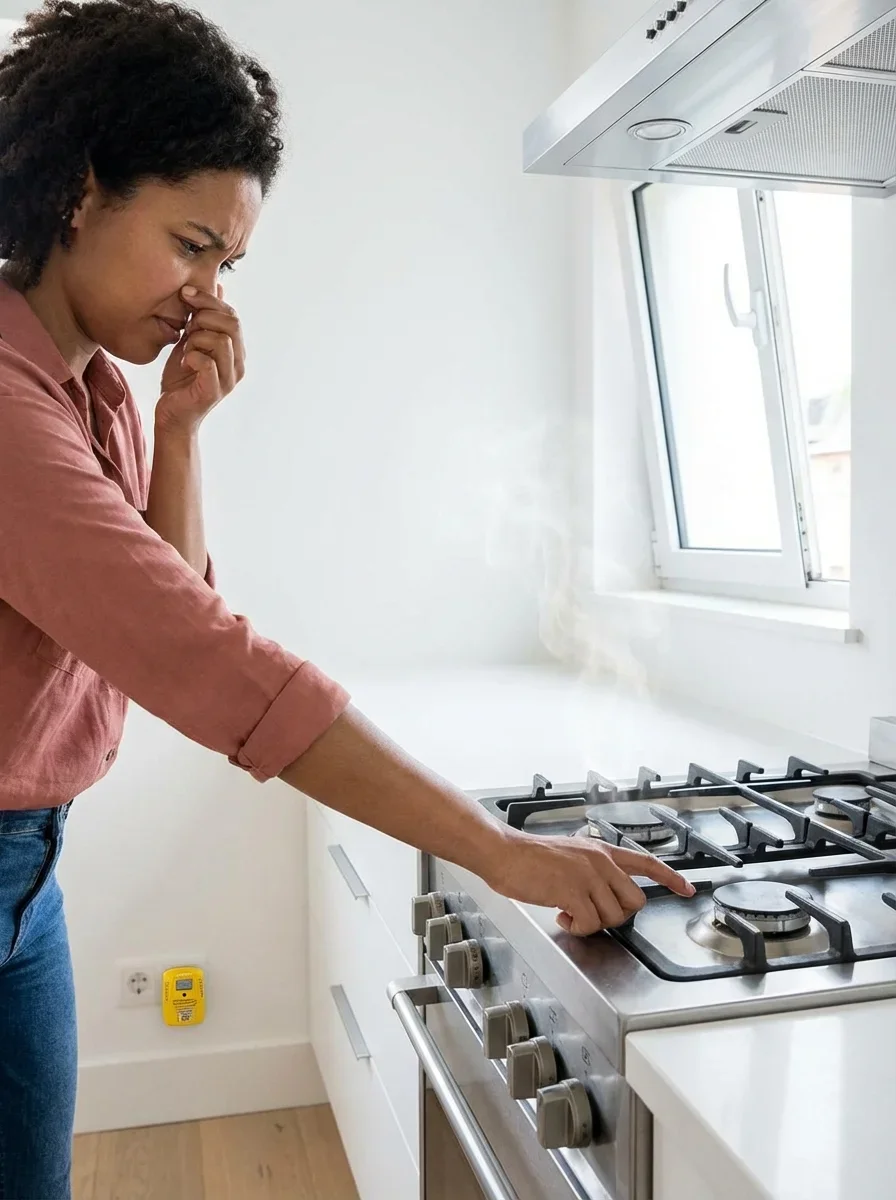
Natural gas is odorless in its pure form. Utility companies add a chemical called mercaptan to create that distinctive rotten egg or sulfur smell — the primary warning system built into your gas delivery.[2]
If you detect this smell anywhere in your home, don't convince yourself it's spoiled food or a sewer gas issue. The odor is deliberately strong and unpleasant to trigger immediate recognition. In Arizona's dry climate, the smell can concentrate quickly in enclosed spaces like laundry rooms or water heater closets, especially in homes with poor ventilation.
One critical exception: older adults and people with diminished sense of smell may not detect mercaptan at dangerous concentrations.
If someone in your household has COVID-19 long-term olfactory damage, sinus issues, or age-related smell loss, you need backup detection methods like electronic gas detectors — particularly near gas appliances.
Audible Hissing or Roaring Sounds
A pressurized gas line releasing natural gas creates distinct sounds. Listen for hissing near gas meters, appliance connections, or along exterior walls where gas lines run.[2] In larger leaks — like a severed line from construction damage — you might hear a roaring sound similar to a high-pressure air compressor.
These sounds intensify near the leak source. Walk your home's perimeter and check the gas meter cabinet (typically on the side of the house in Phoenix-area homes). Arizona's concrete block and stucco construction can muffle sounds inside walls, so exterior checks matter.
If you hear hissing after recent work near your home — landscaping, fence installation, pool equipment upgrades — suspect a damaged line.
Southwest Gas reports that excavation damage is the leading cause of residential gas line failures in Arizona, often from contractors who didn't call 811 before digging.[4] The state's shallow caliche layer means gas lines often run just 18-24 inches below grade, making them vulnerable to shovel strikes and auger penetration.
Physical Symptoms in People and Pets
Natural gas exposure triggers recognizable physical responses. Headaches, dizziness, nausea, and fatigue appear first — symptoms that mimic flu or dehydration, especially during Phoenix summers when heat exhaustion is common.
More severe exposure causes difficulty breathing, chest pain, irregular heartbeat, and loss of coordination.
Pets show signs faster than humans due to their smaller body mass and faster respiratory rates. Watch for lethargy, vomiting, disorientation, or red/irritated eyes in dogs and cats.
Carbon Monoxide Overlap
Gas appliances with incomplete combustion produce carbon monoxide (CO) alongside any gas leak. CO poisoning symptoms overlap with natural gas exposure: headache, confusion, shortness of breath.
The difference is CO has no odor.
You might smell rotten eggs from escaping natural gas while simultaneously experiencing CO poisoning from a malfunctioning water heater. Every Arizona home with gas appliances should have CO detectors on each level — the Arizona Residential Code requires it for new construction and strongly recommends it for existing homes.
What About the Flame Color Change?
You'll often read that yellow or orange flames (instead of blue) on gas appliances indicate incomplete combustion or a leak. That's partially true — but in Arizona, hard water scale buildup on burner ports causes yellow flames more often than gas leaks do.
If your water heater or furnace flame changes color, yes, call a professional.
But don't assume it's leaking gas until confirmed. It might just need burner cleaning.
Quick Reference: Gas Leak vs. Other Common Issues
- Rotten egg smell → Gas leak (evacuate immediately)
- Yellow/orange flames → Usually hard water buildup (needs inspection, not evacuation)
- Headache + rotten egg smell → Gas leak
- Headache + NO smell → Possible carbon monoxide (also evacuate)
- Sewer smell near drains → Dry P-trap or sewer issue (not gas)
- Pilot light out frequently → Pressure issue (needs inspection)
Environmental and Visual Indicators
Natural gas escaping underground or near the surface creates visible disturbances. Look for dirt or dust blowing up from the ground with no wind present, especially near gas meter locations or along known pipe routes.[2]
Dead or discolored vegetation in localized patches — particularly along a line pattern — indicates underground gas killing plant roots. This is easier to spot in irrigated areas where surrounding grass stays green. Desert landscaping makes this harder to identify, but you might notice brittleness or sudden browning in normally hardy plants like oleander or bougainvillea.
If you have a pool, fountain, or irrigation valve box, watch for unusual bubbling in standing water.
Gas escaping through soil and percolating up through water creates persistent bubbles that don't stop.[3] This isn't the temporary bubbling from disturbed sediment. It's continuous and concentrated in one area.
Inside Your Home: Appliance-Specific Warning Signs
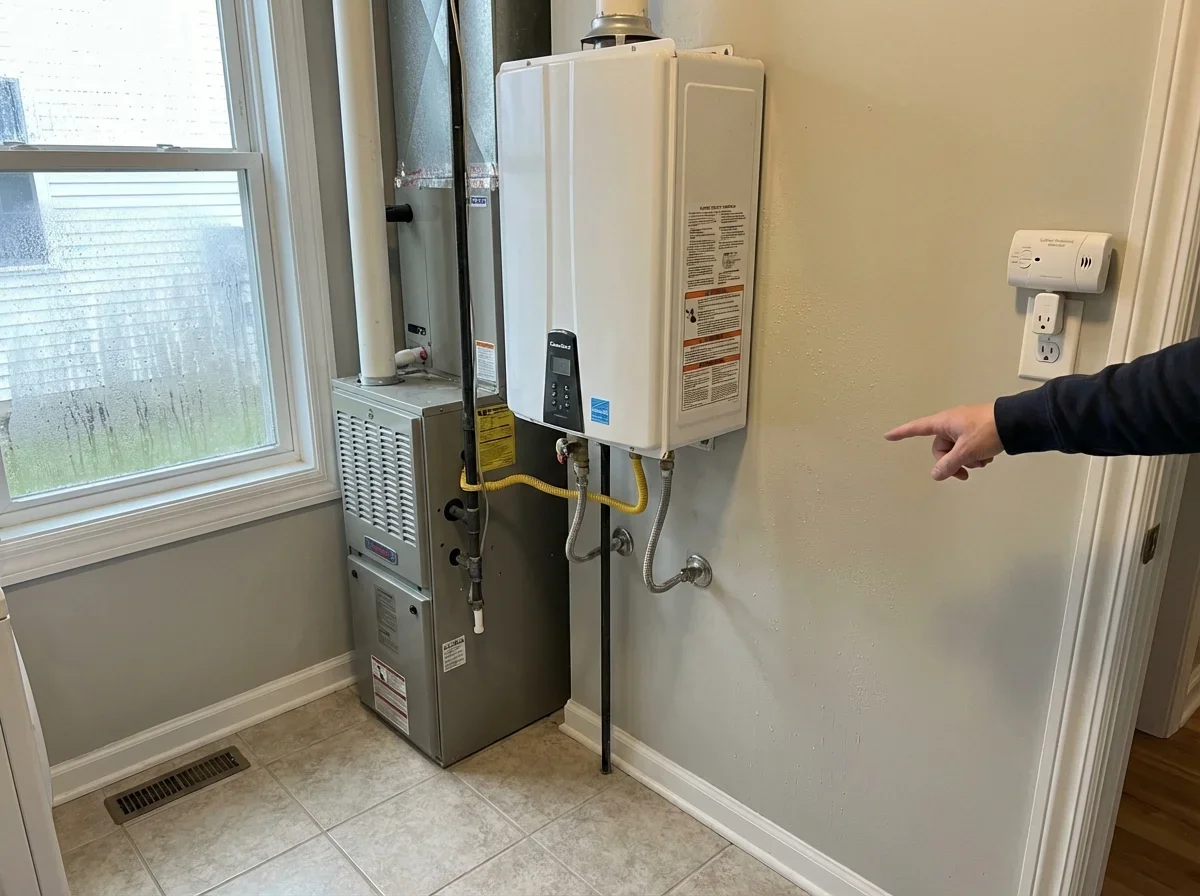
Gas appliances give off their own clues when leaking or malfunctioning. Your water heater, furnace, or range might show condensation on nearby windows or walls — moisture that wasn't there before. Soot or burn marks around appliance vents signal incomplete combustion, which often accompanies gas system problems.
Pilot lights that frequently go out, especially on water heaters or older furnaces, sometimes indicate pressure irregularities in the gas supply. While this isn't always a leak, it warrants inspection.
In Arizona's older homes built before 1995, many still have standing pilot systems rather than electronic ignition. These are more prone to pressure-related extinguishing.
Check the flexible gas connectors behind your range or dryer. These corrugated stainless steel tubes (CSST) or older brass connectors can crack, kink, or disconnect. If you moved your range to clean behind it, verify the connector didn't get stressed or pulled loose. Even a partial disconnect releases gas at a slow but dangerous rate.
Post-Earthquake or Ground Movement
Arizona isn't California, but we experience minor seismic events — and more importantly, differential settling in homes built on caliche. Block construction on slab foundations can shift slightly as caliche layers compact unevenly over decades, stressing rigid gas piping.
After any earthquake (even minor 3.0+ tremors occasionally felt in Phoenix), or if you notice new foundation cracks or doors that suddenly stick, inspect your gas system. Walk the perimeter, smell near the meter, check appliances.
Rigid black iron pipe installations from the 1970s-80s are more vulnerable to movement stress than newer flexible CSST installations.
The same applies after significant construction nearby. If your neighbor's pool excavation involved heavy equipment working close to your property line, your underground utilities experienced vibration and potential soil displacement. That's when previously stable pipes can shift and develop leaks at joints.
What to Do the Moment You Suspect a Leak
Don't investigate further. Don't try to locate the exact source. Don't light anything to "test" for gas presence.
Leave immediately. Everyone, including pets.
On your way out, do NOT:
- Flip light switches (the spark can ignite gas)
- Unplug appliances (same spark risk)
- Use your cell phone inside (move at least 100 feet away first)
- Start your car in an attached garage
- Use the garage door opener
Once outside and at a safe distance, call 911 and your gas utility. In Phoenix, that's typically Southwest Gas at 877-860-6020. In other Arizona areas, it might be UniSource Energy Services or another provider — the number is on your monthly bill and on a sticker near your meter.[1]
Fire departments respond with combustible gas indicators to measure atmospheric gas concentrations and determine the hazard level. They'll establish a safety perimeter and coordinate with utility crews to secure the source.[1]
You won't be allowed back inside until crews confirm the space is safe and any necessary repairs are complete.
When Utility Response Isn't Immediate
During widespread events — monsoon damage, multi-home incidents, or high call volume days — utility response times can extend beyond the typical 60-minute emergency window. If you're waiting and concerned about property damage or vandalism with your home evacuated and open, call non-emergency police for periodic checks.
Do not re-enter to grab valuables or pets you initially missed.
Gas accumulation continues while you wait, and entering hours after your initial exit can be more dangerous than the first time you left.
In some cases, first responders will shut off your gas at the meter as a precaution even before the utility arrives. That's standard procedure for safety. You'll need the utility company to restore service and re-light pilots after repairs — don't attempt to turn gas back on yourself, even if you know where the shutoff is.
Prevention: What You Can Actually Control
Most residential gas leaks result from three causes: excavation damage, corroded lines, and DIY appliance work.
You can reduce risk in all three categories.
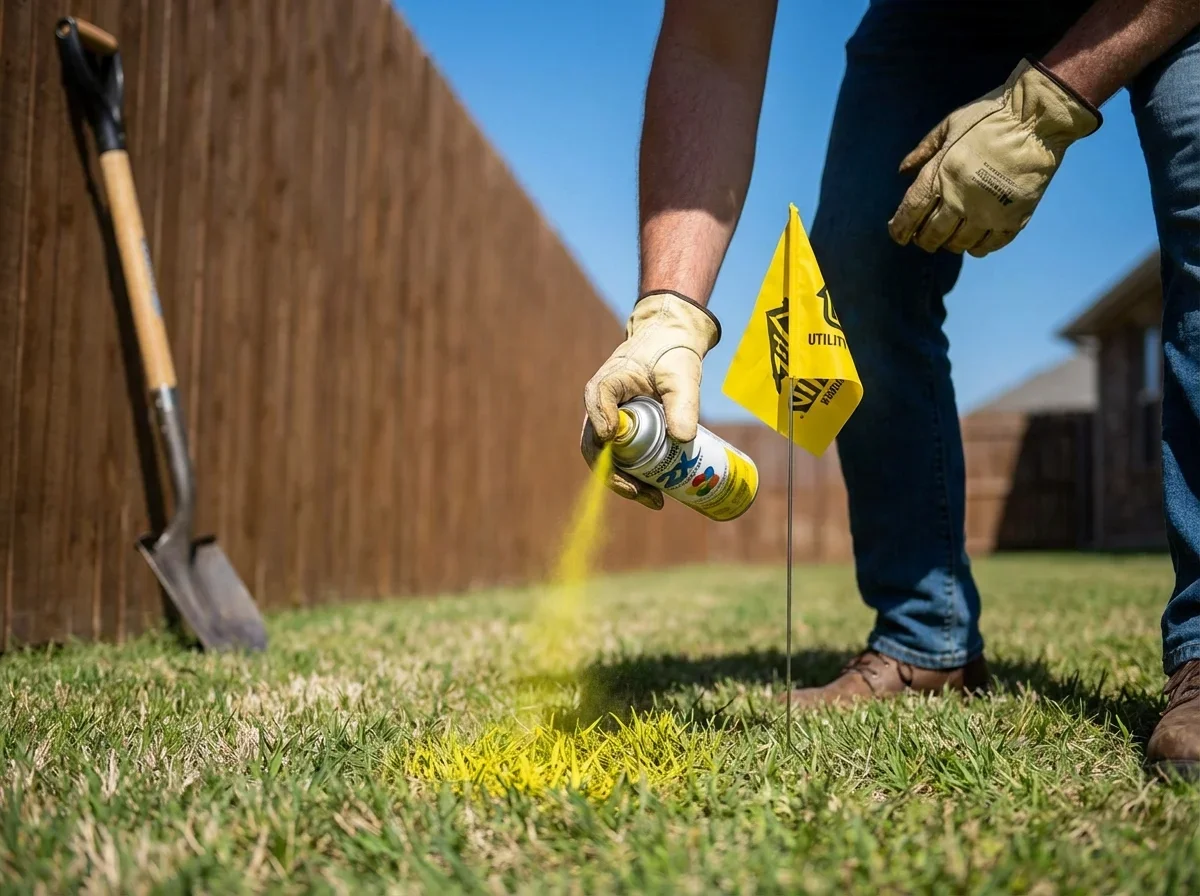
Before any digging — fence posts, irrigation, landscaping, anything that breaks ground — call 811 at least two business days ahead. It's free, it's required by Arizona law, and it gets underground utilities marked. Contractors who skip this step are liable for damage, but that doesn't help you if your home explodes while they're fighting the insurance claim.
For corrosion risk, know what piping material is in your home. Pre-1995 construction often used black iron or galvanized steel, both susceptible to Arizona's soil chemistry and hard water conditions. If your gas lines are original to a 1980s home, consider having a licensed plumber (verify ROC status) inspect them, particularly where pipes transition from underground to above-ground near the meter and at the foundation penetration points.
Modern CSST flexible gas line installed during repiping projects reduces future leak risk from ground movement.
Never attempt DIY gas appliance installation or modification. Arizona law requires licensed professionals for gas work, and homeowner's insurance will deny claims from unlicensed gas work. That includes moving your range six inches to install new countertops — if you disconnect and reconnect the gas line yourself and later have a leak, you've voided coverage.
| Gas Line Material | Common Installation Period | Corrosion Risk | Movement Tolerance | Typical Lifespan |
|---|---|---|---|---|
| Black Iron Pipe | 1970s-1990s | High (Arizona soil chemistry) | Low (rigid, prone to stress cracks) | 30-50 years |
| Galvanized Steel | 1960s-1980s | Very High (hard water damage) | Low (rigid) | 20-40 years |
| CSST (Flexible) | 1990s-present | Low (stainless steel) | High (designed for movement) | 50+ years |
| Copper (rare) | 1950s-1970s | Moderate (soil chemistry) | Moderate | 40-60 years |
ROC-Licensed Gas Work Requirements in Arizona
Arizona Registrar of Contractors requires anyone performing gas line work to hold an active specialty license. For residential work, that's typically an LP-1 (Limited Plumbing) or R-1 (General Residential) contractor classification.
You can verify any contractor's license status, complaint history, and bonding at https://roc.az.gov/ before they start work.
Gas-specific work requires additional certification beyond the general contractor license. Look for contractors who specify gas line services and can show proof of insurance coverage that includes gas work. The ROC bond (typically $7,000 for residential contractors) covers licensing violations but may not fully cover explosion damage. Independent verification of general liability insurance matters.
If you're upgrading from electric to gas appliances, adding a gas line to an outdoor kitchen, or extending service to a new water heater location, expect permitting requirements.
Unpermitted gas work discovered during home sales can kill transactions and trigger mandatory correction before closing.
Cities like Phoenix, Scottsdale, and Tempe actively enforce gas permitting and will red-tag unpermitted installations during routine inspections.
Electronic Gas Detectors: Worth Installing?
Plug-in or battery-powered natural gas detectors retail for $40-150 and alarm when they sense methane concentrations. They're not required by code, but they add a safety layer — particularly for households where occupants may not smell mercaptan reliably.
Install detectors near major gas appliances: water heater closets, furnace locations, and kitchen ranges.
Natural gas is lighter than air (methane has a molecular weight of 16 vs. air's 29), so it rises. Place detectors at ceiling level or high on walls, not near the floor where they'll miss rising gas.
Replace detectors per manufacturer specifications, typically every 5-7 years. Sensors degrade over time and Arizona's heat accelerates that degradation. A detector that's been in your garage attic space through ten Phoenix summers is likely non-functional regardless of its stated lifespan.
Detectors complement your senses — they don't replace them.
If you smell rotten eggs, don't wait for the detector to alarm before evacuating. If the detector alarms and you smell nothing, evacuate anyway. Sensor failure is less common than olfactory failure.
Arizona Installation Tip: Natural gas detectors placed in unconditioned spaces (garages, outdoor utility closets) fail faster than manufacturer ratings suggest. Phoenix attic and garage temperatures regularly exceed 140°F in summer, degrading sensors in 3-4 years instead of the rated 5-7. Replace detectors in hot locations more frequently and test monthly using the test button.
When Neighbors Report Gas Smells
If someone on your street reports a gas smell or you see utility trucks and emergency vehicles on your block, pay attention even if you don't smell anything inside your home. Underground gas main leaks can migrate through soil and enter homes several properties away from the actual break point.
Natural gas follows paths of least resistance through utility trenches, gaps around foundation penetrations, and old pipe chases.
Utility crews will canvas the area with detectors, but if you notice any smell or symptoms after hearing about a nearby incident, report it immediately. Don't assume someone else already flagged your address.
The Phoenix Fire Department protocol establishes hot zones around confirmed leaks and may evacuate homes preventively based on gas indicator readings and wind patterns.[1] If crews tell you to evacuate even though your home isn't the source, comply.
Methane's explosive range is 5-15% concentration in air. Gas that leaked from a neighbor's line can reach explosive levels in your home if concentrations build in shared soil or connected crawlspaces.
After the Leak: Re-Entry and System Checks
Once utility crews clear your home, request documentation of what was found, what was repaired, and what (if any) follow-up is needed. If the leak was in your private piping (past the meter), you're responsible for repair costs unless it resulted from utility work or defective installation.
If it was in the utility's infrastructure (main lines, service line to the meter), they cover repairs.
Before resuming normal gas use, have all pilot lights and electronic ignitions re-established by qualified personnel. Don't attempt to light pilots yourself if you're unfamiliar with the process — improperly lit pilots can create carbon monoxide hazards or re-ignite leaked gas that hasn't fully dissipated.
Schedule a follow-up inspection if the leak was in older piping.
One leak often signals systemic corrosion or stress throughout the same-age piping network. If your 1985 water heater flex line failed, the furnace line and range connections are the same age and material. Consider proactive replacement rather than waiting for the next failure.
If emergency plumbing service was involved in discovering the leak — for example, you called about water issues and they found gas problems during inspection — get a full gas system pressure test. Sometimes water and gas lines run in parallel utility chases, and damage to one suggests possible stress to the other.
Frequently Asked Questions
- City of Phoenix Fire Department. "NATURAL GAS EMERGENCIES." https://www.phoenix.gov/content/dam/phoenix/firesite/documents/074764.pdf. Accessed April 07, 2026.
- UniSource Energy Services (Arizona utility). "Gas safety notice." https://docs.uesaz.com/doc/resources/safety/gas-safety.pdf. Accessed April 07, 2026.
- Arizona Public Service (APS). "Local utilities warn about the dangers underground." https://www.aps.com/en/About/Our-Company/Newsroom/Articles/Local-utilities-warn-about-the-dangers-underground. Accessed April 07, 2026.
- Southwest Gas (Arizona utility). "Working Around Pipelines Safety Booklet." https://www.swgas.com/7200000200604/Working-Around-Pipelines-Safety-Booklet_English.pdf. Accessed April 07, 2026.