Clear DIY Territory: Safe Repairs You Can Handle
Some plumbing fixes require nothing more than a wrench and a trip to the hardware store. If you can turn off the water supply and the repair doesn't involve anything behind a wall or under a slab, you're likely in safe DIY territory.
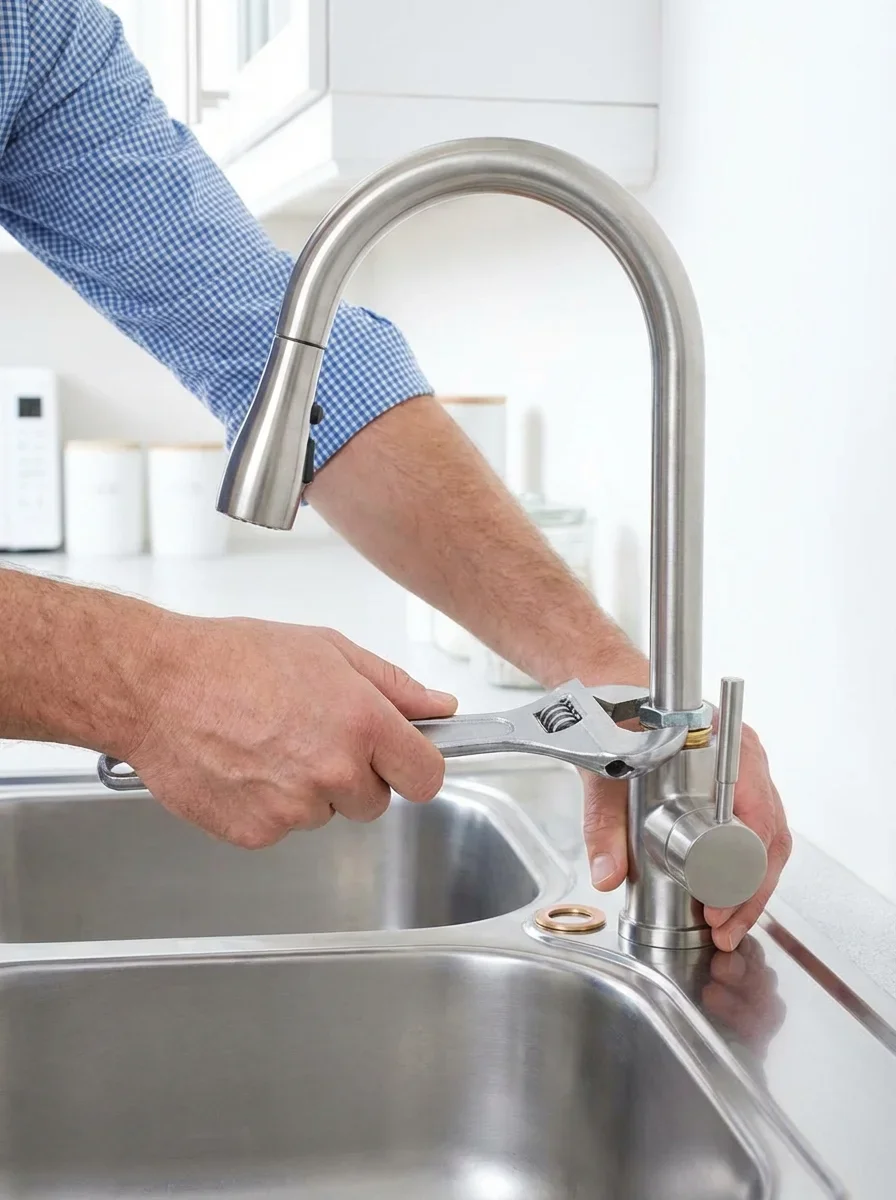
Replacing faucet washers, aerators, and cartridges falls squarely in the homeowner-friendly zone. If your kitchen faucet drips from the spout when turned off, the cartridge or washer has failed. Both cost $8-25 and install with basic hand tools. Same for bathroom faucets showing drips or reduced flow.
Phoenix's hard water clogs aerators (the screen at the faucet tip) with mineral deposits every 6-12 months. Unscrew it, soak in vinegar overnight, reinstall. No permit required, no code issues, no risk of catastrophic failure.
Toilet repairs are equally approachable. If your toilet runs continuously, the flapper isn't sealing (replace for $6-12). If it won't fill or fills slowly, the fill valve is clogged with sediment (replace for $15-25). If the handle feels loose or doesn't trigger a flush, the handle mechanism has corroded (replace for $8-15). These repairs require no special skills and prevent the 200+ gallons per day a running toilet can waste in Phoenix.
Garbage disposal replacement sits at the upper edge of DIY capability. If your disposal hums but won't spin, you can try resetting it (red button on the bottom) or using the hex wrench slot to manually rotate the flywheel and clear a jam. Full disposal replacement requires disconnecting electrical (flipping the breaker first), removing the mounting assembly, and reconnecting drain lines.
Manageable for someone comfortable with basic plumbing connections. But hiring out avoids the risk of improper electrical connections or drain line leaks.
Quick DIY Safety Checklist:
- Can you shut off the water supply to the affected area?
- Is the repair visible and accessible (not behind walls or under slabs)?
- Do you have the right tools and replacement parts?
- Does the job require a permit? (If yes, hire a professional)
- Are you comfortable with the electrical components involved?
- If any answer is "no" or "maybe," call a licensed plumber
When DIY Becomes Risky
The moment a repair involves opening a wall, cutting into a slab, or working on gas lines, you've crossed into professional territory.
Phoenix's slab-on-grade construction means you can't visually trace pipes. They're embedded in concrete. Cutting into a slab to access a leaking pipe without electronic leak detection means you're guessing at pipe locations, risking cutting into electrical conduit or breaking through foundation support areas.
Hard water damage timelines also affect DIY decisions. Copper pipes in Phoenix homes built 1990-2010 develop pinhole leaks at 15-20 years versus 30-40 years in soft water regions. If your home was built during that window and you see water stains on baseboards, ceiling spots below second-floor bathrooms, or unexplained water bill spikes, you're likely dealing with multiple developing leaks. Not a single isolated fix.
Patching one visible leak while three others corrode behind drywall just delays the inevitable repiping conversation.
When to Call Immediately: Non-Negotiable Professional Jobs
Certain plumbing failures carry such high damage potential or legal requirements that attempting DIY creates liability you cannot afford.
These situations demand an ROC-licensed plumber within hours, not days.
Slab leaks are Phoenix's signature plumbing nightmare. Because 95%+ of Valley homes have no basement, all supply lines run under the concrete slab. Phoenix's extreme temperature differential (106°F summer air combined with 55-70°F city water supply) causes daily expansion and contraction cycles. Concrete slabs expand with heat while water in copper pipes stays cool, creating differential thermal stress that flexes pipes at joints until they crack.
Phoenix experiences 180+ days per year over 90°F, creating daily flex cycles that accelerate copper fatigue in under-slab pipes.
You'll know a slab leak by hot spots on your floor (hot water line leak), the sound of running water when all fixtures are off, or sudden water bill spikes during summer months when usage shouldn't increase. A 1/8-inch crack wastes 250+ gallons per day and actively undermines your foundation as water erodes soil beneath the slab.
Professional leak detection equipment uses electronic listening devices and thermal imaging to pinpoint the leak location without destructive exploratory cutting. Something no homeowner owns. Repair requires breaking through flooring and concrete, then either rerouting the line overhead through the attic or repairing the under-slab section and pressure testing the entire system.
Burst pipes create water damage that escalates by the minute. In Phoenix, thermal expansion causes most burst pipe scenarios. Not freezing (rare here), but the daily heat cycling of copper supply lines. Aging pipes may rupture suddenly during summer peak heat, flooding rooms with hundreds of gallons before you locate the main shutoff.
Turn off water at the main valve immediately (usually in the front yard near the street or in a side-yard meter box), then call an emergency plumber.
Every minute water runs adds damage. Drywall, flooring, cabinetry, and electrical systems all absorb water and require remediation.
Gas Line Work Requires Licensed Professionals Only
Arizona law specifically prohibits homeowners from performing DIY gas line work. Period.
Any repair, replacement, or new installation of natural gas or propane lines requires an ROC-licensed plumber with a current license to pull gas permits. This includes seemingly simple work like replacing a gas dryer connector or extending a line to a new range.
The liability is existential. Natural gas leaks create explosion and carbon monoxide poisoning risk. If you smell the distinctive rotten-egg odor (mercaptan added to otherwise odorless gas), evacuate immediately, don't operate light switches or electronics (sparks can ignite gas), and call Southwest Gas at 877-860-6020 from outside your home. They'll send emergency crews to shut off gas and verify the system is safe before a licensed plumber can repair the leak.
Gas line services also require pressure testing after any work. Plumbers use specialized gauges to verify connections hold at operating pressure (typically 7 inches water column for residential natural gas). Improper connections that pass visual inspection can still leak at pressure, creating slow gas accumulation in attics or wall cavities.
Only licensed professionals carry the equipment and knowledge to test properly.
Pro Tip: Before any plumber enters your Phoenix home, verify their Arizona Registrar of Contractors license at roc.az.gov or call 877-692-9762. Look for an active R-37 (Residential Plumbing), C-37 (Commercial Plumbing), or CR-37 (Dual Classification) license. If they can't provide it immediately, do not hire them. This 90-second verification eliminates your biggest risk factor.
Seasonal Phoenix Plumbing Patterns: When Failures Spike
Phoenix's climate creates predictable plumbing failure cycles you can anticipate.
Understanding these patterns helps you schedule preventive service before emergencies strike.
Summer (June through August) brings peak water heater failures. Your water heater works 40% harder in summer because incoming city water is 75-85°F versus 55-60°F in winter, reducing the temperature differential the heater must overcome to reach your 120-140°F setpoint. Combined with hard water sediment buildup (which insulates the heating element from water, forcing it to run longer and hotter), this creates a July-August failure spike.
If your water heater is 8+ years old and you hear popping or rumbling sounds (sediment buildup hitting the heating element), schedule water heater replacement in April or May before summer demand peaks.
Waiting until it fails in July means you're competing for same-day service during the plumber's busiest season.
Monsoon Season Brings Sewer Backup Risk
Phoenix's July through September monsoon season dumps 2-3 inches of rain in hours after months of dry weather.
Soil that's been baked hard for months can't absorb water quickly, causing street flooding that overwhelms storm drains. In older Phoenix neighborhoods built before 1950 (particularly near downtown), combined sewer systems can't handle the sudden volume, and water pressure pushes sewage backward through floor drains and toilets into homes.
If you live in a pre-1950 home in central Phoenix and experience sewage backup during monsoon flooding, a backwater valve prevents this. The valve installs in your main sewer line and automatically closes when reverse flow is detected, blocking sewage from entering your home. Installation requires excavating to access your sewer line and costs $800-1,500, but prevents the $15,000-30,000 damage and health hazard of sewage backup.
This is professional-only work requiring permits from the City of Phoenix.
Monsoon season also reveals roof and gutter failures that dump water near your foundation. If grading around your home slopes toward the foundation (common in older homes where soil has settled), concentrated roof runoff can saturate soil and cause foundation settling or create hydrostatic pressure against basement walls (in the rare Phoenix home with a basement).
While not strictly plumbing, foundation cracks from water intrusion eventually damage supply and drain lines embedded in slabs as the foundation shifts.
The Permit Question: When Code Requires Professional Installation
Phoenix requires permits for specific plumbing work, and attempting these jobs DIY doesn't just violate code.
It creates legal and financial liability that follows you through home ownership and sale.
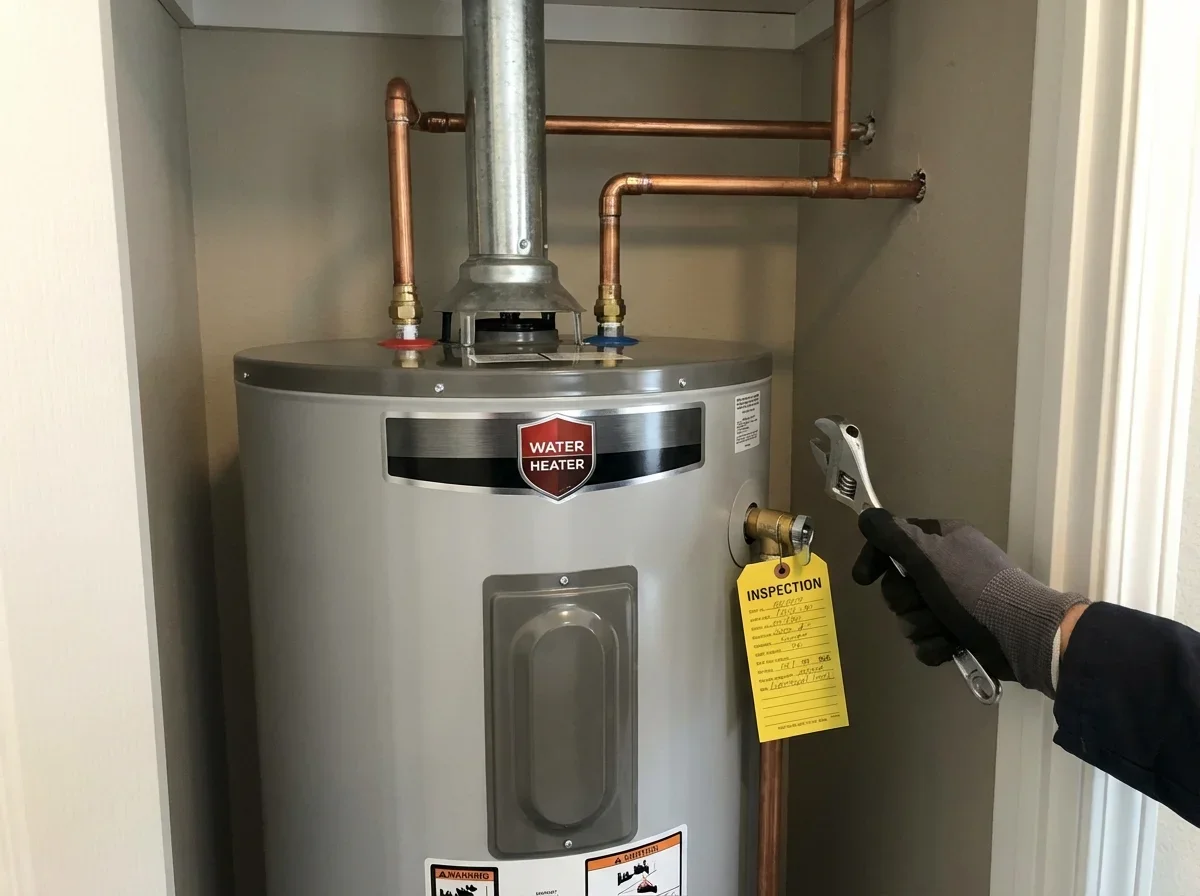
Water heater replacement requires a permit in Phoenix, even if you're swapping a tank for an identical unit. The 2024 International Plumbing Code (adopted by Phoenix in late 2024) includes specific requirements for water heater seismic strapping, temperature/pressure relief valve installation, proper venting for gas units, and electrical disconnect installation. Licensed plumbers pull the permit automatically as part of the job, and inspectors verify the installation meets code before signing off.
If you DIY a water heater replacement without a permit, you'll face problems during home sale. Title companies require disclosure of all work performed on a home, and inspectors flag unpermitted water heaters immediately (permit records are public and easily verified at phoenix.gov/pdd/permits). The buyer will demand either a retroactive permit inspection (which may require re-work to bring the installation to code) or a price reduction to cover professional reinstallation.
Worse, if your DIY water heater installation causes damage (gas leak, water damage, carbon monoxide poisoning), your homeowner's insurance will deny the claim because unpermitted work violated your policy's requirement to maintain the home to code.
| Plumbing Work | Permit Required? | Can You DIY? | Typical Cost |
|---|---|---|---|
| Faucet/toilet replacement | No | Yes | $8-$150 parts |
| Drain cleaning | No | Yes (basic clogs) | $15-$50 tools |
| Water heater replacement | Yes | No (legal/safety) | $1,200-$3,000 |
| Repiping | Yes | No (requires inspection) | $4,000-$15,000 |
| Gas line work | Yes | No (illegal in AZ) | $300-$2,500 |
| Sewer line repair | Yes | No (requires excavation) | $3,000-$12,000 |
What Doesn't Require Permits
Phoenix allows several plumbing repairs and replacements without permits: fixing leaks, replacing faucets and toilets, drain cleaning, and garbage disposal replacement.
These are considered maintenance rather than installation, and you can legally DIY them without code violations.
The distinction matters for hiring decisions. If a plumber offers you a "discount for no permit" on work that legally requires one (water heater replacement, repiping, sewer line repair, adding new fixtures), refuse immediately. This signals they're cutting corners on code compliance, and you'll inherit the liability.
Legitimate plumbers include permit costs in their estimates ($100-300 depending on job scope) and handle filing automatically.
Gas line work, whole-home repiping, and sewer line repairs always require permits. These jobs involve either life-safety systems (gas) or work that affects structural integrity and public health (sewer). Inspectors verify pipe materials meet code, joints are properly made, pressure testing confirms no leaks, and backflow prevention devices are installed where required.
Verifying Your Plumber: ROC License and Insurance Requirements
Before any plumber enters your Phoenix home, verify their Arizona Registrar of Contractors license at roc.az.gov or call 877-692-9762.
Look for an active R-37 (Residential Plumbing), C-37 (Commercial Plumbing), or CR-37 (Dual Classification) license. The ROC license number must be displayed on their truck, business card, and estimate. If they can't provide it immediately, do not hire them.
Unlicensed plumbing work is a Class 1 misdemeanor in Arizona and makes the contract unenforceable, meaning you have no legal recourse if the work fails. The ROC processes 10,000+ contractor complaints per year across all trades. For plumbing specifically, the most common complaints are unlicensed work (40%), abandoning jobs (25%), substandard work (20%), and contract disputes (15%).
Checking license status takes 90 seconds and eliminates your biggest risk factor.
Why the ROC Bond Isn't Enough Protection
The ROC bond required for plumbing contractors is only $4,000-$15,000 depending on license type.
This will not cover a major repair failure. A $30,000 slab leak repair requiring foundation work, or $50,000 in water damage from a burst pipe during a botched repiping job.
Always request a Certificate of Insurance (COI) showing General Liability coverage of at least $1 million and Workers' Compensation coverage if they have employees (Arizona controversially doesn't require contractors to carry workers' comp, but reputable companies do). Call the insurance company listed on the COI to verify the policy is active. This two-minute call can save you tens of thousands in liability if a plumber is injured on your property or their work causes major damage.
Check how long the plumbing company has held its ROC license (visible on the license lookup). A company operating complaint-free for 5+ years in Phoenix has demonstrated consistent quality. They've survived the hard water environment, understand slab-on-grade construction challenges, and know local code requirements.
Newer companies aren't necessarily bad, but longer track records reduce risk.
Hard Water Damage Timeline: When to Replace, Not Repair
Phoenix's 300+ ppm calcium carbonate water creates a predictable pipe corrosion timeline that tells you when to stop repairing individual leaks and commit to whole-home repiping.
In copper pipe homes built before 2000, hard water creates internal scale buildup that reduces pipe diameter by 20-30% over 15 years, lowering water pressure and creating turbulence that accelerates pinhole leak formation at elbows and joints.
The timeline progresses in stages: Years 0-5 show scale buildup beginning on interior pipe walls. Years 10-15 see internal corrosion starting beneath the scale layer. Years 15-20 bring the first pinhole leaks, typically at joints and elbows where turbulence is highest. After year 20, multiple failure points appear system-wide.
If your home was built 1990-2010 with copper supply lines, you're in the peak failure window right now.
Once you've repaired two or three pinhole leaks in different locations, the entire system is compromised. Continuing to repair individual leaks means you're playing whack-a-mole while corrosion spreads behind your walls.
PEX Repiping Considerations
Homes built after 2000 typically use PEX (cross-linked polyethylene) supply lines, which resist corrosion and handle Phoenix's hard water better than copper.
But PEX has different failure modes related to Phoenix's heat.
PEX expands and contracts three times more than copper with temperature change. Phoenix homes with PEX in attic spaces face summer slab heat (concrete slabs can reach 120°F+) that causes PEX to expand. Properly installed PEX includes expansion loops or room for movement at connection points. If you see buckling PEX lines in attic spaces or hear clicking sounds when hot water runs (PEX rubbing against framing as it expands), call a plumber to re-secure the lines before stress cracks develop at fittings.
PEX also degrades under UV exposure. Direct sunlight breaks down the polymer.
If you have exposed PEX lines in outdoor hose bib connections or visible in garages with windows, those sections need UV-protective sleeves or replacement with UV-resistant PEX-B formulations. This is a simple fix if caught early, but UV-damaged PEX becomes brittle and can burst under normal water pressure.
Caliche Excavation: Why Phoenix Sewer Work Costs More
If you need sewer line repair or replacement, expect significantly higher costs than national averages due to Phoenix's caliche soil.
Caliche is a calcium carbonate hardpan layer typically 1-6 feet below surface that forms in arid climates over thousands of years. It's harder than concrete.
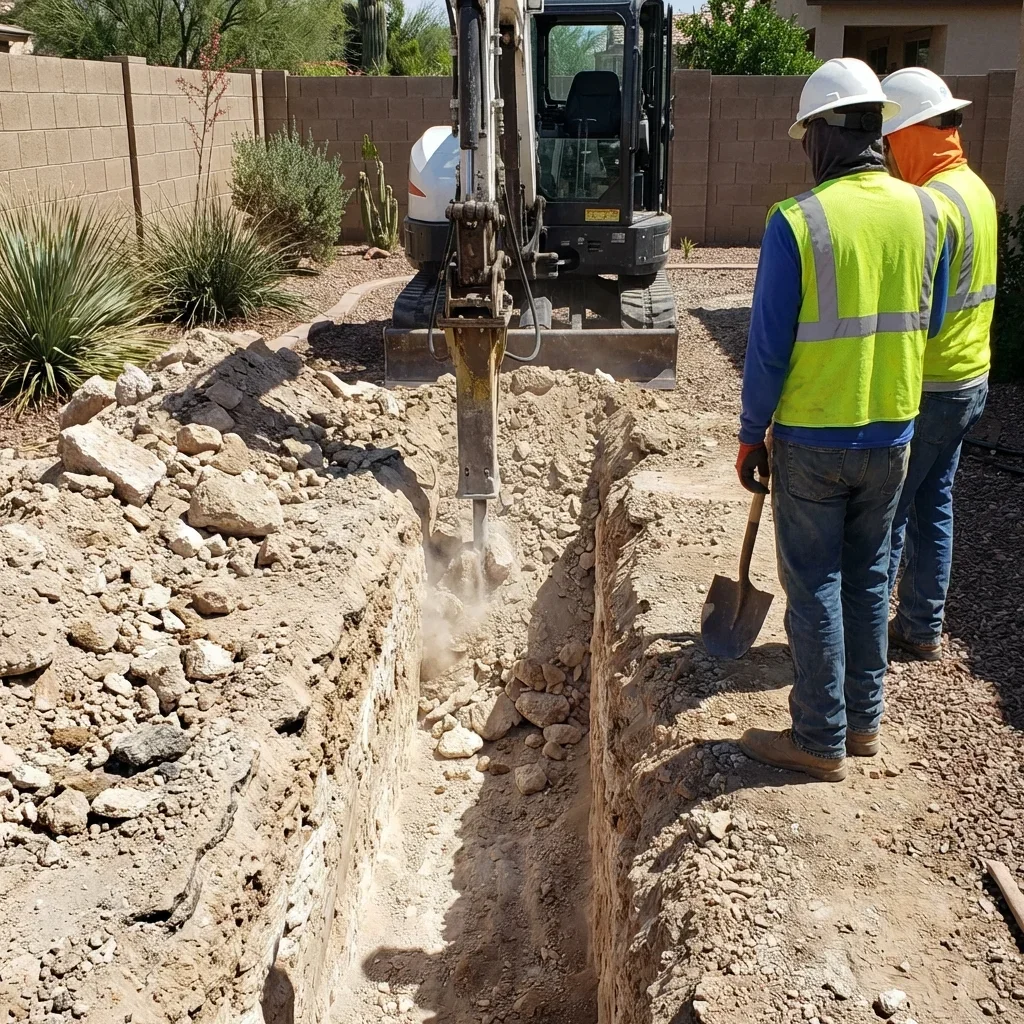
Trenching through caliche requires jackhammering or rock saws, increasing sewer line replacement costs by $75-150 per linear foot versus normal soil. A 50-foot sewer line replacement that costs $3,000-4,000 in soft-soil regions runs $7,000-12,000 in Phoenix due to caliche excavation costs.
This isn't contractor markup. It's the physical reality of breaking through hardpan.
Trenchless sewer repair methods (pipe bursting or pipe lining) can avoid some excavation costs by creating minimal access points rather than full-length trenches. Trenchless versus traditional repair depends on your specific situation. If your sewer line has collapsed sections or severe root intrusion, traditional excavation may be necessary to fully replace the damaged section.
Before any sewer work begins, request a sewer camera inspection to document the damage.
This shows exactly where breaks, root intrusion, or corrosion exist, letting the plumber give you an accurate estimate rather than guessing at the problem severity. Camera inspection costs $200-400 but prevents the "we found additional damage once we started digging" cost escalation that happens when work begins without visual confirmation.
Emergency Situations: What to Do Before the Plumber Arrives
When plumbing failures happen, the minutes before professional help arrives determine how much damage you'll face.
Having a response plan prevents panic.
Locate and label your main water shutoff valve now, before any emergency. It's typically in your front yard near the street in a concrete meter box, or in a side-yard meter box in newer construction. Open the box, find the valve (usually a gate valve or ball valve), and tag it clearly.
If you wait until water is flooding your home to locate the shutoff, you'll waste critical minutes searching.
For burst pipe scenarios, shut off the main water immediately, then turn off your water heater (gas or electric) to prevent the heating element from burning out when the tank empties. Move furniture and electronics away from wet areas, and start documenting damage with photos for insurance claims. Open cabinet doors to let wet areas air out and prevent mold growth while you wait for the plumber.
If you smell gas, the response is different. Evacuate immediately without operating light switches or electronics, and call Southwest Gas at 877-860-6020 from outside your home.
Don't re-enter until gas company crews verify the system is safe. Then a licensed plumber can diagnose and repair the leak source.
Drain Backups and When They're Emergencies
Not all drain clogs require emergency service, but some do.
A single slow-draining sink can wait for normal business hours. Sewage backing up through floor drains or toilets (especially in multiple fixtures simultaneously) signals a main sewer line blockage that needs immediate attention.
Main sewer line blockages prevent all household wastewater from draining. Every flush, shower, and dishwasher load backs up into the lowest fixture in your home (usually a basement floor drain if you have one, or the lowest toilet on the main floor). This is a health hazard and qualifies as a plumbing emergency.
Emergency plumbing service handles this 24/7, but expect higher rates outside business hours.
Tree root intrusion causes 60%+ of main sewer line blockages in Phoenix. Roots seek water and infiltrate sewer lines through joints and cracks, creating complete blockages. Hydro jetting clears roots using high-pressure water (3,000-4,000 PSI), but if roots have damaged the pipe structure, you'll need sewer line replacement to prevent recurring blockages.
Specialty Equipment Requiring Professional Installation
Certain plumbing installations require manufacturer certification, specialized tools, or knowledge of Phoenix-specific code requirements that put them firmly in professional-only territory.
Tankless water heaters are increasingly popular in Phoenix due to energy efficiency in our year-round hot climate, but they require precise installation.
Improper venting creates carbon monoxide hazards. Incorrect gas pressure settings cause burner failure or inefficient heating. Undersized electrical service to the unit (for electric tankless models) trips breakers under peak demand.
Verify your plumber holds manufacturer certification from brands like Rinnai, Navien, or Rheem before they install a tankless unit. Manufacturer-certified installers receive ongoing technical training and their work is often required to maintain the manufacturer's warranty.
A poorly installed tankless unit may work initially but fail within months, voiding the warranty and leaving you with a $2,000-4,000 repair bill.
Water Softener and Filtration Systems
Water softener installation in Phoenix involves more than connecting a tank.
Any plumber performing water softener or whole-home filtration work must have an ADEQ-certified Backflow Prevention Assembly Tester on staff. This certification (from ASSE, ABPA, or CA-NV AWWA) is legally required because these jobs involve connecting to potable water lines.
Backflow prevention devices stop contaminated water from flowing backward into Phoenix's municipal water supply. If your water softener regeneration cycle creates negative pressure and your home lacks a backflow preventer, you could pull contaminated water from your home back into city mains, affecting your neighbors.
Ask to see the backflow certification card before work begins. Uncertified backflow work can contaminate Phoenix's water supply and result in city fines and mandatory re-work.
Water softener sizing also requires calculation based on your household water usage and hardness level. Phoenix's 300+ ppm water requires a properly sized resin tank and appropriate regeneration frequency. Undersized systems regenerate constantly and waste water.
Oversized systems cost more upfront with no performance benefit.
Questions to Ask Before Hiring
When you've determined professional help is necessary, verify these details before signing a contract:
Can you provide your ROC license number for verification? The number should appear on their truck, business card, and estimate. Verify active status at roc.az.gov before any work begins.
Will you pull permits for this work, and are permit costs included in your estimate? For work requiring permits (water heaters, gas lines, repiping, sewer work), legitimate contractors include permit costs and handle filing automatically.
Can I see your Certificate of Insurance showing General Liability and Workers' Compensation coverage? Call the insurance company on the certificate to verify the policy is active. This protects you from liability if a worker is injured on your property.
How long have you held your ROC license, and can I verify you have no unresolved complaints? Companies operating complaint-free for 5+ years demonstrate consistent quality and code compliance.
Do you offer a written warranty on parts and labor? Arizona law requires contractors to warranty their work, but get the specific terms in writing. Typical warranties are 1 year labor, 5-10 years parts (manufacturer warranty).
Will you provide a detailed written estimate breaking down labor, materials, and permits before starting work? This prevents "scope creep" where additional charges appear after work begins.
Any change orders during the job should require your written approval before proceeding.