Find and Shut Off the Main Water Supply
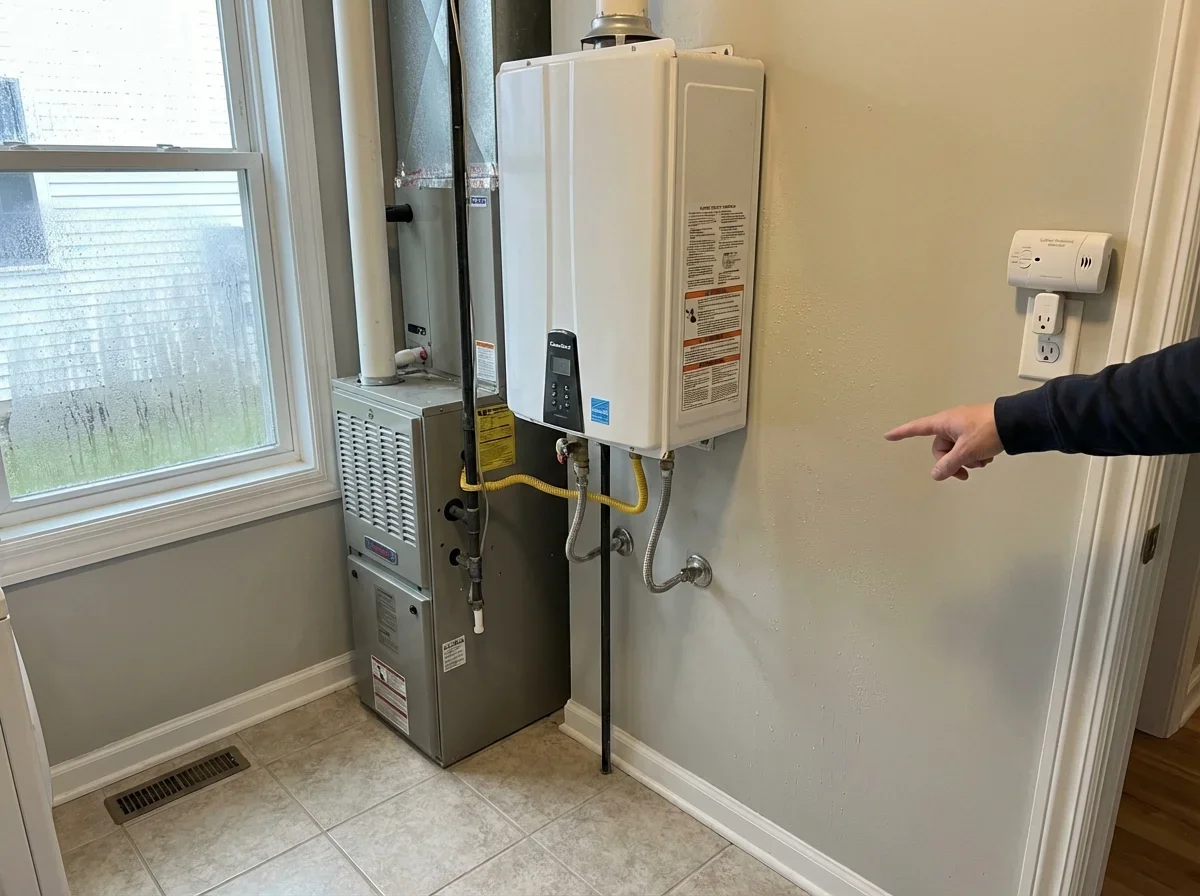
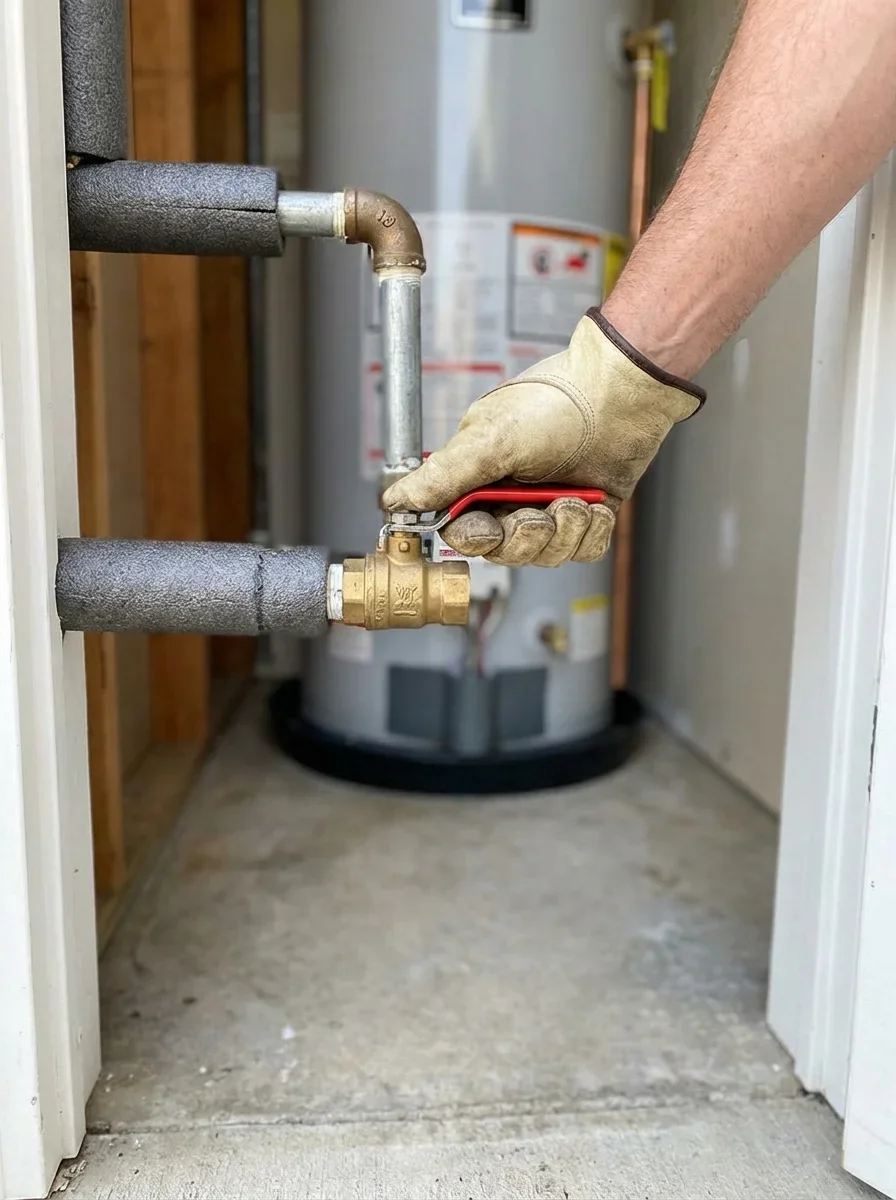
Your first action is to stop the water flow. In most Arizona homes, the main shutoff valve sits in one of three locations: near the water heater (often in a garage or utility closet), in a side yard utility box marked "water meter," or occasionally along an exterior wall where the municipal line enters the property. Turn the valve clockwise until it stops. It may be stiff if it hasn't been turned in years, and some older gate-style valves require multiple full rotations.[1]
Once the main is off, open several faucets throughout the house and flush toilets to drain residual pressure from the lines.[3] This reduces additional water release from the burst section and makes the repair safer when a plumber arrives.
If you can't locate the main valve within the first 60 seconds, go to your water meter. Usually in the front yard near the street in a concrete box. Turn the valve there. It's always present even if it requires a meter key tool that you probably don't have on hand, but a channel-lock plier often works.
If the burst pipe is connected to your water heater and hot water is pouring out, shut off the water heater separately. Gas heaters have a dial that turns to "off," electric heaters should be shut off at the breaker panel. Draining the tank through its bottom drain valve reduces pressure, but only attempt this if the shutoff valve on the cold water inlet to the tank is accessible and you can stop new water from entering.[2]
When the Shutoff Valve Won't Turn
Corroded valves seized by Arizona's hard water (averaging 300+ ppm calcium carbonate) sometimes refuse to budge. Don't force it past moderate resistance. A snapped valve stem creates a second emergency.
In this case, your only option is the meter shutoff or calling your municipal water utility for emergency assistance. The City of Phoenix and City of Tucson water departments both maintain emergency lines for situations where homeowners can't control the flow.[4][5]
Many homeowners discover during a crisis that they've never tested their shutoff valve. Make it a habit to locate and exercise the valve once a year. Turn it fully off and back on to keep the mechanism from calcifying in place.
Pro Tip: Test your main shutoff valve annually by turning it fully off and back on. This 30-second check prevents valve seizure during emergencies and helps you locate it before you're standing in a flood. Tag it with a brightly colored label so family members can find it quickly.
Cut Electrical Power to Affected Areas
Water and electricity form a lethal combination. A burst pipe doesn't discriminate between clean supply water and the live outlets in your wall. If water is pooling near electrical outlets, baseboard heaters, or any appliances, shut off power to those circuits at your main breaker panel immediately.[1][4]
If the flood is extensive or you're unsure which breaker controls the wet area, flip the main breaker to cut power to the entire house.
Standing water conducts electricity across surfaces, and you won't see the current until you step into it. Don't wade through water to reach the breaker panel if it's in a flooded area. Exit the home and call 911 if electrical hazards prevent you from safely shutting off power.
In Arizona's single-story, slab-on-grade construction, electrical panels are typically in garages or exterior utility areas, which keeps them above most interior floods. But pipe bursts in walls or ceilings can send water directly onto junction boxes, ceiling fixtures, and attic wiring. If the burst pipe is overhead and you see water dripping from light fixtures or pooling around ceiling fans, shut off power even if the floor is dry.
Remove Standing Water Immediately
Once the water flow stops and electrical hazards are controlled, your priority shifts to water removal. Every minute that water sits on flooring, drywall, or cabinetry increases absorption and the likelihood of permanent damage.
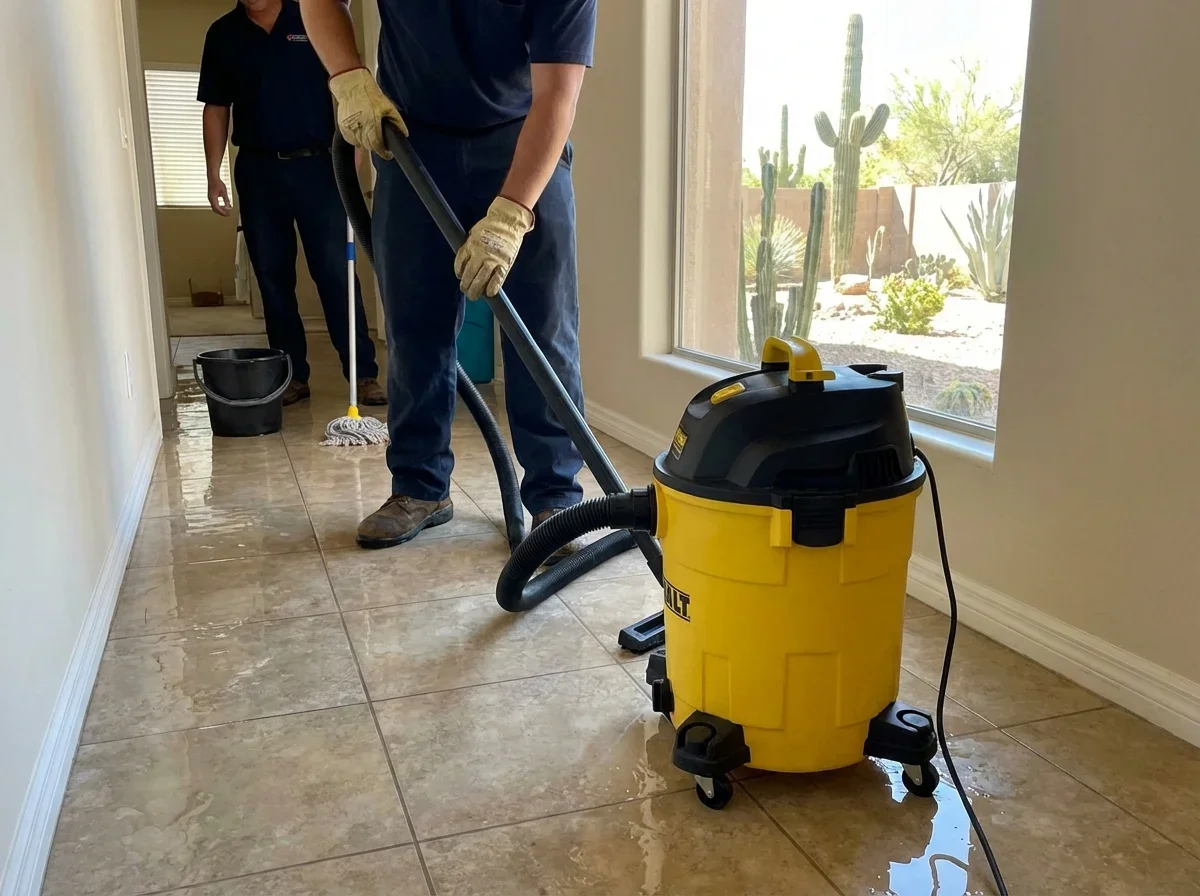
Start with towels, mops, and a shop vacuum if you have one. A standard 6-gallon shop vac can handle minor floods, but anything beyond a few gallons calls for a submersible pump or calling in emergency plumbing services with extraction equipment.
Open windows and run fans to circulate air across wet surfaces. Arizona's low humidity works in your favor here. Moisture evaporates faster than in humid climates, but you still need active airflow to prevent mold spores from colonizing damp drywall and insulation. Dehumidifiers help in enclosed spaces like bathrooms or closets, though in open living areas a simple box fan pointed at the wet zone does most of the work.[2]
Lift area rugs and pull furniture away from wet walls. If water has soaked carpeting, it needs professional drying within 24 hours or replacement becomes inevitable. Carpet padding acts like a sponge and holds moisture against the slab even after the surface feels dry.
When to Avoid DIY Water Removal
If the burst pipe is a drain line (not a supply line), the water may contain sewage. Don't attempt cleanup yourself. Contaminated water requires professional remediation with protective equipment and sanitization protocols.
Similarly, if the flood is extensive enough to submerge outlets or reach into wall cavities, you're beyond shop-vac territory. You need restoration contractors with industrial equipment.
Immediate Water Removal Checklist:
- Use shop vac or towels for minor floods (under 10 gallons)
- Open windows and run fans to increase evaporation
- Lift area rugs and move furniture away from wet walls
- Remove carpet within 24 hours if saturated
- Call professionals if water contains sewage or exceeds DIY capacity
- Deploy dehumidifiers in enclosed spaces like bathrooms
Document the Damage for Insurance
Before you make any repairs or throw away waterlogged materials, photograph and video every affected area. Insurers require visual evidence of damage extent. Once a contractor removes soaked drywall or carpet, you can't recreate the documentation.[2]
Capture wide shots showing the overall flood zone, then close-ups of water lines on walls, saturated flooring, and damaged belongings. Note the time and date. If you can identify the burst pipe location, photograph that too. Insurers often want to see whether the failure resulted from freezing (rare but possible during Phoenix's occasional hard freezes in January), corrosion (common in copper lines with Arizona's hard water), or mechanical damage.
Most homeowners policies cover sudden pipe bursts as water damage, but they exclude flooding from external sources and may limit coverage for gradual leaks that went unnoticed. Your claim success often depends on demonstrating that the burst was abrupt and you responded promptly.
If your home was built before 2000 and still has original copper plumbing, mention that in your claim. Arizona's mineral-rich water accelerates pipe corrosion rates by roughly twice the national average, and insurers are familiar with this pattern.
Call a Licensed Plumber Immediately
A burst pipe is never a DIY fix, even if you've stopped the immediate flooding. The structural failure that caused the burst typically indicates broader system vulnerability, whether it's frozen pipe expansion, corrosion perforation, or pressure spike damage.
A licensed plumber will assess not just the burst section but the entire line to determine whether you're looking at a simple repair or a repiping recommendation.
In Arizona, all plumbing contractors performing work over $1,000 must hold an active ROC (Registrar of Contractors) license. Verify credentials at roc.az.gov before hiring anyone who shows up claiming they can "get you patched up cheap." Emergency situations attract unlicensed operators, and their temporary fixes often fail within weeks. You're left with a second flood and no recourse.
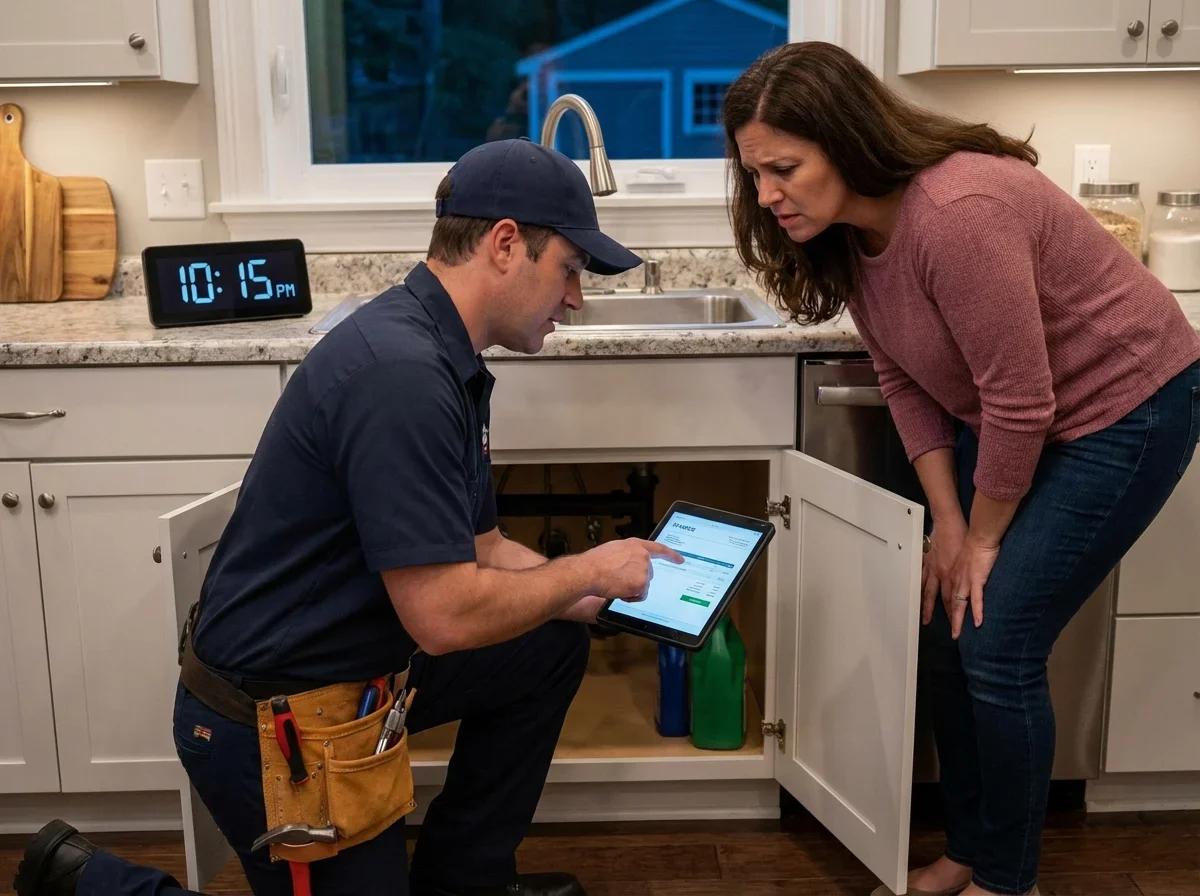
When you call, provide specific details: location of the burst (under kitchen sink, in attic, main line near meter), approximate water volume released, and whether you've fully stopped the flow. Emergency plumbing services in Phoenix operate 24/7, but response times during peak summer months (June through August, when heat stress triggers the highest volume of pipe failures) can stretch to several hours for non-life-threatening situations.
What the Plumber Will Inspect
Beyond the obvious burst section, a thorough plumber checks water pressure at multiple fixtures, inspects visible piping for corrosion patterns, and may recommend a sewer camera inspection if the burst occurred in a drain line. In homes with slab-on-grade construction (virtually all Arizona single-story homes), bursts in the slab itself require leak detection equipment to pinpoint the exact failure point before breaking concrete.
If your home was built between 1978 and 1995 and has polybutylene pipes (gray plastic supply lines), a single burst often signals imminent system-wide failure. These pipes were installed widely during that era and are known for brittleness.
Most plumbers will recommend full replacement rather than spot repairs. Some insurers won't even cover homes with active polybutylene systems.
Address Hidden Water in Walls and Ceilings
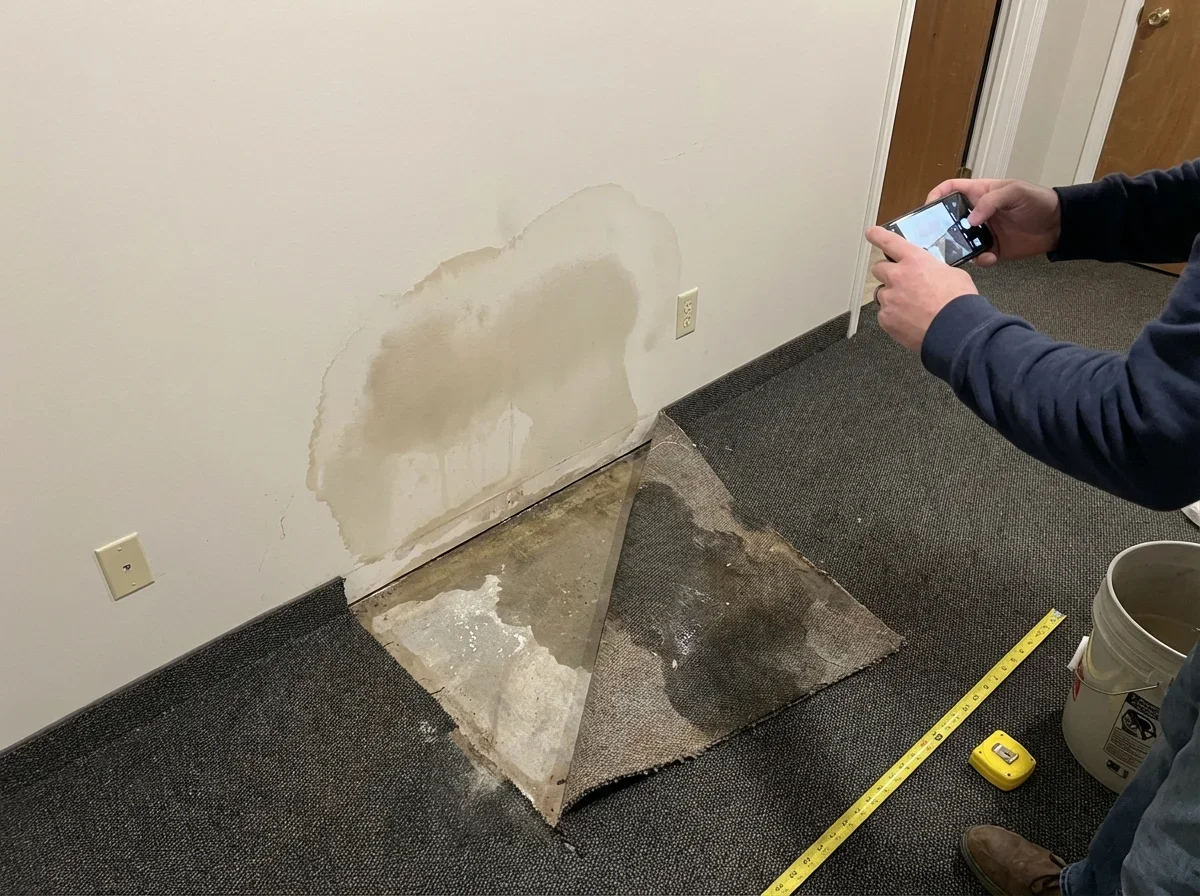
The water you see on the floor represents only part of the problem. Burst pipes in walls or ceilings saturate insulation, soak drywall, and pool above ceilings until the weight causes collapse.
If you notice water stains spreading on walls, bulging drywall, or sagging ceiling panels, those areas contain trapped moisture that won't dry without opening them up.
Professional water damage restoration contractors use thermal imaging and moisture meters to map wet zones behind surfaces. They'll cut access panels in drywall to ventilate cavities and remove saturated insulation. This isn't cosmetic. Trapped moisture in Arizona homes creates ideal mold growth conditions despite the outdoor climate, because the interior wall cavity becomes a sealed humid environment.[2]
Mold colonization begins within 24 to 48 hours of sustained moisture exposure. If the burst happened overnight and you didn't discover it until morning, you're already in the mold risk window. Black mold (Stachybotrys) prefers cellulose materials like drywall paper and wood framing. Exactly what's behind your walls.
Understand the Repair vs. Replacement Decision
A plumber can splice in a new pipe section to replace the burst segment, but whether that's the right approach depends on what caused the failure. Corrosion-related bursts in copper pipes indicate systemic degradation, especially in homes with Phoenix's 300+ ppm calcium carbonate water and no whole-house water softener.
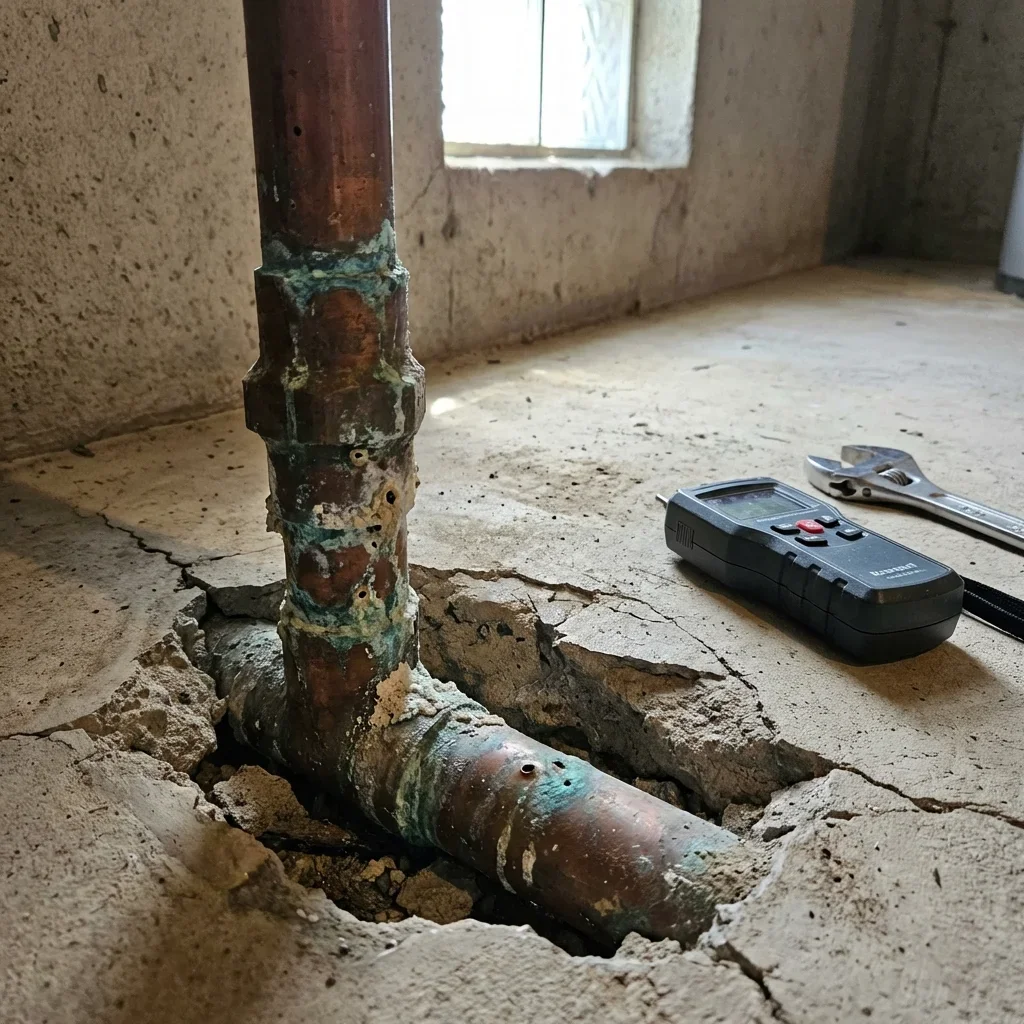
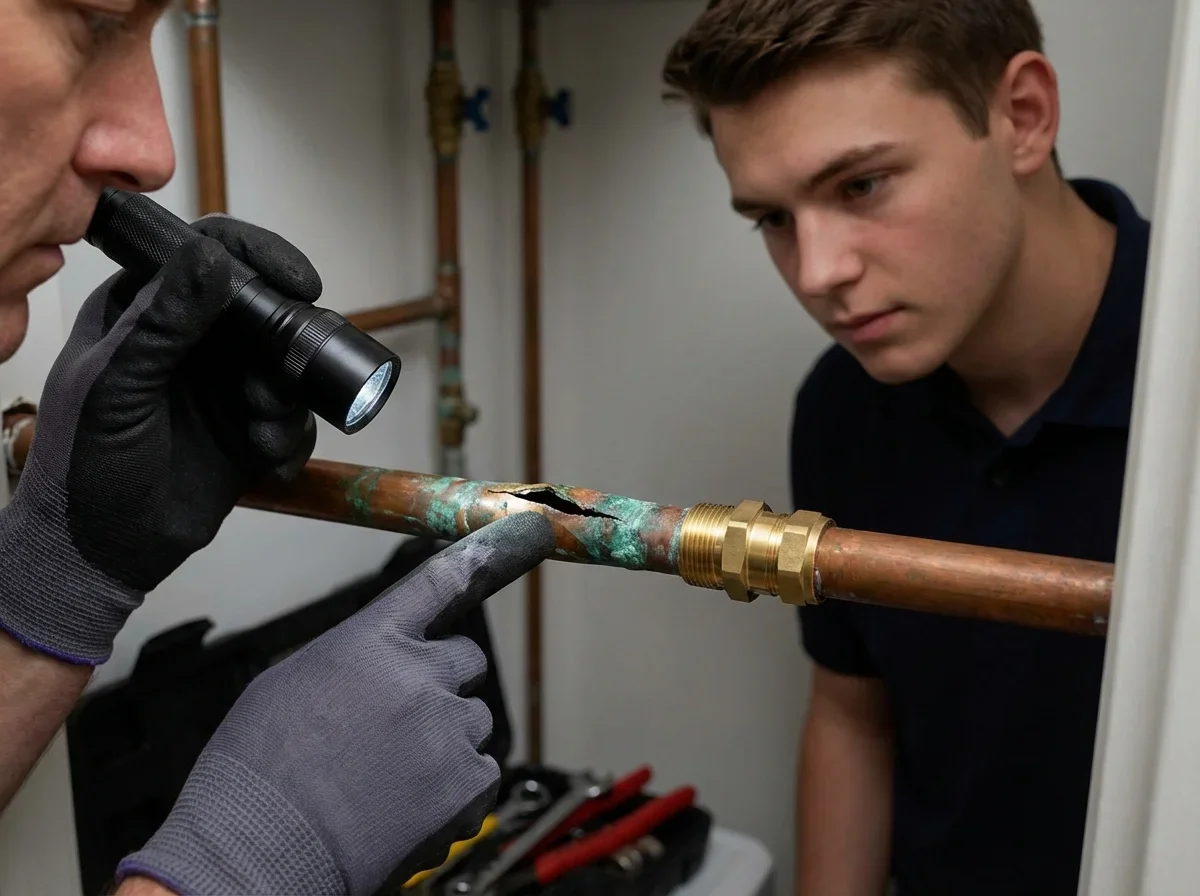
If the plumber finds greenish corrosion (copper oxidation), pinhole leaks in adjacent sections, or significant scale buildup, you're looking at repiping rather than a patch job.
Cold-related bursts during Arizona's rare hard freezes (typically January, when overnight temps occasionally drop to the mid-20s) are isolated events if the pipe was exposed in an attic or exterior wall. Those can be repaired individually, though you'll want to add insulation to prevent recurrence.
Pressure spike bursts suggest plumbing system design issues. Caused by water hammer (sudden flow stoppage creating shockwaves) or thermal expansion in water heaters without expansion tanks. A repair might hold, but you'll likely see repeat failures unless the root cause is addressed. Arizona code now requires thermal expansion tanks on water heater installations, but homes built before that requirement often lack them.
In slab-on-grade construction, slab leak repair is particularly complex. The plumber must break through concrete to access the burst pipe, which costs $2,000 to $5,000 just for the excavation before repair work begins. Many homeowners opt for rerouting the line through the attic or walls rather than repeating slab demolition if another section fails.
| Repair Approach | Best For | Typical Cost | Lifespan |
|---|---|---|---|
| Patch/splice repair | Isolated cold damage or mechanical impact | $300–$800 | 10–15 years |
| Slab reroute | Slab leak without cutting concrete | $1,500–$3,500 | 20+ years |
| Partial repipe | One section showing corrosion | $2,000–$5,000 | 25–30 years |
| Whole-house repipe | Multiple failures or polybutylene system | $4,000–$12,000 | 50+ years |
Prevent Future Bursts
Once the immediate crisis is resolved, evaluate why the burst happened. The most common culprits in Arizona homes:
Hard water corrosion: Copper pipes installed before 2000 degrade faster here than in soft-water regions. A water softener extends pipe life by reducing mineral contact.
High water pressure: Municipal pressure above 80 psi (common in Phoenix and Tucson) stresses pipes and fittings. Install a pressure regulator if your system lacks one.
Thermal expansion: Water heaters heat water, which expands. Without an expansion tank, pressure spikes can burst pipes or blow relief valves.
Aging materials: Polybutylene, galvanized steel, and first-generation PEX (installed in the 1980s) all have known failure patterns. PEX repiping is now the standard replacement in Arizona due to its flexibility and corrosion resistance.
If your home is approaching 30 years old and still has original plumbing, a preventive repiping project costs less than dealing with sequential burst pipe emergencies. Homeowners often discover this during the second or third flood, when insurance deductibles and rising premiums make the economics obvious.
Regular maintenance catches vulnerabilities before they burst. Have a licensed plumber inspect your system every 2 to 3 years, especially if you have visible corrosion on accessible pipes, fluctuating water pressure, or discolored water from the taps. Brown or greenish tint indicates pipe interior degradation.
What Happens Next: Restoration and Repairs
After the plumber repairs or replaces the burst section, restoration work begins. If water damaged drywall, flooring, or cabinetry, those materials need replacement. Most homeowners insurance policies cover this under sudden water damage provisions, though you'll pay your deductible (typically $1,000 to $2,500 in Arizona).
Document every conversation with your insurance adjuster and get written estimates from licensed contractors before authorizing work. Some insurers try to lowball repairs by using depreciated material values or omitting necessary mold remediation.
If the adjuster's estimate seems unreasonably low, you have the right to request a second inspection or hire a public adjuster to advocate for full coverage.
Restoration timelines vary by damage extent. A single-room flood with limited drywall damage might complete in 5 to 7 days. Extensive floods requiring subfloor replacement, cavity drying, and mold remediation can take 3 to 4 weeks. You'll likely need to vacate during intensive drying operations if fans and dehumidifiers make the home unlivable.
If the burst pipe released enough water to affect electrical systems, you'll need a licensed electrician to inspect and test circuits before restoration contractors close up walls. Water-damaged wiring is a long-term fire hazard even after surfaces dry.
When Professional Help Goes Beyond Plumbing
Large-scale floods from burst pipes often require coordination among multiple contractors: the plumber who fixes the pipe, the restoration company that dries and remediates the structure, and potentially an electrician, HVAC tech (if ductwork flooded), or flooring contractor.
Don't assume the plumber handles everything. Their scope typically ends once the water supply is repaired.
A general contractor can coordinate these trades, but in Arizona they must also hold an ROC license (verify at roc.az.gov). Emergency situations attract unlicensed "handymen" offering to handle the whole job. Resist this. Arizona doesn't require contractors to carry workers compensation insurance (a controversial gap in state law), so if an unlicensed worker is injured in your home during repairs, you could face personal liability.
Get multiple written estimates and check ROC license status before signing any contracts. The ROC bond (typically $4,000 to $15,000 depending on license type) doesn't cover large claims, so verify that contractors carry adequate general liability insurance. Ask for a certificate of insurance listing you as an additional insured for the project duration.
Burst pipe recovery isn't just about fixing the plumbing. It's about restoring your home to pre-flood condition while addressing the systemic issues that caused the failure in the first place. That takes time, proper documentation, and working with qualified professionals who understand Arizona's unique plumbing challenges, from hard water corrosion to slab-on-grade construction constraints.
The homeowners who recover fastest treat the burst as a symptom of a larger system that needs evaluation, not just a single bad pipe that needs patching.
Frequently Asked Questions
- University of Arizona Cooperative Extension. "Burst Pipes." https://extension.arizona.edu/sites/extension.arizona.edu/files/pubs/az1493-2016.pdf. Accessed April 07, 2026.
- Arizona Department of Environmental Quality (ADEQ). "Water Damage and Mold Prevention." https://ades.az.gov/sites/default/files/2020-10/water_damage_mold_prevention.pdf. Accessed April 07, 2026.
- University of Arizona Cooperative Extension. "Winterizing Your Home Plumbing." https://extension.arizona.edu/publication/winterizing-your-home-plumbing. Accessed April 07, 2026.
- City of Phoenix Water Services. "Emergency Preparedness: Plumbing Emergencies." https://www.phoenix.gov/publicworks/waterquality/emergency-preparedness. Accessed April 07, 2026.
- City of Tucson Water Department. "Water System Emergencies." https://www.tucsonaz.gov/Departments/Water/Emergency-Preparedness. Accessed April 07, 2026.