Stop the Water First
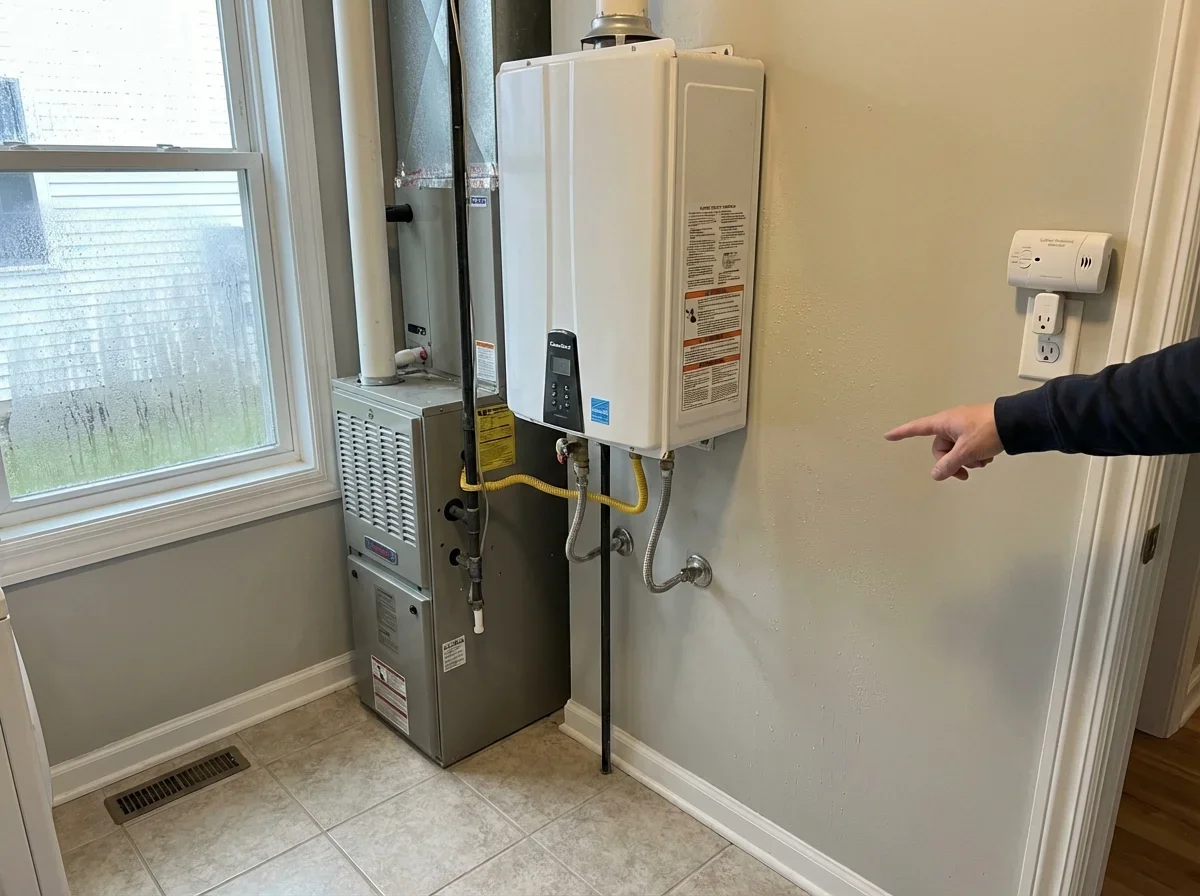
Your main water shutoff valve is the single most important thing to locate right now — not when water is pooling across your kitchen floor. In Phoenix homes, you'll typically find it in one of three places: near your water heater, under the kitchen or bathroom sink, or along an exterior wall facing the street. Older homes built before 1980 sometimes have shutoffs buried in a concrete box near the curb, which requires a meter key to access.
Turn the valve clockwise until it stops. If you have a gate valve (a round wheel), it might take several full turns. Ball valves (a lever handle) shut off in a quarter turn.
Once the water stops flowing, you've bought yourself time to assess the damage and call for help.
Some Phoenix homeowners discover their shutoff valve is corroded shut when they need it most. Hard water deposits can seize valves that haven't been turned in years. If your valve won't budge, don't force it. You risk breaking the valve body and making things worse.
When You Can't Shut Off the Main
If the main valve is stuck or inaccessible, isolate the problem area. Most fixtures have local shutoff valves: look under sinks, behind toilets, or at the base of your water heater. For a burst supply line under a sink, those small oval handles can stop the crisis without cutting water to your whole house.
For a slab leak with no accessible shutoff, you may need to turn off water at the meter. The city-owned shutoff sits in a concrete box near the street, usually marked with a small metal lid. You'll need a meter key (available at any hardware store) to reach the valve.
Turn it clockwise to close.
Quick Reference: Water Flow Rates & Damage Timeline
- Half-inch burst supply line: ~10 gallons per minute (600 gallons/hour)
- Mold growth begins: 24-48 hours in damp materials
- Drywall saturation point: 30-60 minutes of direct water contact
- Insurance documentation window: Photograph immediately, before any cleanup
- Phoenix average water pressure: 50-80 PSI (higher pressure = faster flooding)
Clear the Area and Protect Your Property
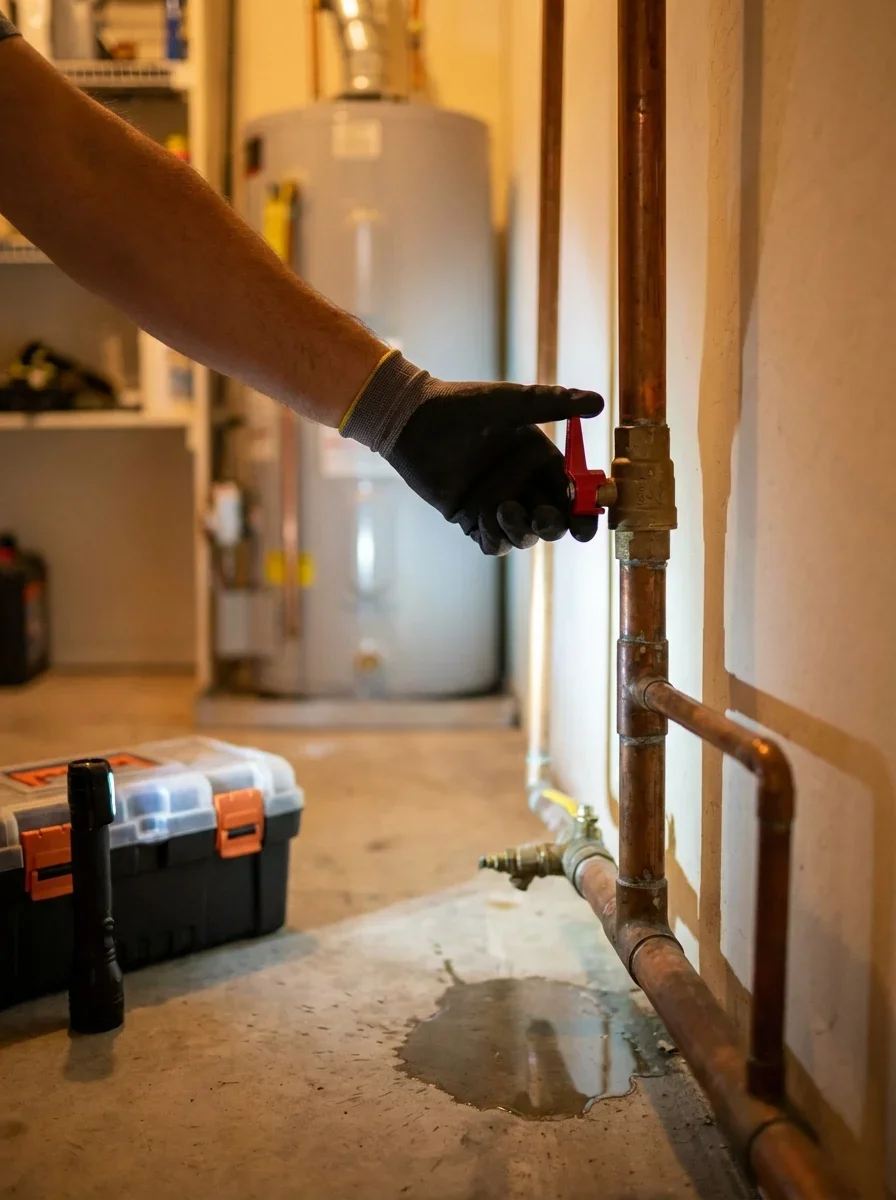
Water moves fast in a house. A burst half-inch supply line delivers about 10 gallons per minute. That's 600 gallons an hour soaking into drywall, flooring, and furniture.
Move electronics, documents, and anything you can't replace to higher ground immediately. Pull up area rugs before they become waterlogged. If water is actively flooding, grab towels and start containing the spread. You're not trying to dry the floor — you're trying to keep water from reaching adjacent rooms or soaking into baseboards.
Document Everything for Insurance
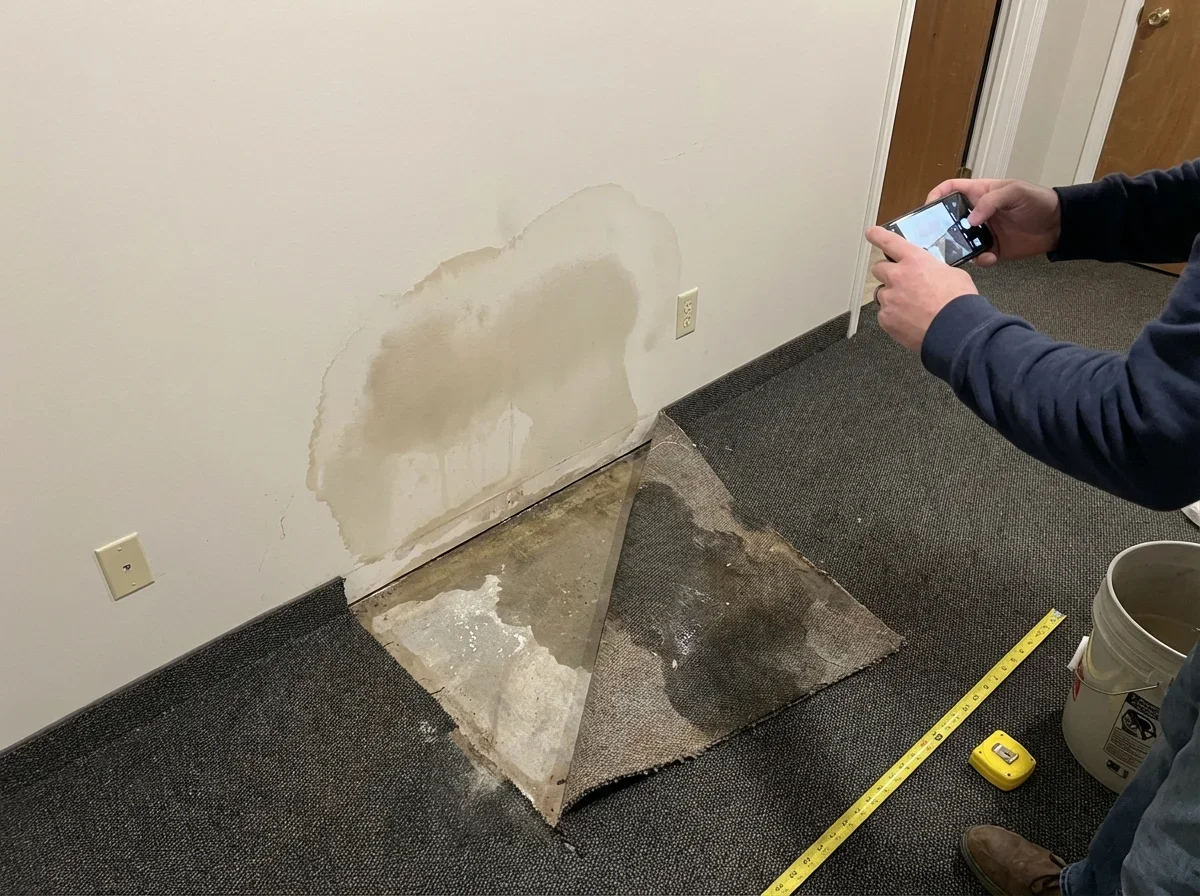
Before you start cleanup, take photos and video of the damage. Insurance adjusters need visual evidence of the initial state. Phoenix homeowners often underestimate how quickly water damage spreads in our dry climate. That wet drywall might not look catastrophic now, but in 24 hours, mold can begin establishing in any material that stays damp.
Photograph the source of the leak, standing water, damaged belongings, and any visible pipe damage. If you have a home warranty, check your policy. Some warranties require specific documentation before authorizing emergency plumbing repairs.
Address Active Flooding
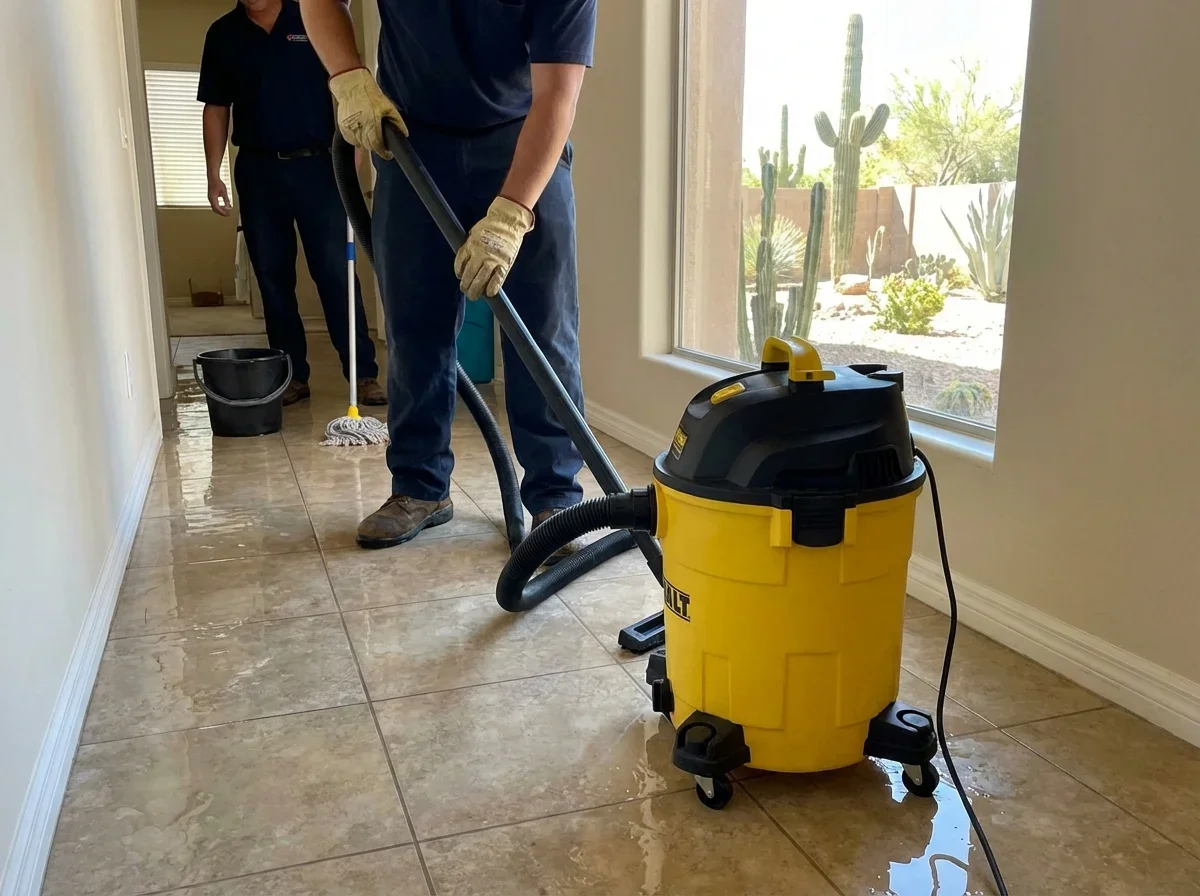
If you're dealing with more than a few inches of water, you need to start removing it. Grab a wet/dry vacuum if you have one. For larger volumes, use a mop and bucket. Tedious, but effective. Push water toward drains or exterior doors.
Turn off electricity to any affected rooms at the breaker panel if water is near outlets or appliances. Standing water and electrical current are a deadly combination. If you can't safely access the breaker without stepping in water, leave it alone and call 911.
Phoenix's dry climate works in your favor once the water stops. Open windows and doors to increase airflow. Set up fans if you can do so safely. The faster you dry wet materials, the less likely you'll face secondary damage like mold growth or wood rot.
Identify What Broke (and Why)
Understanding the source helps you describe the problem accurately when the plumber arrives. Phoenix homes face specific failure patterns that licensed contractors know well.
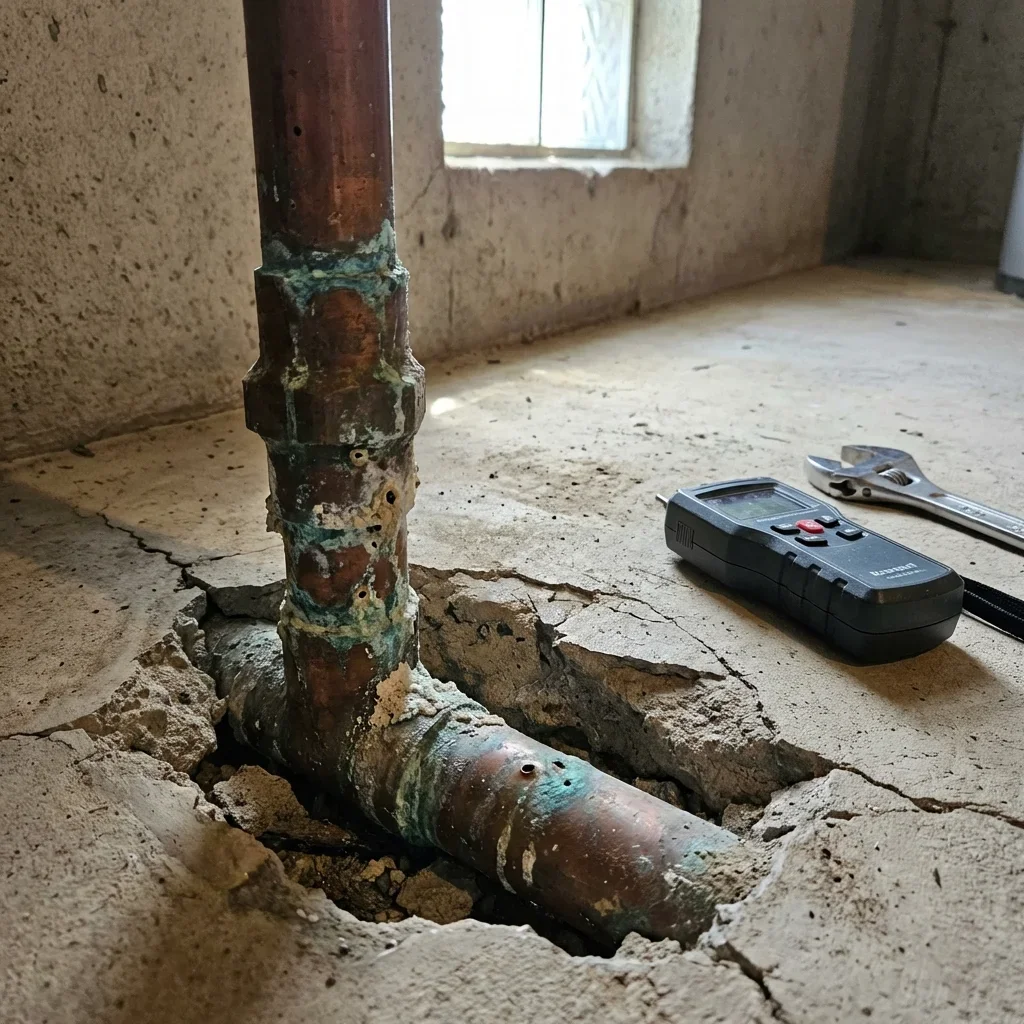
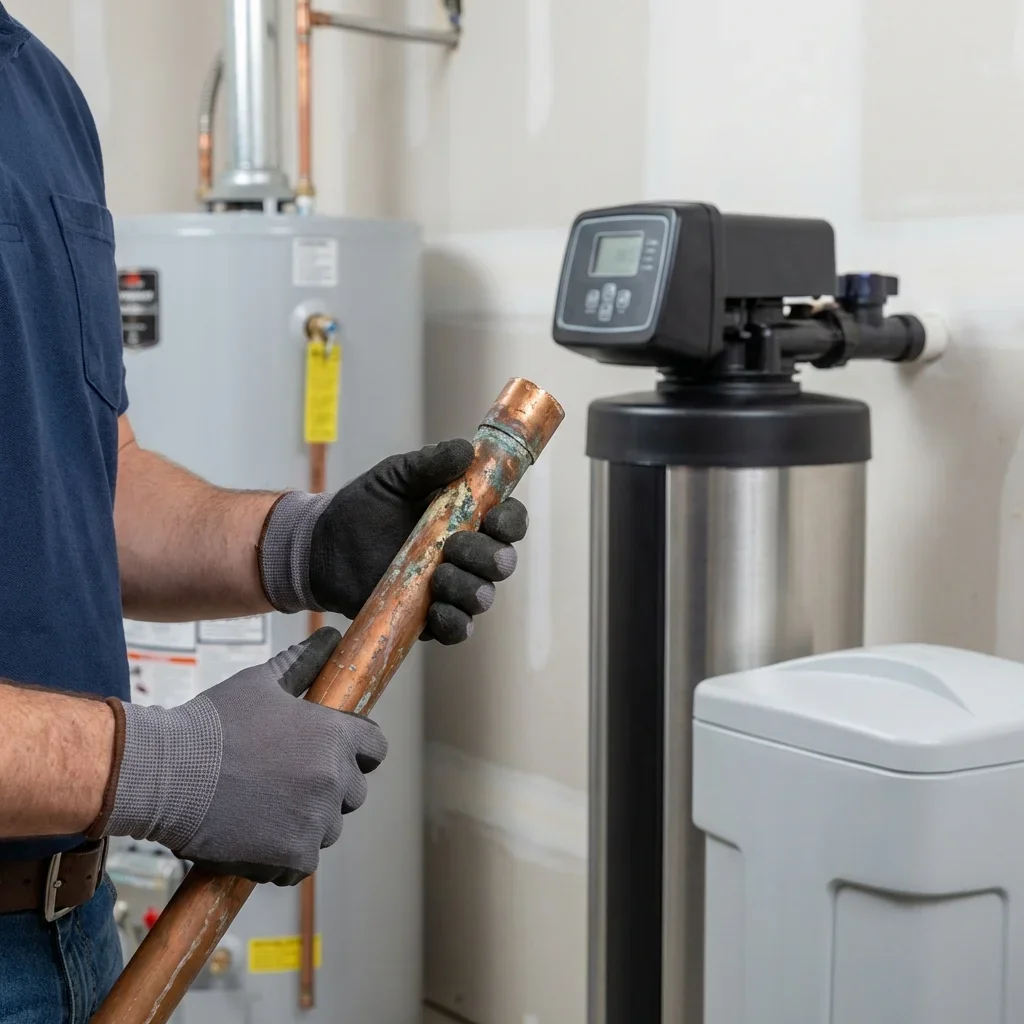
Copper supply lines in pre-2000 homes develop pinhole leaks from hard water corrosion. If you see a small stream spraying from a pipe, that's likely the culprit. These leaks often cluster. If one pipe has failed, others in the same run may be near failure.
Water heaters over 8-10 years old fail more frequently in Phoenix due to mineral buildup and constant summer use. If water is pooling around the base of your tank, the unit has likely corroded through.
You're looking at water heater replacement, not repair.
Slab Leaks: Phoenix's Unique Challenge
If you hear running water when all fixtures are off, or if you see wet spots on your floor with no obvious source above, you might have a slab leak. These occur when pipes embedded in your concrete foundation corrode or break. Common in Phoenix's slab-on-grade construction.
Don't try to locate a slab leak yourself. You need professional leak detection equipment to pinpoint the source without breaking up your entire floor. Most ROC-licensed plumbers in Phoenix use electronic listening devices or thermal imaging to find these leaks within inches.
| Common Emergency | Typical Cause in Phoenix | Repair Complexity | Average Response Time Needed |
|---|---|---|---|
| Burst supply line | Hard water corrosion (300+ ppm calcium) | Simple - parts on truck | Within 2 hours |
| Water heater failure | Mineral buildup, 8-10+ year age | Moderate - same-day replacement | 2-4 hours |
| Slab leak | Foundation movement, copper corrosion | Complex - detection + repair | 24-48 hours (detection first) |
| Sewer backup | Tree roots, aging clay pipes | Variable - inspection required | 2-6 hours |
Know Who to Call (and When)
True 24/7 plumbing service means a licensed technician responds to your call, not an answering service that schedules you for Monday morning[3]. This distinction matters when water is actively damaging your home.
Verify any plumber's license before they start work. Arizona law requires all contractors performing work over $1,000 to hold an active ROC license. Check the license status at roc.az.gov before agreeing to any service. A valid license confirms the contractor carries required bonding and has passed competency testing.
Some Phoenix homeowners report rapid response times: technicians arriving within 20 minutes on Sunday afternoons, even during intense summer heat[1]. But if you're working through a home warranty company, expect potential delays while they locate an available contractor[1].
When you're facing active flooding, calling an emergency plumber directly often gets faster results.
What to Expect When the Plumber Arrives
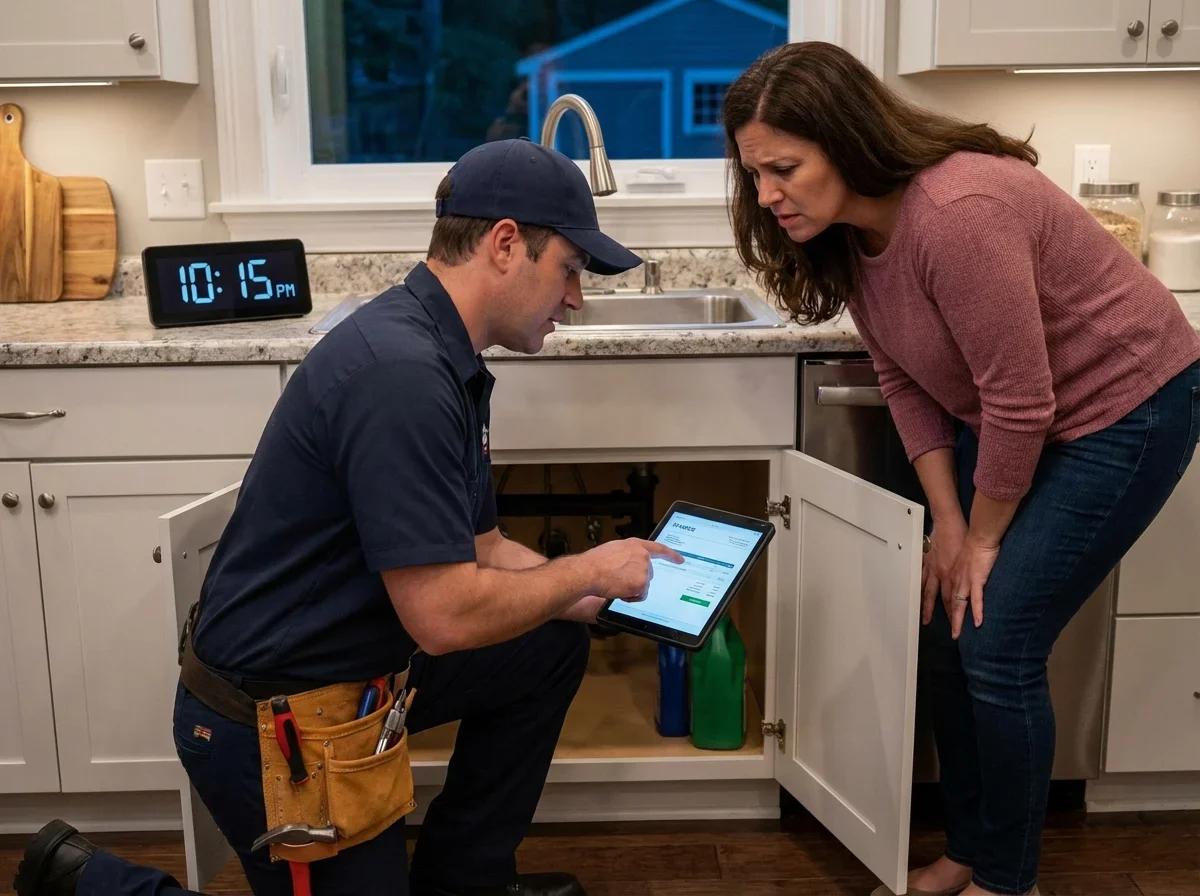
A professional emergency response starts with assessment. The plumber should locate the source, explain what failed and why, and outline repair options before starting work. You should receive a clear estimate, even in an emergency.
For straightforward repairs like replacing a burst supply line or fixing a leaking toilet, most technicians carry common parts on their truck and can complete the work immediately. Complex issues like slab leaks or sewer line failures may require follow-up appointments after the immediate crisis is contained.
Licensed plumbers should clean up their work area and explain any follow-up maintenance needed[1]. If they recommend additional diagnostics like a sewer camera inspection, ask why and what they're looking for.
Good technicians educate you throughout the process.
Prevent the Next Emergency
Once the crisis is over, address the underlying cause. If hard water corrosion caused the failure, a water softener can extend the life of your remaining pipes and prevent future leaks. Phoenix's 300+ ppm calcium carbonate water is among the hardest in the nation. Untreated, it will continue attacking your plumbing.
If your home was built before 2000 and still has original copper supply lines, consider repiping before you face multiple failures. Repipe costs in Phoenix range from $4,000-$12,000 depending on home size. Often less than the cumulative cost of emergency repairs plus water damage restoration.
Regular Maintenance Pays Off
Schedule annual water heater flushes to remove sediment buildup. Especially critical in Phoenix's hard water. A water heater working 20-30% harder due to scale deposits will fail years sooner and cost more to operate.
Test your main water shutoff valve twice a year. Turn it fully closed, then fully open. If it's stiff or leaking when you turn it, replace the valve before you need it in an emergency.
A $200 preventive valve replacement beats a $2,000 water damage claim.
Inspect exposed plumbing under sinks and around your water heater every few months. Look for moisture, corrosion, or small drips. Catching a slow leak early prevents an emergency later.
Pro Tip: Phoenix's extreme summer heat accelerates plumbing failures. Water heaters work harder when incoming water temperatures reach 90°F+, and outdoor hose bibs can develop stress cracks from thermal expansion. Schedule your annual plumbing inspection in April or May—before the peak heat season—to catch potential failures before they become midnight emergencies.
What Happens After Hours
Nighttime and weekend emergencies often feel more stressful, but Phoenix's 24/7 plumbing services handle them routinely. Many homeowners report no extra charges for nights, weekends, or holidays from established emergency plumbing companies[4].
When you call, describe what happened clearly: "My water heater is leaking from the base" gets better results than "I have a plumbing emergency." Mention if you've shut off the water and if there's active flooding. This helps the dispatcher prioritize your call and send the right technician with appropriate equipment.
If you're waiting for a plumber and water is still seeping despite your shutoff, you likely have a slab leak or the shutoff valve isn't fully closing. Keep removing standing water to minimize damage. Set up fans to dry wet areas.
Take more photos as damage progresses. Your insurance claim will benefit from detailed documentation.
Gas Line Emergencies Are Different
If you smell gas, suspect a gas leak, or have natural gas service to your home, follow a different protocol. Don't turn lights on or off. Don't use your phone inside the house. Don't operate any electrical switches.
Evacuate immediately and call 911 or Southwest Gas from outside.
Gas leaks require specialized equipment and licensing to repair safely. Never attempt DIY gas line work. Arizona requires specific endorsements on ROC licenses for gas work, and mistakes can be fatal.
When DIY Makes Things Worse
Some homeowners try temporary fixes while waiting for the plumber: taping a pipe, tightening a connection, or using pipe sealant. These rarely work for active leaks and sometimes make proper repairs harder.
Compression fittings on copper lines require precise alignment. Over-tightening cracks the ferrule and makes the leak worse. Pipe tape on threaded connections won't hold under water pressure. That spray-on leak sealer you saw advertised? It might contain the leak temporarily, but the plumber will need to cut out the contaminated section anyway.
Your job before the plumber arrives is damage control: stop water flow, protect your property, document everything.
Leave the actual repair to someone with the right tools, parts, and ROC license. The cost difference between emergency service and emergency service plus fixing your attempted repair is substantial.
Most Phoenix plumbers would rather you do nothing than attempt fixes that complicate the real solution. If you're mechanically inclined and want to help when repairs don't happen quickly, ask the emergency dispatcher what's safe to attempt. They might walk you through isolating a fixture or resetting a tripped breaker.
Always ask first.