What Defines an Emergency Plumbing Call
Not every urgent problem qualifies as an emergency in pricing terms. Plumbers charge emergency rates when you need service outside normal business hours (typically 8 AM to 5 PM weekdays) or when the issue poses immediate risk to your property or safety.
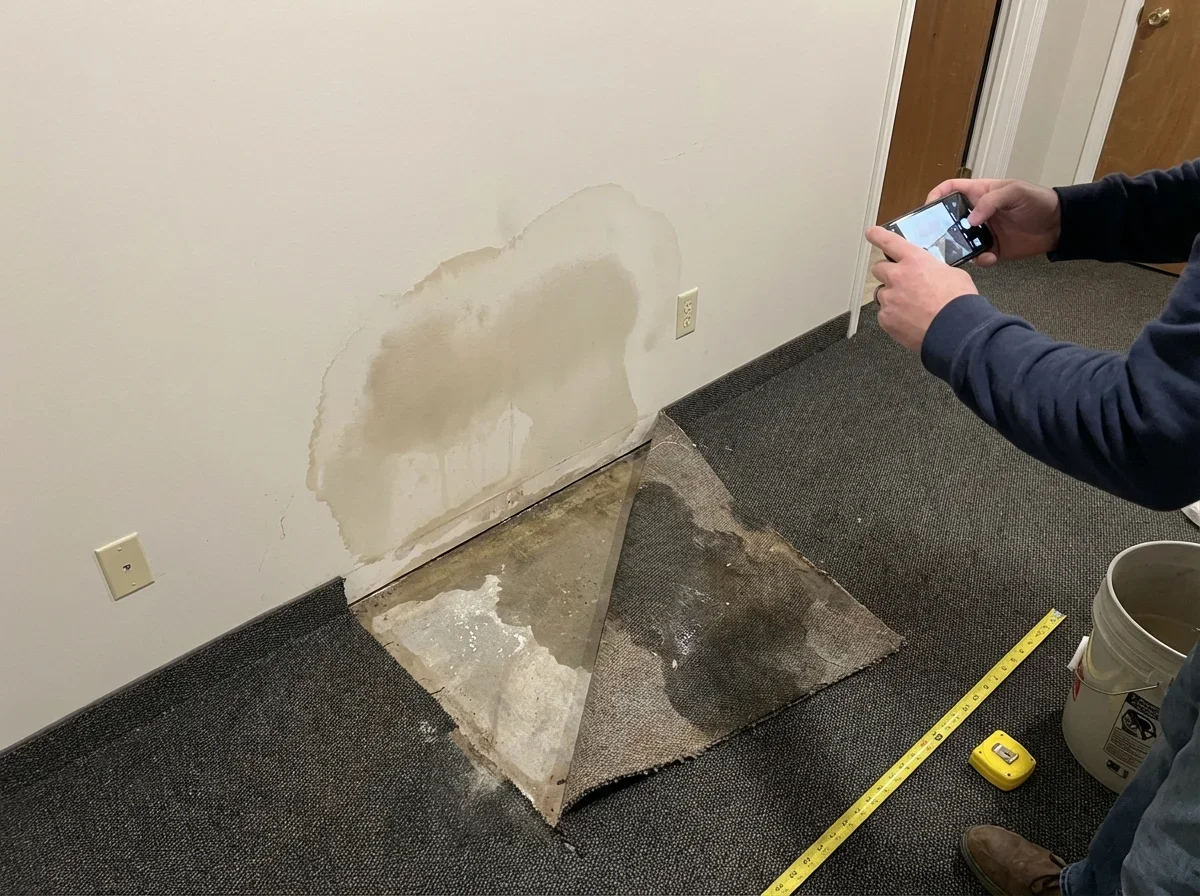
True emergencies include active leaks flooding your home, burst pipes, sewer backups into living spaces, gas leaks, or complete loss of water service. A running toilet or slow drain might feel urgent, but most plumbers won't apply emergency pricing unless the problem is actively causing damage or creating a hazardous condition.
If you can shut off water to the affected fixture and wait until morning without risk, you'll save 50-100% on labor rates by scheduling a standard service call.
Pro Tip: Learn where your main water shut-off valve is located NOW, before an emergency strikes. This single piece of knowledge can save you hundreds in water damage costs and help you downgrade a midnight crisis into a morning appointment.
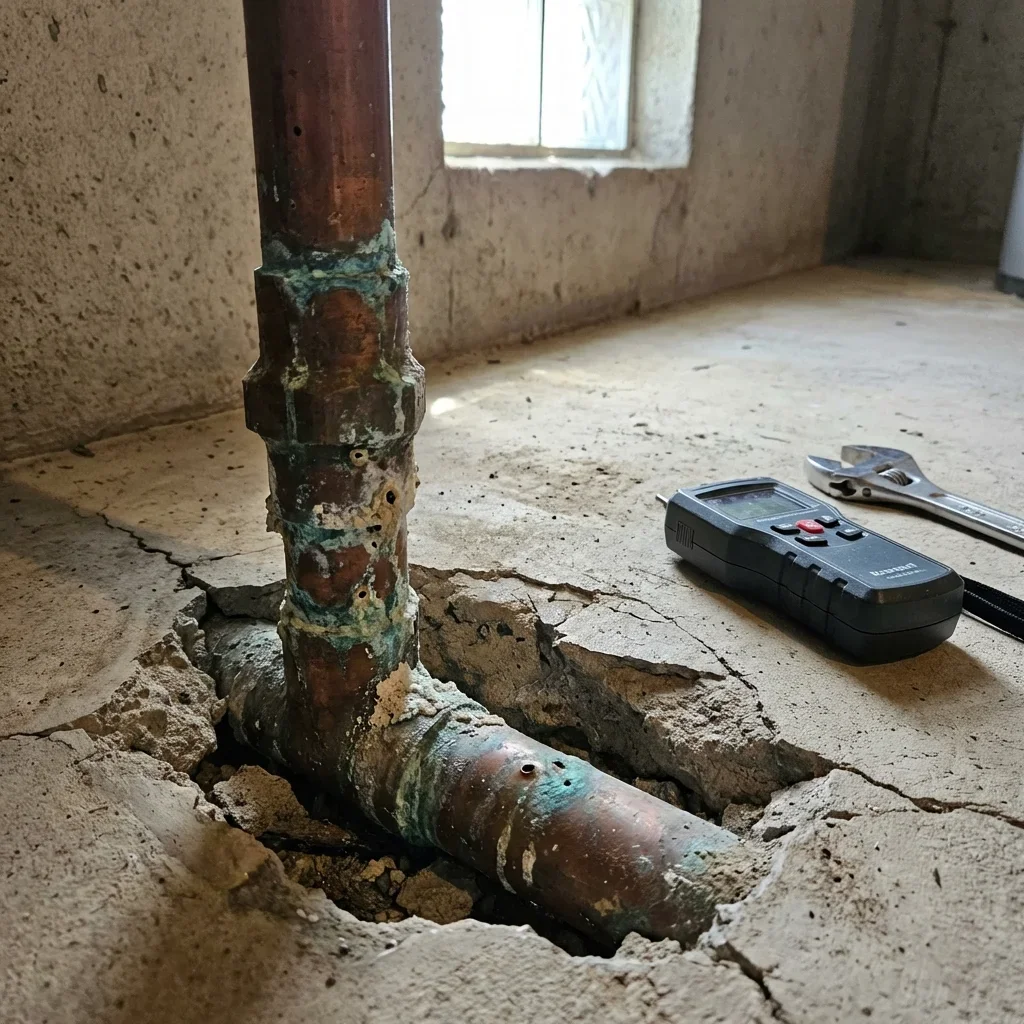
Arizona's climate creates some region-specific emergencies that homeowners elsewhere rarely face. Slab leaks under concrete foundations become critical faster here because water pooling beneath your slab can destabilize caliche soil and create foundation issues within days. Summer heat stress on older copper pipes causes pinhole leaks that start small but escalate to full ruptures if ignored.
During monsoon season (July through September), a roof leak that allows water into walls can lead to electrical hazards and mold growth in the humid conditions that follow storms.
Base Emergency Service Call Fees
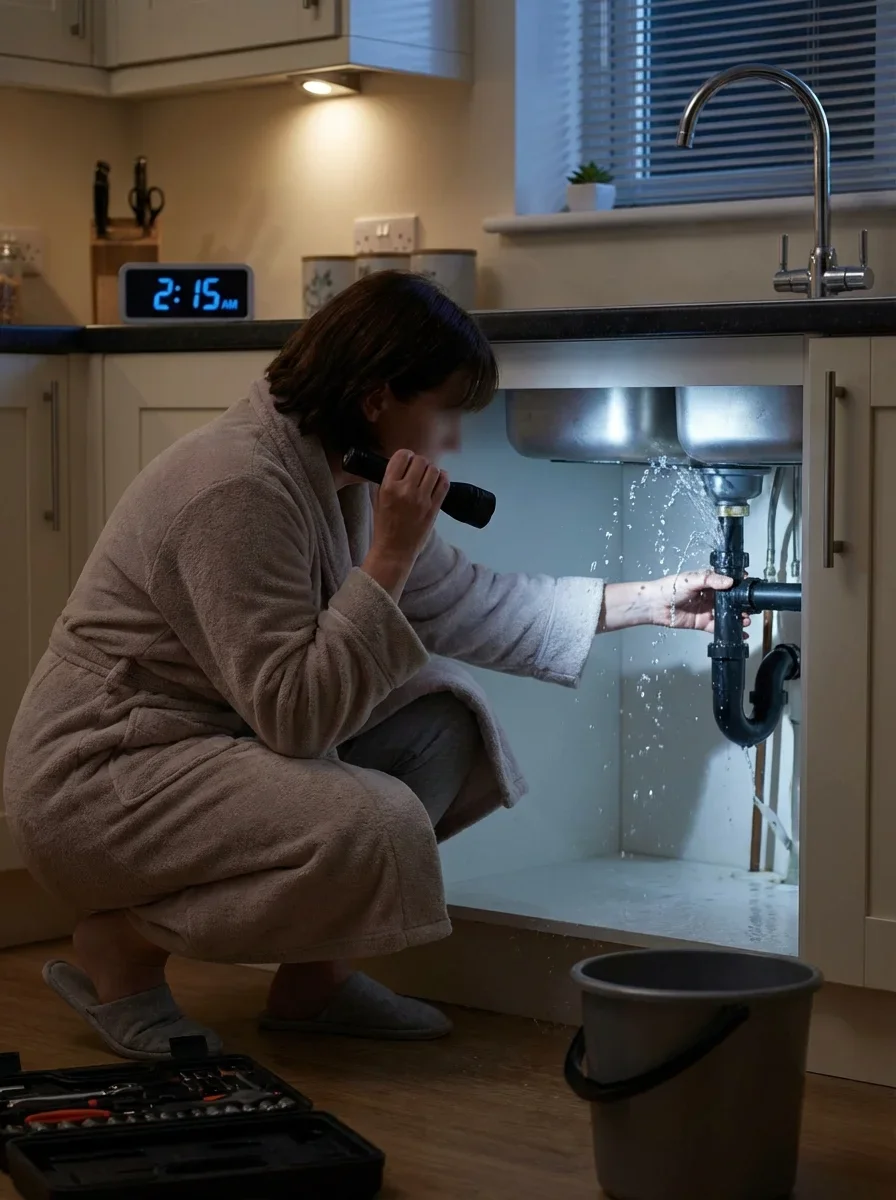
Most Arizona plumbers structure emergency pricing with a trip charge that covers the plumber showing up at your door, regardless of what work gets done. This base fee runs $100 to $200 during standard after-hours periods (weeknights until 10 PM, weekends during daylight) and $150 to $300 for middle-of-the-night calls.
After-Hours Rate Tiers
Plumbers typically operate on tiered emergency pricing:
Evenings (5 PM to 10 PM weeknights): Standard rate plus 50-75%
Late night (10 PM to 6 AM): Standard rate plus 100-150%
Weekends: Standard rate plus 50-100%
Holidays: Standard rate plus 100-200%
A plumber who charges $125/hour during business hours might bill $185/hour on Saturday afternoon, $250/hour at 11 PM on a Tuesday, and $325/hour on Thanksgiving. These multipliers stack. Christmas Eve at 2 AM could hit 250% over standard rates.
ROC-licensed contractors in Arizona aren't legally required to disclose these multipliers upfront, but reputable plumbers will give you a clear quote before starting work. If a plumber refuses to provide even a ballpark estimate over the phone, that's a red flag.
You can verify any Arizona plumber's license status and complaint history at https://roc.az.gov/ before agreeing to service.
Trip Charges vs. Diagnostic Fees
Some companies waive the trip charge if you approve the repair work on the spot. Others charge a separate diagnostic fee ($75-$150) that covers the time spent identifying the problem, then quote repair work separately.
Ask which model the plumber uses when you call. It affects your total cost if the issue turns out to be simple or if you decide not to proceed with repairs.
| Time Period | Rate Multiplier | Example Cost ($125/hr base) | Best For |
|---|---|---|---|
| Business Hours (8 AM-5 PM weekdays) | Standard | $125/hour | Non-urgent repairs, scheduled maintenance |
| Early Evening (5-10 PM weeknights) | +50-75% | $185-220/hour | Problems that can't wait but aren't catastrophic |
| Late Night (10 PM-6 AM) | +100-150% | $250-315/hour | Active flooding, burst pipes, gas leaks |
| Weekends | +50-100% | $185-250/hour | Issues discovered during off-hours |
| Major Holidays | +100-200% | $250-375/hour | True emergencies only—wait if possible |
Labor Costs for Common Emergency Repairs
Once the plumber diagnoses your problem, labor charges depend on repair complexity and how long the job takes. Emergency hourly rates in Phoenix metro typically range from $150 to $350, with most jobs falling into predictable time brackets.
A burst supply line repair under a sink usually takes 1-2 hours including water cleanup and testing. At $200/hour emergency rates, you're looking at $200-$400 in labor before materials.
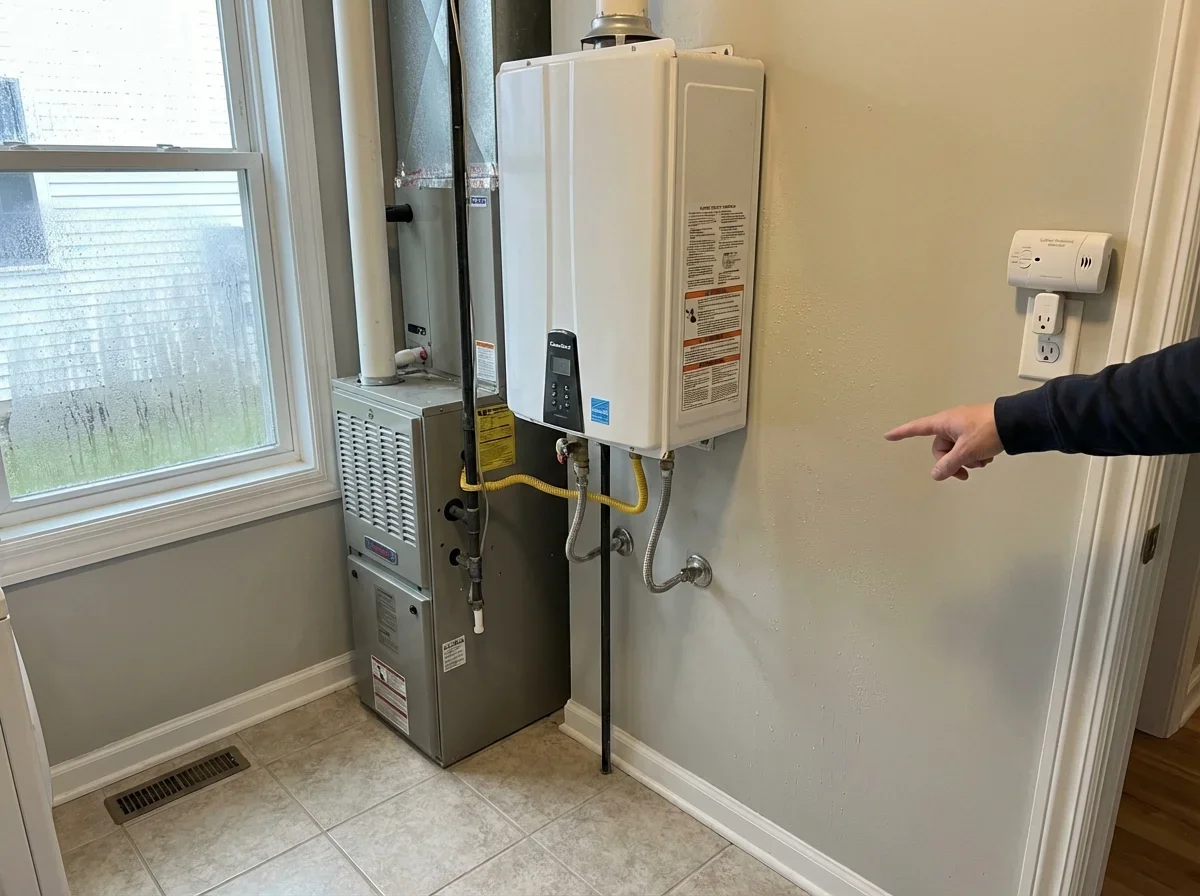
Replacing a failed water heater at 3 AM takes 3-4 hours, pushing labor to $600-$1,200 on top of the unit cost. Sewer line repair or slab leak work often can't be completed during an emergency call. The plumber stabilizes the situation (shuts off water, contains damage) for $300-$500, then returns during business hours for the actual repair to avoid tripling your costs.
What Takes Longer Than You'd Expect
Arizona's construction methods add time to several common repairs. Slab-on-grade homes (the standard here) mean plumbers need to cut through concrete or tunnel beneath your foundation to access supply lines. A 30-minute repair in a home with a basement becomes a 3-hour job when pipes run through the slab.
Caliche soil makes emergency excavation for outdoor line repairs brutally slow. What would take an hour in sandy loam can stretch to three when plumbers hit that calcium carbonate hardpan layer 2 feet down.
Older Phoenix homes with copper supply lines and cast iron drain lines present access challenges. That cast iron often runs beneath the slab along specific paths that require extensive cutting to reach. Top-rated contractors like those in our directory typically carry ground-penetrating radar or acoustic leak detection equipment to minimize how much concrete they remove, but even with technology, slab access adds 1-2 hours to most jobs.
Parts and Materials Markups
Emergency plumbers carry common parts on their trucks, but you'll pay a premium over retail pricing. A shut-off valve that costs $12 at a supply house might be billed at $35-$50 in an emergency call.
A standard toilet fill valve retailing for $18 could appear on your invoice at $45.
This markup isn't pure profit gouging. It covers the plumber's inventory costs, the expense of maintaining a stocked truck, and the risk that specialized parts go unused. Emergency service companies can't wait for parts orders, so they invest thousands in inventory that sits idle most of the time. The markup model keeps their trucks ready to solve your problem immediately instead of scheduling a return visit after ordering parts.
For major components like water heaters, expect 15-30% over what big-box stores charge. A 50-gallon gas water heater that Home Depot sells for $650 will cost $750-$850 through your emergency plumber.
You can sometimes reduce this markup by offering to source the part yourself if the plumber is willing to install customer-supplied materials. Many won't do this for liability reasons. If the part fails, they want control over the warranty claim process.
Geographic Cost Variations Across Arizona
Emergency plumbing costs in Scottsdale and Paradise Valley run 15-25% higher than Phoenix proper, reflecting higher overhead costs and the clientele's willingness to pay premium rates. A midnight service call in Scottsdale that costs $500 might run $400 for an identical issue in Glendale.
Rural areas outside the Phoenix metro face distance surcharges. If you're in Cave Creek, Queen Creek, or Rio Verde, expect an additional $50-$150 trip charge on top of standard emergency rates to cover the plumber's travel time from their service area.
Some companies won't dispatch for middle-of-the-night calls more than 20 miles from their base, leaving you with fewer options and potentially higher costs from the plumbers willing to make the drive.
Tucson emergency rates run about 10% below Phoenix on average, while Flagstaff (with its much smaller service provider pool) can exceed Phoenix rates by 20-30% for after-hours work. The fewer licensed plumbers operating in an area, the more leverage they have on emergency pricing when you're in crisis mode.
Arizona Emergency Plumbing Cost Quick Reference:
- Base trip charge: $100-$300 depending on time
- Phoenix metro hourly rate: $150-$350 emergency
- Scottsdale/Paradise Valley: +15-25% above Phoenix
- Rural areas: Add $50-$150 distance charge
- Tucson: -10% below Phoenix average
- Flagstaff: +20-30% above Phoenix
- Parts markup: 200-400% over wholesale
- Major appliances: +15-30% over retail
How Time of Day and Day of Week Affect Cost
The difference between a 6 PM call and a 10 PM call can be $150 in labor charges. Many plumbers maintain lower emergency multipliers for early-evening calls (5-10 PM) than for late-night service.
If you discover a problem at 9 PM and can contain it temporarily by shutting off water to that fixture, waiting until 8 AM could cut your total cost in half.
Weekends cost less than middle-of-the-night weekday calls but more than weekday business hours. A Saturday morning service call (when some plumbers run regular weekend hours) might only carry a 25% surcharge versus 100% for a Sunday evening call. Major holidays trigger the highest multipliers since plumbers sacrifice family time to take your call.
Phoenix's summer peak demand (June through August) sometimes adds seasonal pricing even to daytime calls. When every plumber's schedule is packed with AC-related electrical work and heat-stressed pipe failures, you lose negotiating leverage.
Calling for emergency plumbing service during a 115-degree heat wave means paying whatever the available plumber quotes.
What Drives Emergency Costs Higher
Certain problem types automatically push emergency bills into the upper cost ranges regardless of timing. Gas line emergencies require specialized licensing and create life-safety risks that justify premium pricing. Expect $400-$800 even for relatively simple repairs like replacing a corroded connector.
Sewer backups involve hazardous waste handling and require cleanup beyond basic plumbing work. Emergency sewer calls often top $600 before any actual pipe repair begins.
Slab leak repairs combine difficult access with foundation risk. The emergency plumber might charge $350-$500 just to locate the leak using acoustic detection equipment, then quote $2,000-$5,000 for the actual repair once they've tunneled under your slab or cut through it. In older Phoenix homes where copper pipes run through concrete laid directly on caliche soil, corrosion from hard water (Phoenix averages over 300 ppm calcium carbonate) creates pinhole leaks that escalate rapidly.
Once one section fails, you're often looking at repiping rather than single-leak repairs.
When Permits Complicate Emergency Work
Arizona requires permits for most plumbing work, but emergency repairs to stop active damage fall into a gray area. A plumber can temporarily fix a burst pipe to stop water flow without a permit, but the permanent repair technically requires one.
This matters because pulling an emergency permit (if your jurisdiction even offers after-hours permitting) adds $50-$150 to your bill plus inspection fees.
Some emergency plumbers will stabilize your crisis during the night call, then return during business hours to complete the permitted repair work at standard rates. Others will complete the full repair overnight and handle permitting retroactively. Ask before work begins. Unpermitted plumbing work can void your homeowner's insurance coverage if a future claim involves that system, and it absolutely complicates home sales when buyers' inspectors discover unpermitted modifications.
Ways to Reduce Emergency Plumbing Costs
Knowing where your main water shut-off valve sits and how to operate it can save hundreds in water damage before the plumber arrives. Every minute that burst pipe flows adds to flooring, drywall, and potential mold remediation costs that dwarf the plumbing bill.
Most shut-offs are near the water heater or where the main line enters your home (often in the garage in Arizona homes).
Fixture-Level Shut-Offs
Individual shut-off valves under sinks, behind toilets, and at water heaters let you isolate problems without killing water to your entire house. If your kitchen sink supply line fails, turning off those under-sink valves stops the flood while maintaining water service to bathrooms and appliances.
This containment often lets you downgrade from a midnight emergency call to a next-morning standard service call.
Hard water in Phoenix (and throughout Arizona) corrodes these shut-off valves over time until they won't turn or break off when you try. Replacing all your fixture shut-offs preventively every 10-15 years costs $200-$400 during a standard service call. Discovering a frozen valve during an emergency when you're already paying premium rates means the plumber bills emergency prices to replace it before even addressing the original problem.
When to Call Immediately vs. Waiting for Business Hours
Active flooding, gas odors, or sewage backing into living spaces justify emergency rates. A dripping faucet, running toilet, or slow drain don't.
You're paying double or triple for work that poses no immediate risk to your home. If you can shut off water to the affected fixture and the problem doesn't create safety issues, waiting for business hours saves substantial money.
Sewer camera inspections and diagnostic work sometimes get pushed as urgent when they're really not. If you have slow drains throughout your house but nothing's backing up, scheduling a camera inspection during business hours costs $200-$350 versus $400-$600 after hours. The drain isn't getting dramatically worse overnight in most cases.
Insurance Coverage for Emergency Plumbing
Standard homeowner's insurance covers water damage from sudden pipe failures but typically excludes the cost of repairing the plumbing itself. Your policy might pay for drywall replacement, flooring, and contents damaged by a burst pipe while leaving you to cover the $800 emergency plumbing bill that stopped the water.
Some policies include limited coverage for emergency service calls (capped at $500-$1,000) as part of equipment breakdown coverage or through optional riders. Check your policy details before assuming insurance will reimburse emergency plumbing costs.
Even when covered, you'll likely pay out of pocket first, then file a claim and wait for reimbursement.
Home warranty plans vary wildly on emergency coverage. Many cap reimbursement at $500 per incident and define "emergency" narrowly enough that your midnight crisis doesn't qualify. They also require you to use their network plumbers, which might mean waiting 12+ hours for an available provider while water spreads across your floor.
Read the contract specifics. Home warranties work well for planned replacements but often fail during actual emergencies.
Questions to Ask Before Approving Emergency Work
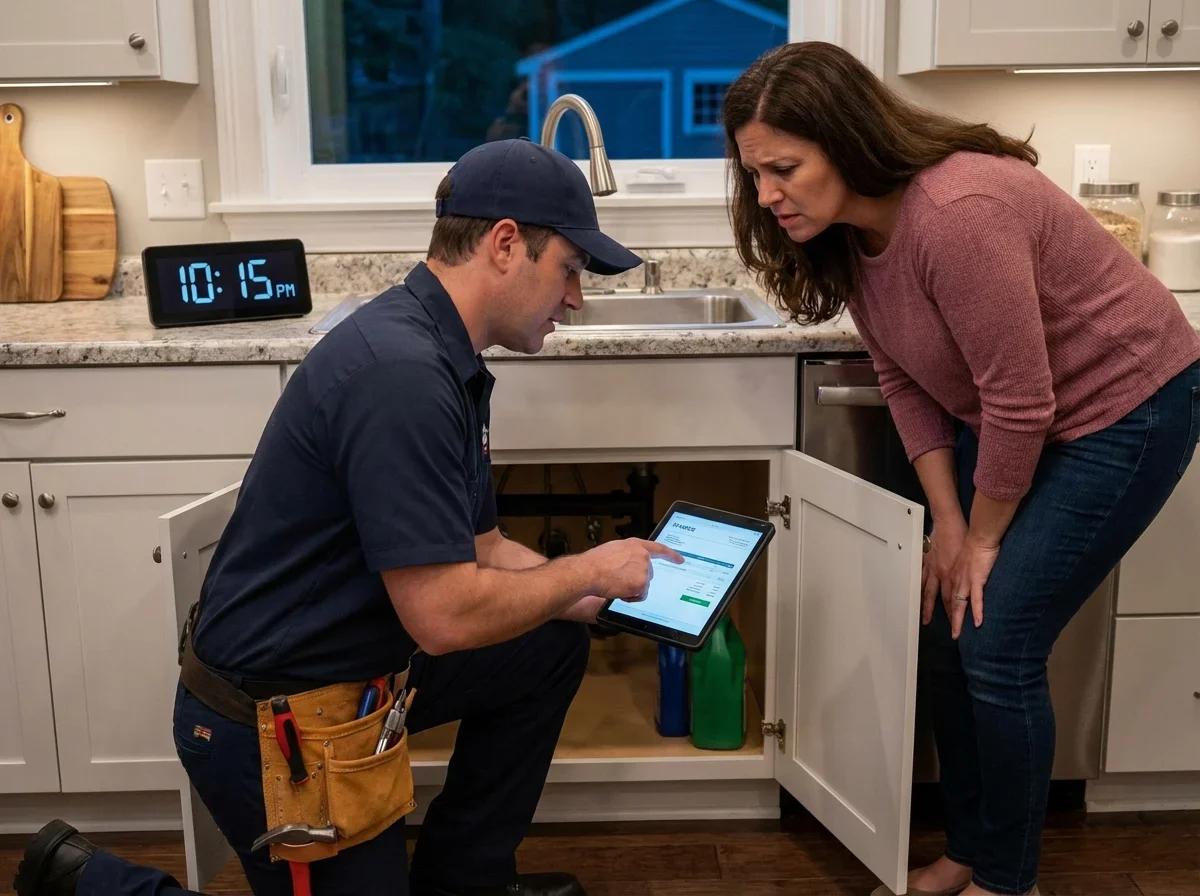
Get a quote that breaks out trip charges, hourly labor rates, and estimated parts costs separately. A single "total estimate" of $650 doesn't tell you whether you're paying $250/hour in labor with $150 in parts or $150/hour with a $350 parts markup.
You need those details to evaluate whether the pricing is reasonable.
Ask whether the trip charge applies toward the total bill or adds on top of labor and materials. Some plumbers credit your $150 trip fee against the first hour of work; others charge it separately, meaning you're paying $150 just for showing up plus $200/hour for labor.
Licensing and Insurance Verification
Every plumber working in Arizona should hold an active ROC license for jobs over $1,000. That includes most emergency repairs. Ask for the license number and verify it at https://roc.az.gov/ before agreeing to work. Check for complaints, license suspensions, and bonding status.
Arizona doesn't require contractors to carry workers' compensation insurance (many operate without it), so ask specifically about general liability coverage. If an uninsured plumber gets injured on your property, you could face liability claims.
Confirm what warranty covers the emergency repair work. ROC-licensed contractors must provide a one-year warranty on workmanship, but parts warranties vary. A water heater installed during an emergency call should come with the manufacturer's warranty plus labor coverage for installation issues.
Get warranty terms in writing before work begins.
Hidden Costs That Appear on Emergency Bills
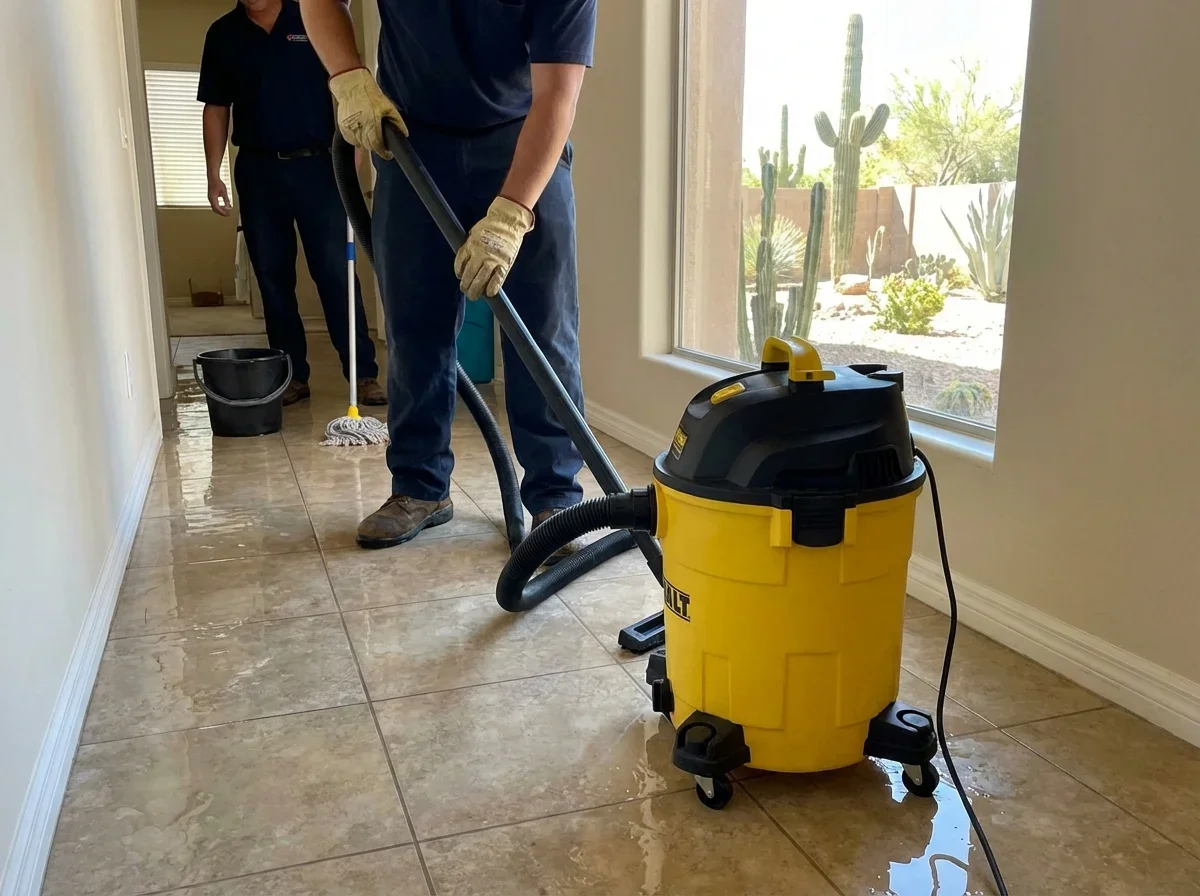
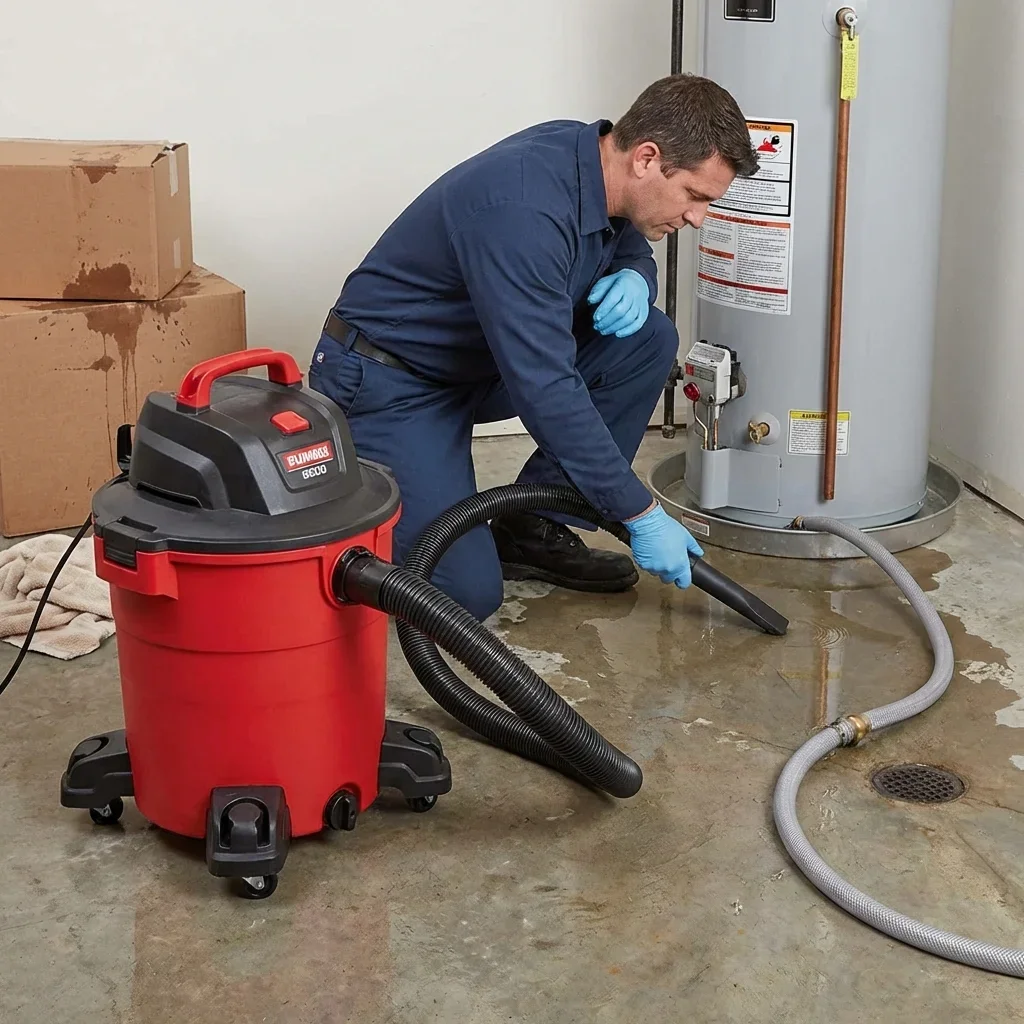
Water damage mitigation often falls outside the plumbing scope of work but gets bundled into emergency service. If the plumber needs to move furniture, extract standing water with a shop vacuum, or cut away wet drywall to access pipes, those tasks add billable time at emergency rates.
Some plumbers subcontract water restoration companies for significant flooding, which brings in a second invoice at premium overnight rates.
Disposal fees for old water heaters, broken fixtures, or contaminated materials can add $50-$150 to emergency bills. The plumber can't leave a failed water heater in your garage. They need to haul it to a disposal facility, and that costs more at 3 AM than during business hours when the recycling center is open.
Minimum Service Charges
Many emergency plumbers enforce 2-hour minimums even if they solve your problem in 45 minutes. At $250/hour, you're paying $500 regardless of actual time spent.
This protects plumbers from losing money on short calls that still require driving across town in the middle of the night. But it means you might pay the same amount for a 30-minute fix as you would for a job that actually takes two hours.
When Emergency Repairs Turn Into Bigger Projects
The plumber arrives to fix a leaking supply line under your kitchen sink and discovers corroded pipes throughout the house. Now you're facing a repiping recommendation that runs $8,000-$15,000 on top of your emergency repair bill.
This scenario plays out constantly in older Phoenix homes where hard water has degraded copper piping over decades.
Reputable plumbers will stabilize the immediate crisis during the emergency call, then provide a detailed quote for comprehensive repairs at business-hour rates. Less scrupulous operators use the crisis moment to upsell expensive work at emergency pricing when you're not in a position to get competing bids.
If a plumber pushes for immediate approval of major work beyond stopping the active problem, pump the brakes. Get the emergency handled, then obtain at least two quotes for the larger project during normal business hours.
Slab Leak Scenarios
Discovering a slab leak during an emergency call creates a decision point. The plumber can shut off water to your house and schedule proper leak detection and tunneling work for the next day at standard rates, or they can begin the full repair process immediately at emergency pricing.
Unless the leak is causing severe foundation settlement or flooding interior spaces, waiting 12 hours saves $1,000-$2,000 in labor costs. The leak has been forming for weeks or months. One more night with water shut off rarely matters.
Evaluating Whether Emergency Service Was Necessary
After the dust settles, you might question whether you really needed that $650 emergency call for a problem a DIY fix could have handled. Burst supply lines, gas leaks, and sewer backups into living spaces absolutely justify emergency rates.
A toilet that won't stop running or a dripping faucet probably didn't.
Before calling for emergency service, consult resources like Phoenix Plumbing Emergency: What to Do Before the Plumber Arrives to assess severity. Many issues that feel urgent at midnight can wait until 8 AM if you know how to shut off water to that fixture and prevent damage from spreading. The difference between a true emergency requiring immediate response and an urgent problem you can temporarily contain is often $300-$500 in unnecessary after-hours charges.
Learning basic shut-off valve locations and how to handle common issues pays for itself the first time you convert a potential emergency call into a scheduled appointment. A clogged drain that's backing up slowly doesn't need hydro jetting at 11 PM. Shut off water to that fixture, avoid using it overnight, and schedule proper drain cleaning the next morning at half the cost.
Local Emergency Response Times and Availability
Phoenix metro plumbers typically quote 60-90 minute emergency response times for in-service-area calls. Outlying areas like Queen Creek, San Tan Valley, or Anthem might wait 2+ hours even for plumbers willing to dispatch.
During peak demand periods (summer heat waves, monsoon season), those windows stretch. You might wait 3-4 hours for an available truck on a Saturday afternoon in July when every plumber is fielding multiple emergency calls.
Some neighborhoods see faster response because multiple plumbing companies base operations nearby. Central Phoenix, Tempe, and Scottsdale typically have more available providers within 10 miles than growing areas like Buckeye or Casa Grande. That competition helps keep emergency pricing somewhat in check and improves response times.
24/7 vs. "On-Call" Emergency Service
Not all plumbers advertising emergency service actually staff trucks around the clock. Many operate on-call systems where a technician gets paged and drives from home, adding 30-60 minutes to response time versus companies running dedicated overnight crews.
Ask whether they're dispatching a truck that's already on the road or calling someone in from off-duty status. You're paying emergency rates either way, but one gets you help significantly faster.
Comparing Quotes During Emergencies
You rarely have time to call five plumbers and compare detailed quotes when water is actively flowing across your floor. But you can get ballpark estimates from 2-3 companies before choosing.
Explain the problem clearly: "I have a burst supply line under the kitchen sink, water is shut off at the fixture, I need someone within two hours." Most dispatchers can quote trip charges and hourly rates immediately, giving you enough information to identify outliers.
Price gaps of $50-$100 on emergency calls are normal market variance. Quotes that differ by $200+ for the same described problem suggest either dramatically different service quality or someone taking advantage of your crisis. The lowest quote isn't always the best choice. A plumber who can arrive in 45 minutes might justify higher rates than one who can't dispatch for three hours, since water damage accumulates by the hour.
Check online reviews quickly while you're waiting. A plumber with 200 reviews averaging 4.8 stars and specific mentions of fair emergency pricing is worth $100 more than one with 12 reviews averaging 3.5 stars and complaints about surprise charges.
You can make reasonably informed decisions even under time pressure if you know what questions to ask and what warning signs to watch for.