Average Drain Cleaning Costs in Phoenix (2026)
You're looking at $175 to $450 for most residential drain cleaning jobs in the Phoenix metro area. That's the realistic range once you factor in service call fees, pipe access, and whether the plumber needs more than a basic snake.
Single fixture clogs (a bathroom sink, shower drain, toilet) typically run $150-$250 if the blockage is within 25 feet of the access point. Mainline stoppages start at $300 and climb from there depending on distance, depth, and what caused the clog.
These are the kind that back up multiple fixtures or flood your yard.
Emergency calls skew the numbers hard. A Saturday night mainline stoppage can easily hit $600-$800 once you add after-hours rates and the probability that a simple snake won't cut it. Phoenix plumbers charge 1.5x to 2x their normal rates outside business hours, and that multiplier applies to everything: the service call, hourly labor, equipment fees.
- Single fixture clog: $150-$250 (sink, shower, toilet)
- Mainline stoppage: $300-$700+ (multiple fixtures affected)
- Emergency after-hours: Add $150-$300 surcharge
- Service call fee: $75-$125 (sometimes waived)
- Camera inspection: $150-$350 additional
- Hydro jetting: $350-$700 vs. $150-$300 for snaking
Service Call Fees and Trip Charges
Almost every Phoenix plumber charges a diagnostic or service call fee just to show up, typically $75-$125. Some waive it if you proceed with the work. Others fold it into the total.
A few high-volume operations advertise "$49 drain cleaning" then tack on travel fees, video inspection "recommendations," and disposal charges that push the final bill past $300.
Ask upfront whether the quoted price includes the service call or if that's added separately. ROC-licensed contractors (verify at roc.az.gov) are required to provide written estimates before starting non-emergency work over $1,000, but drain cleaning often falls under that threshold and pricing transparency varies.
Factors That Affect Drain Cleaning Prices in Phoenix
Location of the Clog
The farther a plumber has to snake, the more you pay. A bathroom sink trap clog 3 feet from the cleanout? That's the cheap end. A mainline blockage 75 feet out where your sewer lateral meets the city line?
That's where prices double.
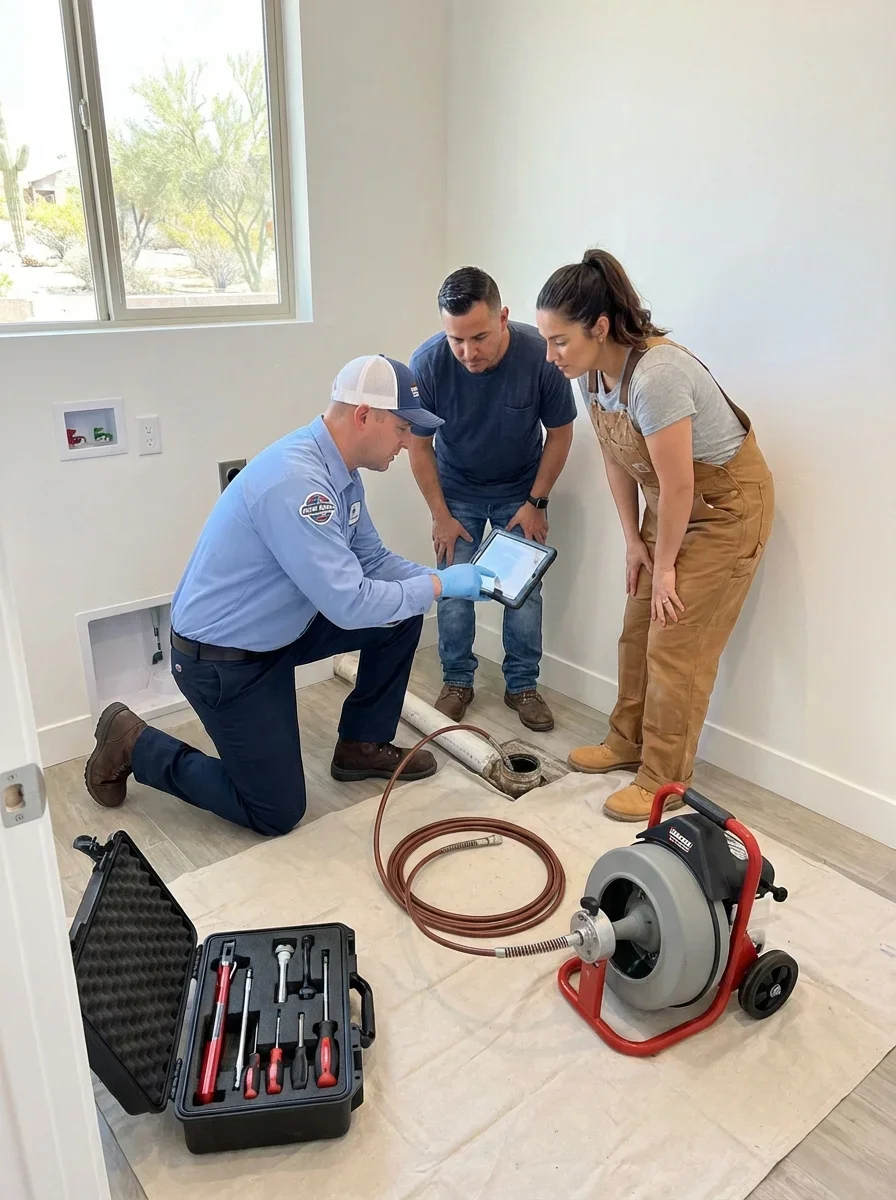
Phoenix's slab-on-grade construction complicates access. Most homes have no basement, so plumbers access drain lines through cleanouts (if you have them) or by pulling toilets. If your home lacks accessible cleanouts and the plumber has to remove a toilet or go through a vent stack on the roof, add $100-$200 in labor before they've even addressed the clog.
Older Phoenix neighborhoods (Encanto, Coronado, Arcadia) often have cast iron drain lines buried under the slab with minimal cleanout access. That adds time, equipment needs, and cost compared to newer PVC systems with strategically placed cleanouts.
Type of Blockage
Grease and soap buildup? A motorized snake usually handles it for $150-$250. Tree roots infiltrating a cracked sewer line 60 feet from the house? You're looking at hydro jetting ($350-$700) or a sewer camera inspection to assess whether you need sewer line repair entirely.
Phoenix's hard water (300+ ppm calcium carbonate) accelerates scale accumulation inside drain pipes, especially in pre-2000 homes with cast iron drains. That mineralized buildup doesn't respond well to snaking alone. It scrapes off temporarily, then re-accumulates.
Many plumbers recommend hydro jetting for recurring clogs caused by scale. It costs more upfront but actually clears the pipe interior rather than just punching a hole through the blockage.
Hair and organic debris are the easiest and cheapest to clear. Flushed objects (the classic toy cars, hygiene products, "flushable" wipes that absolutely are not flushable) require more aggressive equipment and sometimes pipe disassembly.
Method: Snaking vs. Hydro Jetting
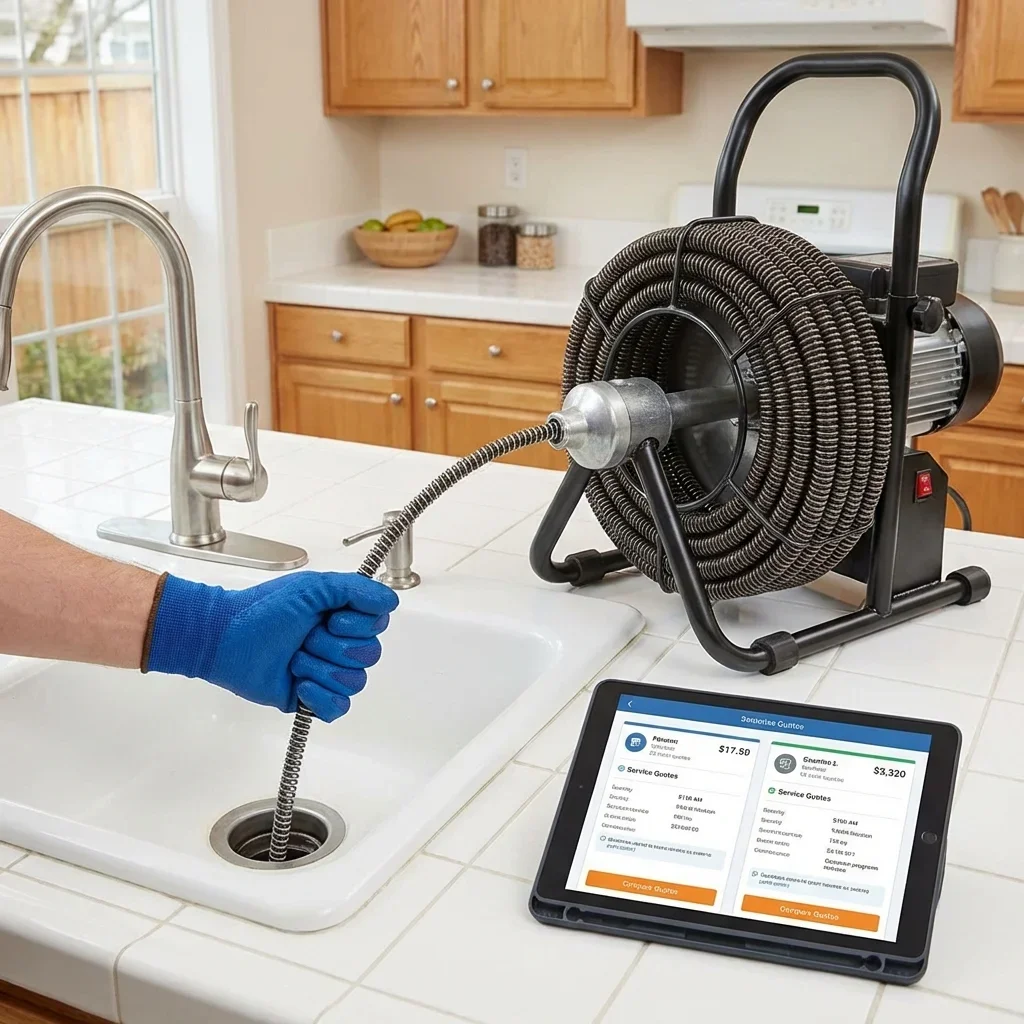
A standard motorized drain snake (also called augering) costs $150-$300 and works for most single-fixture clogs and straightforward mainline blockages. The plumber feeds a flexible cable with a cutting head into the pipe, breaks up or retrieves the obstruction, and you're done in 30-60 minutes.
Hydro jetting uses high-pressure water (3,000-4,000 PSI) to scour pipe walls clean and flush everything out to the sewer main. It's overkill for a simple hair clog, but it's the right tool for grease-compacted kitchen lines, root-infested sewer laterals, and scale buildup from hard water.
Hydro jetting runs $350-$700 in Phoenix depending on line length and access difficulty.
| Factor | Drain Snaking | Hydro Jetting |
|---|---|---|
| Cost | $150-$300 | $350-$700 |
| Best For | Hair, simple clogs, single fixtures | Grease, roots, scale, recurring clogs |
| Duration | 30-60 minutes | 30-60 minutes |
| Effectiveness | Punches hole through blockage | Completely cleans pipe walls |
| Warranty | 30-90 days typical | 6-12 months typical |
If you've had the same drain clog three times in two years, hydro jetting usually solves the underlying buildup problem that snaking just keeps temporarily denting. More details in our hydro jetting vs. drain snaking comparison.
Some plumbers use hydro jetting as their primary tool because it's more thorough. Others reserve it for situations where snaking fails. If a plumber immediately recommends hydro jetting for a basic sink clog without trying a snake first, get a second opinion.
Time of Service
Normal business hours (typically Monday-Friday, 7am-5pm) get you standard pricing. Evenings, weekends, and holidays trigger surcharges.
Expect to pay $150-$300 extra for after-hours emergency drain cleaning on top of the base service cost.
A $225 daytime mainline snake becomes a $450 Saturday night call. A $500 hydro jetting job turns into $800 if your sewer backs up at 10pm on Sunday. Phoenix plumbers justify the premium because they're pulling technicians from off-hours, and frankly, because homeowners with sewage backing into their shower will pay it.
Some companies charge flat emergency rates. Others multiply their hourly rate by 1.5x or 2x. Ask what "emergency" means to them (some define it as any call outside business hours, while others reserve the premium for genuinely urgent situations like active backups or flooding versus "my drain is slow but not yet critical").
Video Inspection Add-Ons
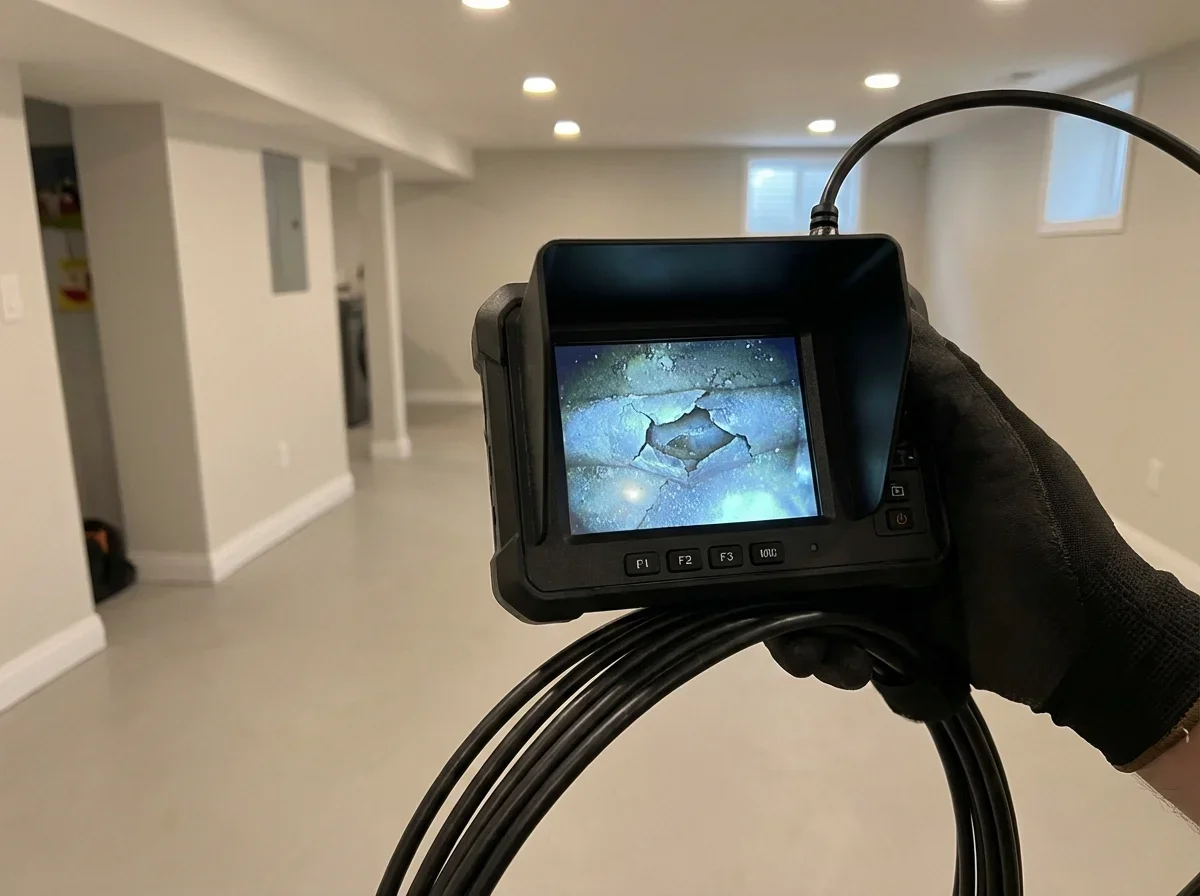
A sewer camera inspection costs an additional $150-$350 and isn't always necessary for straightforward clogs. But if you're dealing with recurring stoppages, slow drains in multiple fixtures, or a clog the plumber can't clear with standard equipment, a camera inspection tells you what's actually happening inside the pipe.
It's worth the cost when you're deciding between a $400 hydro jetting session and a $6,000 sewer line replacement.
The camera shows you tree root intrusion, collapsed pipe sections, bellied lines where waste pools, and offset joints where sections have separated. That visual evidence prevents expensive guesswork and helps you avoid paying for drain cleaning that won't solve the real problem. See what the process looks like in our guide to sewer camera inspections.
Some plumbers include basic camera work in their mainline service pricing. Others charge separately. If they're recommending major work based on camera findings, ask to see the footage yourself so you understand what needs fixing.
Typical Pricing by Drain Type
Kitchen Sink: $150-$275
Grease, food debris, and soap scum are the usual suspects. If you have a garbage disposal, the plumber may need to disconnect it to access the drain line, adding 15-30 minutes of labor.
Phoenix's hard water compounds kitchen drain issues because minerals bind with grease and solidify inside pipes faster than in soft-water regions.
Homeowners who cook frequently and rinse grease down the drain (even with hot water running) often face recurring clogs within 18-24 months unless they switch to scraping grease into the trash or get hydro jetting to fully clean the line.
Bathroom Sink/Shower: $125-$250
Hair and soap are easy to clear when the clog is in the trap or within a few feet. Most bathroom clogs cost on the lower end unless the plumber discovers the stoppage is farther down the line or caused by something wedged in the pipe.
Pop-up drain assemblies in bathroom sinks collect hair and gunk around the stopper mechanism. Some plumbers disassemble and clean the pop-up rather than snaking, especially if the clog is right at the stopper.
That's a 10-minute fix but you still pay the service call fee.
Toilet: $150-$300
Toilets have a built-in trap that catches objects and creates clogs. A standard auger usually clears them quickly. If the toilet itself isn't clogged but waste backs up when you flush, the blockage is downstream in the drain line or sewer lateral, and pricing moves into mainline territory.
Some Phoenix plumbers use closet augers specifically designed for toilets. Others pull the toilet and snake the drain line directly. Pulling a toilet adds $75-$150 in labor and requires a new wax ring on reinstallation, but it provides better access for stubborn stoppages.
Mainline/Sewer Line: $300-$700+
Mainline clogs affect multiple fixtures and often cause sewage backups in the lowest drains (usually showers or floor drains in single-story Phoenix homes). These require heavier equipment, longer snake runs (often 75-150 feet), and sometimes hydro jetting to clear root intrusion or compacted debris.
If tree roots have infiltrated the sewer line through cracks or joints (common in Phoenix's older neighborhoods with mature landscaping), you're looking at recurring clogs until you address the pipe damage itself.
Hydro jetting can cut through roots temporarily, but they regrow.
Many homeowners facing annual root stoppages eventually opt for sewer line repair or replacement rather than paying $500 every year for temporary clearing.
Mainline access cleanouts are often buried or located in inconvenient spots (side yards, under landscaping). If the plumber spends 30 minutes digging out a cleanout before even starting the actual drain work, that's billable time.
When Drain Cleaning Becomes Something More Expensive
Sometimes what you thought was a $200 clog turns into a four-figure repair estimate.
Here's when that happens and why it's not always a bait-and-switch.
Collapsed or Damaged Pipes
If the camera inspection shows a collapsed section of cast iron pipe, offset joints, or a bellied line where waste pools and can't drain properly, snaking or hydro jetting won't fix it. You're looking at pipe repair or replacement, which starts around $2,500 for trenchless methods and climbs past $6,000 for traditional excavation depending on depth and length. More pricing details in our repiping cost guide.
Phoenix's caliche soil (calcium carbonate hardpan 1-6 feet below the surface) makes excavation expensive. Breaking through caliche requires specialized equipment and adds $75-$150 per linear foot compared to normal soil.
That's why trenchless sewer repair (which pulls a new liner through the existing pipe without full excavation) has become popular here despite the higher upfront cost.
Widespread Hard Water Scale
If your entire drain system is coated in mineral buildup, clearing one clog doesn't solve the systemic problem. Some plumbers recommend whole-system hydro jetting or even re-piping if the scale has reduced pipe diameter by 50% or more.
Homes built before 1990 with original cast iron drains and no water softener often face this scenario.
The same hard water destroying your water heater has been depositing minerals inside your drain lines for 30+ years. At some point, the cost of repeated drain cleaning exceeds the cost of replacing the worst sections with PVC.
Root Intrusion Requiring Pipe Repair
Tree roots can infiltrate sewer lines through tiny cracks and grow into massive blockages. Hydro jetting with a root cutter can clear them temporarily, but roots regrow in 6-18 months if the pipe damage isn't repaired.
Phoenix's desert landscaping often includes deep-rooted trees like mesquite and palo verde. Their roots seek water aggressively and will exploit any weakness in sewer pipes. If your home is in an older neighborhood with mature trees and you're clearing root clogs annually, you're likely facing pipe replacement eventually.
The only question is whether you pay for it proactively or after the next backup.
How to Save Money on Drain Cleaning (Without Getting Burned)
Prevent Clogs Before They Happen
Basic drain maintenance costs nothing and prevents most of the $200-$400 service calls Phoenix homeowners make. Install mesh strainers in all sinks and tubs to catch hair and debris. Scrape food scraps into the trash before rinsing dishes.
Never pour grease down the drain, even with hot water running. It solidifies farther down the line where you can't reach it.
Monthly hot water flushes help dissolve soap and grease buildup. Run hot water for 2-3 minutes after each use of kitchen and bathroom sinks. For stubborn slow drains, pour half a cup of baking soda followed by half a cup of vinegar, wait 15 minutes, then flush with hot water. It's not a miracle cure, but it handles minor buildup before it becomes a full stoppage. More prevention tactics in our guide on how to prevent drain clogs.
Phoenix's hard water means you're fighting mineral accumulation constantly. A whole-house water softener won't fix drains that are already scaled up, but it prevents future buildup in both supply and drain lines. Homeowners with softeners report fewer drain issues over time, though that benefit takes years to show up.
Get Multiple Quotes for Non-Emergency Work
If your drain is slow but not backed up, you have time to call three plumbers and compare pricing. Phoenix has enough competition that quotes for the same job can vary $150-$300.
One plumber might quote $450 for hydro jetting while another charges $275 for snaking and only recommends hydro jetting if the snake fails.
Don't automatically pick the cheapest bid. Verify the plumber holds an active ROC license (check at roc.az.gov), carries liability insurance, and has actual reviews from homeowners who've used them for similar work. A $125 drain cleaning from an unlicensed handyman costs $2,500 if they damage your pipes and you have to call a real plumber to fix it.
Ask About Flat-Rate vs. Hourly Pricing
Some Phoenix plumbers charge flat rates for common jobs (e.g., $195 for any single-fixture snake, $425 for mainline hydro jetting up to 100 feet). Others bill hourly at $100-$175/hour plus equipment fees and trip charges.
Flat-rate pricing benefits you when the job runs long or complications arise. You pay the quoted amount regardless.
Hourly billing can save you money on quick, straightforward clogs but exposes you to cost overruns if the plumber hits unexpected issues. Ask which model they use and request a written estimate before work begins.
DIY Caution: When to Call a Professional
A $6 plunger and a $25 hand snake from the hardware store can handle basic sink and toilet clogs if you're comfortable trying. But Phoenix homeowners often turn a $175 plumber visit into a $600 repair by forcing tools too aggressively, damaging pipe connections, or pushing a clog deeper into the line.
Don't snake a toilet more than 3-4 feet. If the blockage is farther down, it's not a toilet problem and you need a plumber.
Don't use chemical drain cleaners before calling a plumber (they create caustic standing water that endangers whoever opens the cleanout). And if you feel significant resistance while snaking, stop. You're either hitting a sharp turn in the pipe or about to punch through deteriorated cast iron.
Pro Tip: Knowing when to stop DIY efforts separates successful homeowner fixes from expensive damage. If you hit resistance while snaking, if a plunger doesn't work after 10-15 vigorous attempts, or if multiple fixtures are affected—call a professional before you make it worse.
Knowing when to stop separates DIY success from expensive damage. Our guide on when to call a plumber vs. DIY covers the judgment calls in detail.
Questions to Ask Before Hiring a Drain Cleaning Service
Is the Service Call Fee Separate or Included?
Some companies advertise "$99 drain cleaning" but charge a $75-$125 service call fee on top of that. Others include the trip charge in their quoted price.
Clarify this in the initial phone call so you're comparing actual total cost, not teaser rates.
What Method Do You Recommend and Why?
A good plumber explains whether they're using a snake, hydro jetting, or camera inspection and why that's the right approach for your specific situation. If they push hydro jetting for a simple hair clog or refuse to camera-inspect a recurring mainline stoppage, those are red flags.
Are You ROC Licensed and Insured?
Arizona requires contractors performing work over $1,000 to hold an active Registrar of Contractors license. While most drain cleaning jobs fall under that threshold, hiring an ROC-licensed plumber ensures they've met minimum competency standards and carry a contractor bond.
Verify the license at roc.az.gov. It takes 30 seconds and protects you from fly-by-night operators.
Ask about liability insurance separately. Arizona doesn't require contractors to carry workers compensation insurance, which is controversial and leaves you potentially liable if a worker is injured on your property. Make sure the plumber carries general liability coverage at minimum.
What's Your Warranty on the Work?
Reputable Phoenix plumbers guarantee their drain cleaning for 30-90 days. If the same clog returns within that window, they come back and re-clear it at no charge. That's standard for snaking work.
Hydro jetting often carries longer guarantees (6-12 months) because it's more thorough.
If a plumber won't warranty their work, they either don't trust their own methods or they're clearing symptoms rather than solving the actual problem. More on what to expect from service guarantees in our guide to plumbing warranties in Arizona.
Red Flags and How to Avoid Overpaying
Phoenix's plumbing market includes excellent ROC-licensed professionals and also aggressive operators who exploit homeowner panic during backups.
Here's what to watch for.
Bait-and-Switch Pricing
The ad says "$79 drain cleaning," but once the plumber arrives, every actual drain cleaning scenario suddenly requires $300+ in "necessary" upgrades: video inspection, hydro jetting, enzyme treatments, preventive maintenance agreements. If the advertised price never applies to real-world situations, that's a bait-and-switch.
Legitimate plumbers charge realistic prices upfront.
If a quote seems too good to be true, it probably involves hidden fees or pressure tactics once the technician is in your home.
Unnecessary Upsells on Simple Clogs
A hair clog in your bathroom sink doesn't require hydro jetting, a camera inspection, and a whole-house drain treatment plan. If a plumber quoted $150 to snake a single fixture then arrives and immediately recommends $800 in additional services before even attempting the original job, get a second opinion.
That said, some legitimate recommendations emerge during diagnosis. If the plumber discovers your mainline has roots or your cast iron drains are deteriorating, that's useful information even if it costs more to address.
The difference is whether they explain what they found and why it matters, or whether they just pressure you to approve expensive work right now while they're already on site.
Extremely Low Prices Followed by "Unexpected" Charges
A company offers $49 drain cleaning, then charges $125 for the "required" service call, $75 for "disposal fees," and $50 for "after-hours service" even though you called at 2pm on a Tuesday. You end up paying $300 for what was advertised at $49.
Ask for the total price out-the-door, including all fees, before the plumber leaves their shop.
If they can't or won't quote a complete price, call someone else.
Local Considerations for Phoenix Drain Cleaning
Phoenix's climate, water quality, and construction methods affect both what causes drain clogs and what it costs to fix them.
Hard Water Impact on Drains
Phoenix's municipal water contains 300+ ppm calcium carbonate (officially "very hard" and among the highest in major U.S. cities). That mineral content coats the inside of drain pipes the same way it scales up your water heater and shower heads.
Over time, cast iron and even PVC drains narrow as mineral deposits accumulate.
A 4-inch drain line in a pre-1990 Phoenix home may have an effective diameter of 2-3 inches after decades of scale buildup. That's why hydro jetting has become common here. Snaking punches through the buildup temporarily, but hydro jetting actually scours pipe walls clean and restores flow capacity.
If you're buying a home in Scottsdale, Tempe, or Phoenix built before 1990 and it's never had the drains hydro jetted, budget for that within the first year. It's not an emergency, but it prevents the kind of recurring clogs that cost $200-$400 each time they happen.
Seasonal Patterns
Phoenix plumbers see clog volume spike during two windows: post-holiday (late December through January) when cooking grease accumulation catches up with homes, and late summer (August-September) when monsoon rains overwhelm aging sewer laterals and expose drainage problems that marginal systems masked during dry months.
Emergency drain calls drop slightly in winter when temperatures are mild and household water use decreases.
If you can schedule non-urgent drain work in December through February, you may have better availability and less pressure to accept emergency pricing.
Slab Leaks and Drain Access Issues
Phoenix's slab-on-grade construction means all your drain pipes run under or through the concrete slab. When a plumber needs access to a buried cleanout, it often involves excavation, core drilling through the slab, or pulling fixtures to access drain lines from above.
That adds cost and time compared to homes with basements or crawl spaces.
If your home lacks exterior cleanouts and the plumber has to pull a toilet or go through a roof vent, factor in an extra hour of labor. Older Phoenix homes often have minimal cleanout access because pre-1980s building codes didn't require them in all the places modern plumbers wish they existed. More on this challenge in our slab leak repair cost guide.
What to Expect During a Typical Drain Cleaning Visit
A professional drain cleaning appointment in Phoenix usually follows this sequence.
The plumber arrives and assesses the problem: which fixtures are affected, how fast (or slow) they drain, whether you have cleanout access. They may run water to confirm symptoms and check for backups in other drains. That initial assessment takes 5-10 minutes and helps them determine the right tool and approach.
Next, they locate and access the clog. For single-fixture clogs, that's often through the drain opening itself or the trap under the sink. For mainline stoppages, they'll use an exterior cleanout (if you have one) or pull a toilet to access the drain line.
If your cleanout is buried under landscaping, this step can take 30+ minutes.
The actual clearing work depends on the method. Snaking involves feeding a motorized cable into the pipe, breaking up or retrieving the obstruction, then pulling the cable back out. That takes 15-45 minutes for most clogs. Hydro jetting involves threading a high-pressure hose through the line and blasting water to scour pipe walls. It's louder, messier, and takes 30-60 minutes depending on line length.
After clearing the clog, the plumber tests drainage to confirm flow is restored and inspects for any damage or additional issues they noticed during the work.
If they found something concerning (deteriorated pipe, root intrusion, severe scale), they'll explain what they saw and what it means. That's also when they'll recommend camera inspection if the situation warrants it.
Finally, they clean up, reassemble any fixtures they removed, and provide an invoice with warranty terms. Good plumbers explain what caused the clog and suggest maintenance to prevent recurrence. That's a sign they're thinking past the current service call.
When Emergency Drain Service Is Worth the Premium
An emergency plumber costs 1.5x to 2x normal rates, but sometimes you can't wait until morning.
You need emergency service when sewage is actively backing up into showers, tubs, or sinks and creating a health hazard. You also need it when the mainline is stopped and you can't use any plumbing in the house without causing backups.
Those situations justify paying $500-$800 for a 9pm Sunday call because the alternative is a hotel room and water damage.
You probably don't need emergency service for a slow kitchen sink, a single clogged toilet when you have another bathroom, or drains that are sluggish but still functional. Call in the morning, get normal pricing, and use workarounds until the plumber arrives during business hours.
Some Phoenix homeowners panic and call emergency plumbers for non-urgent situations, then regret the bill when they realize they could've waited 12 hours and saved $300.
If the problem is annoying but not creating immediate damage or making your home unlivable, schedule normal-hours service. More guidance on genuine plumbing emergencies in our article on what to do before the plumber arrives.