How Drain Snaking Works
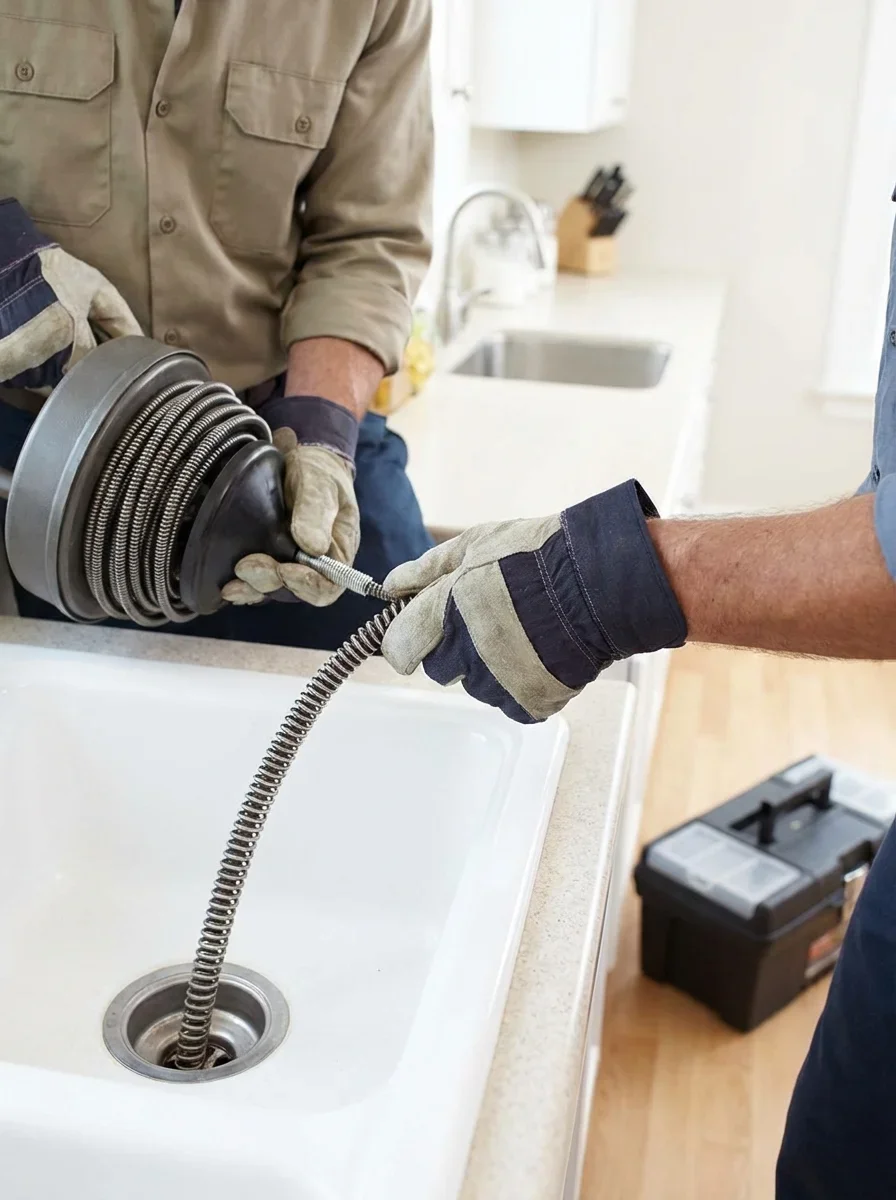
A drain snake — also called a drain auger — is a flexible metal cable that spins through your pipes to break up clogs. The technician feeds the cable into your drain, rotating it as it advances until it hits the blockage. The cable's cutting head either breaks apart the obstruction or hooks it so it can be pulled back out.
Most residential snakes reach 25-100 feet, which handles clogs in branch lines (the pipes connecting fixtures to your main drain). The process takes 30-60 minutes for a typical backup.
Plumbers can run the snake through your toilet, cleanout access point, or sink drain depending on where the clog sits.
Snaking works best on fresh, soft blockages — hair clogs in bathroom drains, food particles in kitchen sinks, toilet paper accumulation. It's a targeted fix that clears the immediate obstruction without altering the pipe's interior condition.
If tree roots have infiltrated your sewer line, the snake cuts through them but doesn't remove the root structure. The roots grow back within months.
How Hydro Jetting Works
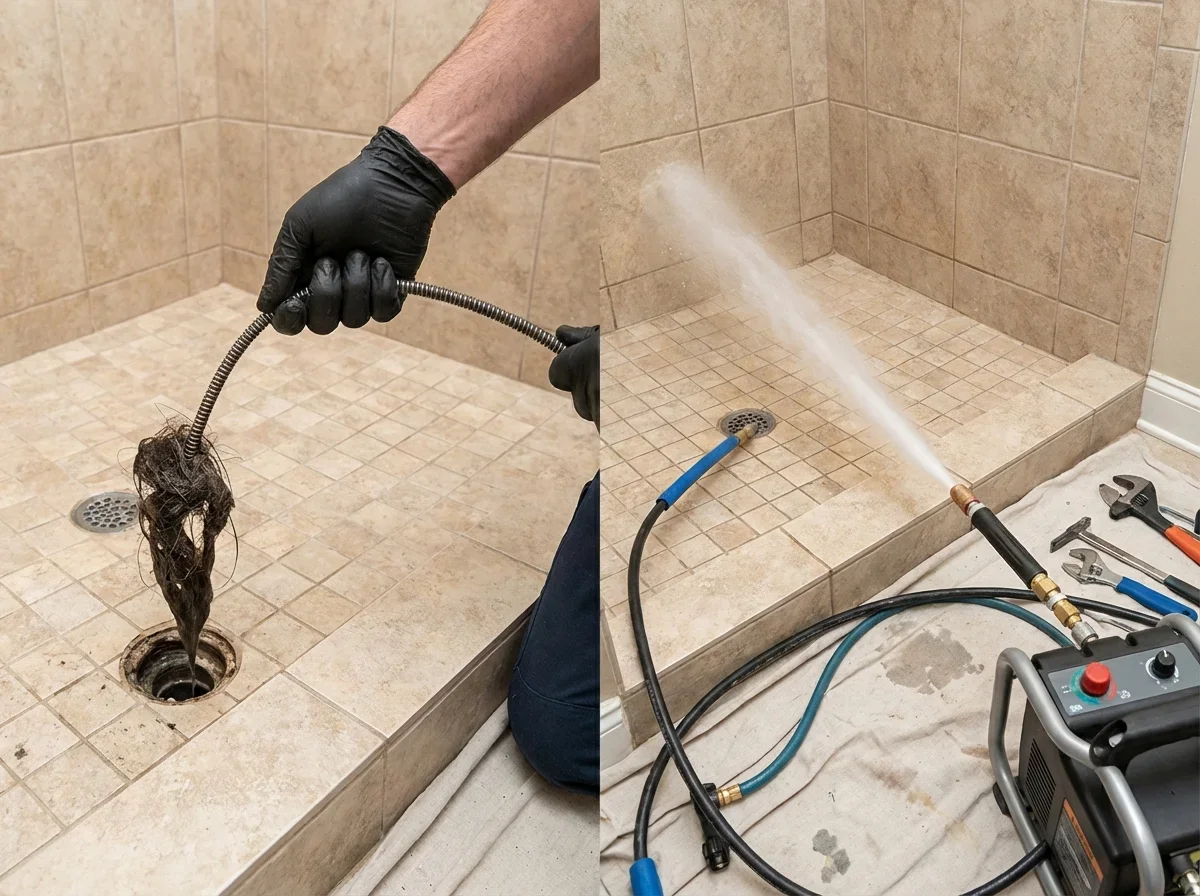
Hydro jetting uses a specialized hose that shoots water backward at 3,000-4,000 PSI while pulling itself forward through your pipes. The high-pressure jets scour the entire interior surface, removing grease, scale, soap scum, and root fragments.
It's not just clearing a path — it's restoring the pipe to near-original diameter.
The technician inserts the jetting hose through a cleanout or access point, typically after running a sewer camera inspection to locate the blockage and assess pipe condition. The process flushes everything downstream into the municipal sewer or septic system. For a 100-foot residential line, jetting takes 1-2 hours including setup and camera work.
Jetting pressure varies by application. Residential lines typically run at 3,000-3,500 PSI. Commercial kitchens dealing with heavy grease buildup might use 4,000 PSI. The nozzle design matters too — forward-cutting nozzles for grease, penetrating nozzles for roots, chain flail nozzles for hardened scale.
When Hydro Jetting Isn't Safe
Older pipes with existing cracks or corrosion can fail under jetting pressure. Cast iron drain lines in pre-1980 Arizona homes often have rust pinholes you can't see from the outside.
The pressure blast turns a small weakness into a rupture.
ROC-licensed plumbers run a camera inspection first — they're looking for wall thickness, joint separation, and existing damage before deciding if jetting is appropriate.
Clay sewer lines, common in homes built before 1970, are particularly vulnerable. The joints between clay pipe sections shift over decades of soil movement. Jetting can widen those gaps or crack brittle sections. If camera footage shows compromised clay, you're looking at sewer line repair or replacement instead.
Orangeburg pipe — a tar paper product used in the 1950s-1970s — collapses under jetting pressure. If your home was built during that era and you've never replaced the sewer line, get a camera inspection before anyone mentions hydro jetting.
| Factor | Drain Snaking | Hydro Jetting |
|---|---|---|
| Cost | $150-$300 | $400-$700 |
| Time Required | 30-60 minutes | 1-2 hours |
| Effective Range | 25-100 feet | 100-200 feet |
| Best For | Fresh clogs, hair, toilet paper | Grease, scale, roots, buildup |
| Longevity of Results | Temporary (weeks to months) | Long-term (2-3 years) |
| Pipe Risk | Low | Moderate (requires inspection first) |
Cost Comparison
Drain snaking in Phoenix runs $150-$300 for a standard service call. That covers travel time, equipment, and clearing one blockage point. If the clog is deep in your main line or requires rodding from the roof vent, add $100-$150.
After-hours or weekend service bumps the price to $250-$450.
Hydro jetting costs $400-$700 for residential work, depending on line length and access difficulty. That price typically includes camera inspection before and after jetting to verify results. Commercial jetting for restaurant grease traps or multi-unit buildings runs $600-$1,200 due to longer runs and heavier buildup.
The price gap reflects equipment investment and training. A basic snake costs $300-$500. A professional jetting rig with camera equipment runs $15,000-$30,000. Technicians need specialized certification to operate jetting equipment safely — improper use damages pipes or causes blowback injuries.
Most Phoenix plumbers offer drain cleaning packages that include both services when needed. If snaking reveals scale buildup or recurring clogs, they'll recommend jetting as a follow-up.
Bundling the services usually saves $100-$150 versus separate service calls.
Effectiveness for Different Clogs
Hair clogs in shower drains respond equally well to snaking or jetting. Snaking is faster and cheaper for this application — the mechanical action pulls out the hair mass in one pass.
Jetting works but feels like overkill unless you have chronic buildup from multiple fixtures draining to the same line.
Grease buildup in kitchen drains needs hydro jetting. Snaking pokes a hole through grease but leaves most of it coating the pipe walls. The opening shrinks back within weeks as more grease sticks to the residue.
Jetting strips the grease layer entirely, buying you 2-3 years before buildup returns (assuming you're not pouring bacon fat down the drain weekly).
Tree root intrusion requires staged treatment. Snaking cuts through roots to restore immediate flow — essential if you have sewage backing up into your house. But roots regrow from the fragments left behind.
Follow-up jetting within a week removes the root structure and delays regrowth by 12-18 months. Long-term solutions involve root barriers or pipe replacement at the intrusion point.
Mineral scale from Arizona's hard water (300+ ppm calcium carbonate) accumulates in horizontal drain runs over years. You'll see this in homes with original 1980s-era plumbing that's never been treated. Scale reduces a 4-inch drain to 2-3 inches of effective diameter, causing slow drainage across multiple fixtures.
Snaking doesn't touch scale — you need jetting or chemical descaling, and jetting works faster.
Commercial vs. Residential Applications
Restaurant and commercial kitchen drains see grease volumes that residential snaking can't manage. Health codes in most Arizona municipalities require quarterly or semi-annual jetting for food service establishments.
The grease load clogs lines within months without preventive maintenance.
Multi-unit properties with shared drain stacks often schedule annual jetting to prevent tenant complaints. One clogged vertical stack affects 10-20 units. The $600 jetting cost is cheaper than fielding emergency calls from angry residents.
Residential homes in Phoenix typically need jetting every 3-5 years if you have chronic slow drains, older pipes with buildup, or mature trees near your sewer line. Snaking handles acute clogs between jetting services.
Think of snaking as emergency repair and jetting as preventive maintenance.
Pro Tip: If you've had the same drain clog three or more times in six months, snaking is just treating symptoms. The underlying buildup needs hydro jetting, or you'll be on a maintenance treadmill that costs more long-term than a single jetting service.
Arizona-Specific Considerations
Phoenix's slab-on-grade construction means most drain lines run under your foundation before exiting to the street. You can't easily access these pipes without cutting concrete.
Cleanout access points are your only entry — usually one in the garage or side yard, sometimes a rooftop vent on older homes.
Limited access affects both methods. If your cleanout is 60 feet from the clog location, the snake might not reach it. Commercial-grade snakes extend 100+ feet, but most residential plumbers carry 50-foot cables.
Hydro jetting doesn't have this limitation — the hose easily reaches 100-200 feet and the water pressure doesn't diminish with distance.
Arizona's caliche soil creates foundation settling that stresses drain lines. Cast iron pipes develop cracks at joint connections where the foundation shifted. Older ABS drain lines (common in 1980s-1990s construction) become brittle under decades of 115°F attic heat and UV exposure from roof penetrations.
Both conditions increase the risk of pipe failure during jetting. Camera inspection before jetting isn't optional here — it's standard practice for any ROC-licensed plumber who wants to avoid callbacks and liability.
Hard water scale combines with soap scum in shower and laundry drains to create a cement-like coating. You'll notice this if your shower drains slowly despite clearing visible hair from the strainer.
Snaking scratches the surface but doesn't remove the buildup. Jetting or chemical descaling are your only effective options.
When to Use Each Method
Choose snaking when you have a sudden, isolated clog — toilet overflows, sink won't drain, one shower backing up. It's the quickest fix for acute problems.
If you've maintained your drains reasonably well and this is your first clog in 2+ years, snaking will likely solve it.
Choose hydro jetting when you notice recurring clogs in the same drain every few months, multiple slow drains across your house, or if your plumber runs a camera and shows you buildup coating the pipe walls. Jetting makes sense for homes with 15+ year old plumbing that's never been professionally cleaned.
It's also the right choice after a slab leak repair where pipes were opened — you want to flush out any concrete debris or installation residue.
If you're selling your home and the buyer's inspector notes slow drainage or old plumbing, jetting before listing shows good faith and may prevent renegotiation requests. It's a $500 investment that protects a $425,000 transaction (Arizona's median home value as of 2026).
Preventive Maintenance Timing
Most Phoenix plumbers recommend jetting every 3-5 years for homes built before 2000, especially if you have copper supply lines (which often means older drain systems too).
Homes built after 2000 with PVC drains and PEX supply lines can often go 5-7 years between jetting services if you follow basic prevention — no grease down drains, monthly enzyme treatments, hair catchers on tub drains.
Properties with large trees (eucalyptus, mesquite, palo verde) within 30 feet of the sewer line need more frequent jetting. Root intrusion is inevitable — those trees seek water aggressively in Arizona's dry soil.
Plan on jetting every 18-24 months once roots appear on camera inspection.
Commercial properties follow different schedules. Arizona health codes require food service establishments to maintain grease traps and demonstrate regular drain maintenance. Most restaurants jet quarterly. Office buildings and retail spaces typically jet annually unless problems arise.
Seasonal factors matter less in Phoenix than other regions — you don't have freeze-thaw cycles causing pipe stress. But summer is peak plumbing season (June-August) when heat stress causes pipe failures and water use increases.
Schedule preventive jetting in fall or spring when plumbers have more availability and you're not waiting 3-5 days for an appointment.
Recommended Jetting Frequency by Property Type:
- Pre-2000 homes with original plumbing: Every 3-5 years
- Post-2000 homes with PVC drains: Every 5-7 years
- Properties with mature trees near sewer lines: Every 18-24 months
- Restaurant/commercial kitchens: Quarterly (every 3 months)
- Multi-unit residential buildings: Annually
- Homes after slab leak repair: Immediately post-repair
Combined Approach for Chronic Problems
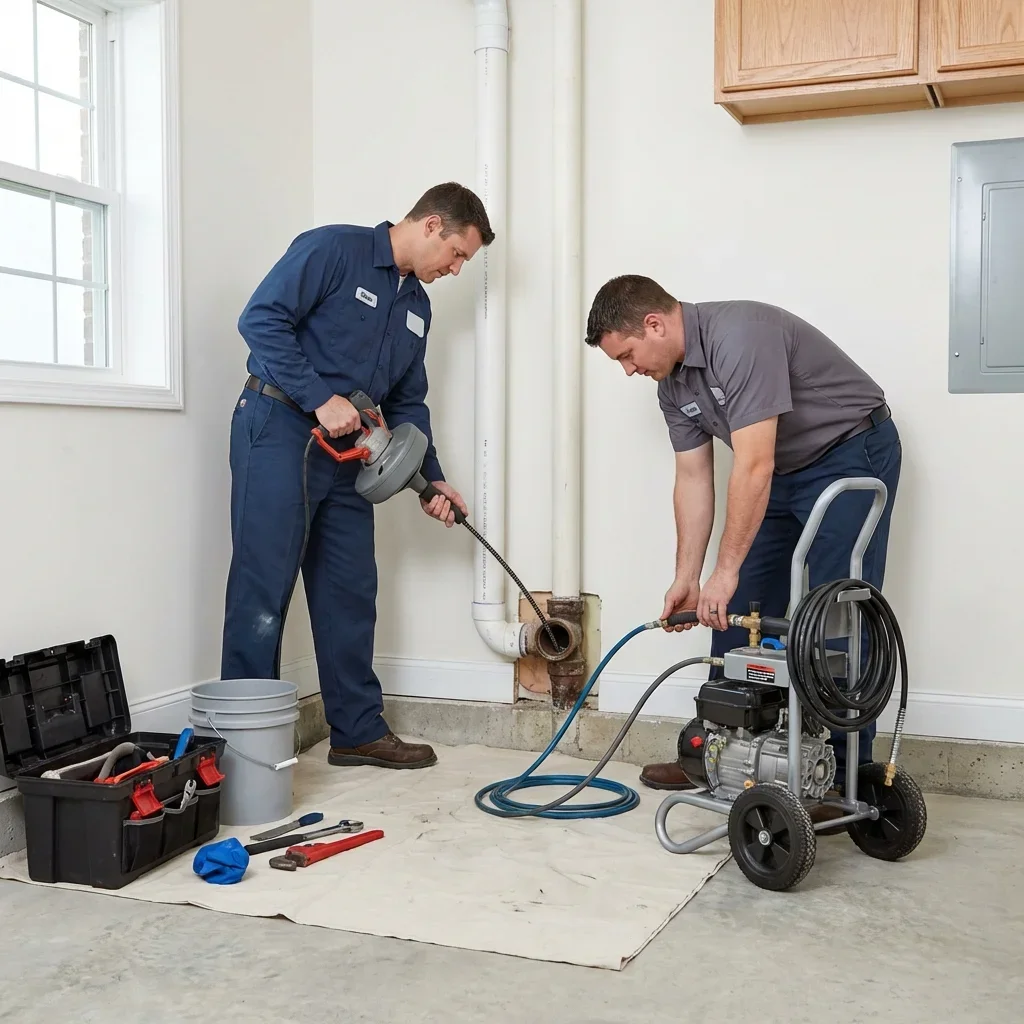
Plumbers often use both methods in sequence for severe blockages. Snaking clears the immediate obstruction so jetting water can flow through.
Trying to jet a completely blocked line just creates backpressure — the water has nowhere to go and can blow back through fixtures or cleanout caps.
After jetting removes buildup, camera inspection confirms the pipe is clear and identifies any structural issues requiring repair. If the camera shows cracks, offset joints, or severe corrosion, you're looking at repiping or spot repairs before the problem escalates.
Some Phoenix plumbers include enzyme or bacterial treatments after jetting to slow grease and organic buildup. These drain-safe products digest residue over weeks, extending the time between service calls.
They're particularly useful in kitchen drains and homes with garbage disposals.
Equipment and Licensing Requirements
Arizona Registrar of Contractors (ROC) requires plumbers performing work over $1,000 to hold an active license — verify at https://roc.az.gov/. Look for the "K" classification (plumbing).
Hydro jetting equipment is expensive enough that most companies carry $2 million liability insurance to cover potential pipe damage.
Professional jetting rigs include pressure regulators, multiple nozzle types, and camera systems. The technician should adjust pressure based on pipe material — 2,500 PSI for older cast iron, 3,500 PSI for PVC, lower pressures for ABS that's been heat-stressed.
Anyone running the same pressure regardless of conditions either lacks training or doesn't care about protecting your system.
Snaking requires less specialized equipment but still needs skill. Feeding a cable blindly can scratch pipe interiors, catch on joints, or coil back on itself. Experienced technicians feel the resistance change when they reach a clog versus when they hit a pipe bend.
DIY vs. Professional Service
Homeowner-grade drain snakes ($30-$80 at hardware stores) work for shallow clogs within 10 feet of the drain opening. They're fine for sink and tub clogs caused by hair or soap buildup.
Anything deeper or more stubborn requires professional equipment.
DIY hydro jetting is dangerous and not recommended. Consumer-grade pressure washers (2,000-2,500 PSI) lack the specialized nozzles and controls needed for safe pipe cleaning.
You can easily damage pipes, create leaks, or injure yourself with high-pressure blowback. The equipment investment for DIY doesn't make sense when professional service costs $400-$500.
Chemical drain cleaners provide temporary relief for minor clogs but damage pipes over time. Sodium hydroxide and sulfuric acid products generate heat that can warp PVC, corrode cast iron, and weaken pipe joints. They're particularly problematic in Arizona where pipes are already stressed from thermal expansion cycles and hard water corrosion.
If you're comfortable with basic plumbing and the clog is accessible, try snaking first. If that fails or the problem recurs within weeks, call a professional for camera inspection and jetting.
Attempting repairs beyond your skill level often creates expensive secondary damage — particularly with slab-on-grade homes where access is limited and mistakes require concrete work to correct.
Long-Term Pipe Health
Jetting extends pipe lifespan by removing corrosive buildup. Hard water scale traps bacteria and organic matter against pipe walls, accelerating corrosion in copper and cast iron.
Regular jetting (every 3-5 years) can add 5-10 years to your drain system's functional life.
Snaking doesn't affect long-term pipe health positively or negatively — it's a neutral intervention that clears blockages without changing pipe condition. Overuse of snaking on grease or root clogs becomes a maintenance treadmill where you're calling a plumber every 3-6 months for the same problem.
The most cost-effective approach combines both: snaking for acute clogs, jetting every few years for preventive maintenance, and camera inspection when patterns suggest chronic problems. Most Phoenix plumbers offer this tiered service model.
If your plumber only recommends one method regardless of circumstances, that's a red flag suggesting they lack full equipment capabilities or don't understand proper application.
For homes with pipes approaching end-of-life (40+ year old cast iron, 50+ year old clay, any Orangeburg), neither method provides a permanent solution. Jetting might trigger failures in compromised sections.
You're managing symptoms while planning for eventual replacement.
A camera inspection gives you timeline visibility — you can budget for repiping over the next 1-3 years rather than facing an emergency replacement when a pipe ruptures under your slab.